714: PAKISTAN’S SOARING DEFENCE BUDGET: BULLETS FROM BORROWED MONEY


My Article published on the IIRF website on 02 Aug 25.


On June 10, 2025, Pakistan’s Finance Minister Muhammad Aurangzeb announced the national budget for the fiscal year 2025-26, revealing a notable 20.4% increase in defence expenditure, the highest in ten years. The budget allocation for the nation’s armed forces increased to 2.55 trillion rupees (equivalent to $9 billion), up from 2.12 trillion rupees in the preceding fiscal year. This increment constitutes 1.97% of Pakistan’s gross domestic product (GDP), compared to 1.7% in the previous year. The rise in defence spending prompts inquiries regarding its funding sources, economic trade-offs, and broader implications for Pakistan’s fiscal stability and geopolitical strategy.


Funding the Defence Budget Hike

The defence allocation of 2.55 trillion rupees, supplemented by an additional 742 billion rupees (equivalent to $2.63 billion) designated for military pensions, results in a total military expenditure of 3.292 trillion rupees (approximately $11.67 billion). This escalation occurs amidst a context of a 6.9% contraction in the overall federal budget, which decreased from 18.9 trillion rupees to 17.57 trillion rupees (about $62 billion). To accommodate this increase in defence spending, Pakistan is employing a combination of tax revenue, non-tax revenue, borrowing, and reallocation of resources from other sectors, managing to stay somehow within the framework of fiscal constraints imposed under an International Monetary Fund (IMF) program.

Tax Revenue: The Ordinary Citizen Pays. The principal source of funding for the defence budget is an assertive tax collection target. The 2025-26 budget anticipates total gross revenue of 19.298 trillion rupees, with 14.131 trillion rupees expected from the Federal Board of Revenue (FBR). This signifies a 19% increase from the revised 12.33 trillion rupees collected in the preceding fiscal year. The government aims to achieve a tax-to-GDP ratio of 11.4%, up from 9.5%, by expanding the tax base and improving compliance. Essential measures encompass taxing agricultural incomes, augmenting levies on salaried individuals, and imposing higher taxes on retailers and exporters. Nevertheless, Pakistan’s sluggish economic growth, estimated at 3.5% for 2025-26, casts doubt on the achievability of this target.

Non-Tax Revenue: State–owned and Private Enterprises Contribute.  Non-tax revenue, projected at 5.167 trillion rupees, constitutes a significant component of fiscal income. This includes proceeds from privatisation (87 billion rupees), dividends from state-owned enterprises, and various other sources, such as regulatory fees. Although these funds do not directly target defence expenditures, they augment the overall revenue pool, thereby enhancing the government’s capacity to allocate additional resources to the military. Nonetheless, privatisation initiatives have historically yielded limited results, and dependence on non-tax revenue remains a precarious strategy amid Pakistan’s economic volatility.

Borrowing for Bullets. The budget projects a fiscal deficit of 6.5 trillion rupees (approximately $23 billion), representing 3.9% of Gross Domestic Product (GDP), a decrease from 5.9% in the preceding year. This deficit will be financed through both domestic and external borrowing, including commercial loans and multilateral assistance. Domestic borrowing, primarily via government bonds, is anticipated to cover a substantial portion. Concurrently, external loans from entities such as the International Monetary Fund (IMF) and friendly nations, including China and Saudi Arabia, will also contribute. The escalation in defence expenditure, coupled with a 24% increase in debt servicing costs amounting to 8.8 trillion rupees, highlights Pakistan’s significant dependence on borrowing. Such an approach poses risks of exacerbating the country’s debt burden, which, according to IMF estimates, already accounts for approximately 90% of the country’s GDP.

Reallocation from Social Sectors: At The Cost of Development. To accommodate the defence hike, the government has significantly reduced expenditures in critical social sectors. The federal budget allocated for health was decreased to 32 billion rupees, and education received a mere 113 billion rupees, reflecting a 7% overall reduction in development expenditure. These reductions have elicited widespread criticism, particularly in rural regions where healthcare and educational infrastructure are already under significant strain. By prioritising defence over development, Pakistan is redirecting resources away from long-term growth drivers, thereby potentially aggravating socio-economic inequalities.

IMF Program and Fiscal Discipline: Spending on Defence but Borrowing for Essentials. Pakistan’s economy operates under an IMF Extended Fund Facility, which imposes strict fiscal targets, including a primary surplus of 1.6% of GDP. While IMF funds are not directly allocated to defence, they stabilise the economy by supporting the balance of payments and stabilising the Pakistani rupee. This stability allows the government to redirect domestic resources to military spending. However, the IMF’s emphasis on fiscal consolidation limits Pakistan’s ability to expand social spending, forcing trade-offs that favour defence. The government’s commitment to meeting IMF conditions, such as reducing subsidies and increasing taxes, further constrains its fiscal flexibility.


Implications of the Defence Surge

The significant increase in defence spending has far-reaching implications for Pakistan’s economy, society, and regional standing.

Economic Trade-Offs: Vicious Cycle. The prioritisation of defence over social sectors risks undermining Pakistan’s long-term financial stability. Reduced investment in health and education could exacerbate poverty and illiteracy, which already affect 40% and 43% of the population, respectively, according to World Bank data. The reliance on borrowing to finance the fiscal deficit, including defence spending, increases Pakistan’s debt servicing burden, which now consumes nearly 50% of the budget. This could lead to a vicious cycle of borrowing and repayment, limiting fiscal space for future development. Moreover, the ambitious tax targets may strain businesses and households, potentially stifling economic growth. Higher taxes on salaried workers and retailers could exacerbate inflation, a persistent issue with annual rates of 9-12%. If tax collection falls short, the government may resort to further borrowing or austerity measures, both of which could destabilise the economy.

Geopolitical Context: Regional Arms Race. The increase in the defence budget is a direct response to heightened tensions with India. Pakistan’s military assesses the necessity of strengthening its capabilities to counter India’s superior defence expenditures, projected to reach $80 billion by 2025. Nonetheless, this escalation poses the risk of intensifying an arms race in South Asia, which may further strain Pakistan’s economy and divert resources from essential domestic priorities.

Social and Political Ramifications: Political Instability and Tension. The budget’s focus on defence at the expense of social services has sparked public discontent in Pakistan. Critics argue that neglecting health and education undermines human capital development, critical for Pakistan’s young and growing population. Political opposition parties, including the Pakistan Tehreek-e-Insaf, have capitalised on this, accusing the government of prioritising military interests over public welfare. This could exacerbate political instability, a concern already present in Pakistan’s history of civil-military tensions.

International Relations and IMF Oversight: External Debt Vulnerabilities. The defence hike may complicate Pakistan’s relations with the IMF and other international partners. While the IMF does not directly dictate defence spending, its focus on fiscal discipline could lead to scrutiny of Pakistan’s budgetary priorities. Friendly nations like China, which provide significant loans and investments, may support the defence increase due to their strategic interests in countering India. However, reliance on foreign loans risks deepening Pakistan’s external debt vulnerabilities.


Conclusion

Pakistan’s decision to augment defence expenditure by over 20% in the 2025-26 budget reflects its strategic imperatives amid tensions with India. Funded through increased taxes, non-tax revenue, borrowing, and reductions in social sectors, this increase underscores the government’s prioritisation of security over development. While the augmentation may enhance military capabilities, it entails considerable costs to economic stability and public welfare. The dependence on borrowing and ambitious fiscal targets, coupled with curtailed social spending, risks exacerbating poverty, inequality, and fiscal vulnerabilities. As Pakistan navigates these challenges, establishing a balance between defence requirements and economic and social priorities will be essential for ensuring long-term stability in a volatile region.


Please Add Value to the write-up with your views on the subject.


1879
Default rating

Please give a thumbs up if you  like The Post?


For regular updates, please register your email here:-

Subscribe

Link to the article on the website:-

PAKISTAN’S SOARING DEFENCE BUDGET: BULLETS FROM BORROWED MONEY by Air Mshl Anil Khosla (Retd)


References and credits

To all the online sites and channels.

Pics Courtesy: Internet

Disclaimer:

Information and data included in the blog are for educational & non-commercial purposes only and have been carefully adapted, excerpted, or edited from reliable and accurate sources. All copyrighted material belongs to respective owners and is provided only for wider dissemination.


References:-

 1. Aurangzeb, Muhammad. “Federal Budget Speech 2025-26.” Government of Pakistan, Ministry of Finance, June 10, 2025.

2.International Monetary Fund (IMF). “Pakistan: 2023 Article IV Consultation and Request for an Arrangement Under the Extended Fund Facility.” IMF Country Report No. 23/260, July 2023.

3. World Bank. “Pakistan Economic Update: Macroeconomic Challenges and Outlook.” World Bank, October 2024.

4. Government of Pakistan, Ministry of Finance. “Budget in Brief 2025-26.” June 2025.

5. Stockholm International Peace Research Institute (SIPRI). “Military Expenditure Database: India.” SIPRI, 2024.

6. The Express Tribune. “Pakistan’s Defence Budget Jumps 20.4% Amid Tensions with India.” June 11, 2025.

7. Dawn News. “Budget 2025-26: Fiscal Deficit and Borrowing Challenges.” June 12, 2025.

8. Pakistan Bureau of Statistics. “Economic Indicators: Inflation and Exchange Rates.” June 2025.

9. Geo News. “Opposition Slams Budget for Neglecting Social Sectors.” June 15, 2025.

710: SHAHEEN-3 MISSILE TEST FAILURE: A WAKE-UP CALL FOR PAKISTAN’S MISSILE PROGRAM


My article was published on “The EurasianTimes” website

on 24 Jul 25.


On July 22, 2025, Pakistan’s ambitious ballistic missile program experienced a notable setback and its strategic defence landscape was jolted, by the high-profile failure of its Shaheen-3 ballistic missile test. The incident, occurring near civilian settlements and in dangerously proximity to a primary nuclear site, has drawn national and international attention, not only over the technical reliability of Pakistan’s missile program but also concerning the safety of local populations and the geopolitical stability of South Asia.


The Missile. The Shaheen-III, developed by Pakistan’s National Development Complex (NDC) in collaboration with the National Engineering and Scientific Commission (NESCOM), constitutes a fundamental component of the nation’s strategic defence capabilities. With an asserted range of 2,750 kilometers, this missile is engineered to carry both conventional and nuclear warheads, thereby ranking among Pakistan’s most sophisticated systems. Its development is regarded as a strategic response to India’s expanding missile capabilities, including the Agni series, and aims to maintain deterrence within the volatile security environment of South Asia. The missile’s capacity to reach targets over an extensive geographical area highlights its strategic importance.


The Incident. The Shaheen-3 was launched from the Dera Ghazi Khan region in Punjab. According to multiple credible reports, the missile deviated from its planned trajectory shortly after launch and crashed in the Matt area of Dera Bugti district in Balochistan. The impact site was alarmingly close, approximately 500 meters, to civilian settlements and within the vicinity of a significant nuclear facility. Residents reported a powerful explosion near the Loop Seharani Levies Station, which was heard 20–50 kilometers away. Shockwaves of concern rippled through nearby communities, leading to scenes of panic and evacuation as locals rushed to distance themselves from a potential disaster. Social media platforms circulated videos and messages depicting the chaos.


Local Reaction. Pakistan’s Inter-Services Public Relations (ISPR) issued a brief statement acknowledging the test but maintained that all safety standards were followed. The statement, however, lacked specifics about the cause of the failure or the environmental impact of the crash. This opacity has fuelled speculation and criticism, both domestically and internationally. Analysts point out that the absence of transparent reporting on such incidents undermines public confidence in Pakistan’s missile program and raises questions about the technical reliability of the Shaheen-III.


Safety and Security Concerns. The close call between the missile crash and a densely populated area, combined with the proximity to critical nuclear infrastructure, has highlighted serious safety and security vulnerabilities. Given Balochistan’s historical sensitivity due to both its restive population and strategic assets, the event stoked local and national anxieties about the risks associated with missile tests conducted in such areas. While there were no immediate reports of casualties, the potential for significant harm was evident. The magnitude of the blast, the risk of radioactive contamination, and the psychological fear instilled in the local population have all contributed to widespread condemnation and calls for more responsible test protocols.


Technical Reliability and Pattern of Failures. What makes this incident particularly concerning is its apparent repeat of past failures. Reports indicate that previous Shaheen-3 tests, including those in 2023, also resulted in accidents near nuclear or sensitive military infrastructure. This pattern of technical shortcomings raises fundamental questions over the actual operational reliability of Pakistan’s most far-reaching missile.


Reinforcement of US concerns. The timing of the failure is notably significant, occurring merely months after the United States imposed sanctions in December 2024 on entities associated with Pakistan’s ballistic missile program. The United States expressed concerns regarding proliferation risks and the potential for missile technology to destabilise the region. This unsuccessful test is likely to intensify these concerns, supplying additional argumentation to critics who contend that Pakistan’s missile development suffers from insufficient oversight and technical maturity.


Strategic Significance. The Shaheen-3 is considered a central pillar of Pakistan’s deterrence strategy, designed to ensure that all major cities in India and beyond are within striking distance. The reliability of such a strategic asset is therefore crucial, not merely for defence planners in Islamabad but also for regional actors who closely monitor each development as part of a delicate balance of power. Its recent failures have reignited debate over the safety of ongoing missile development and testing in densely inhabited or strategically sensitive regions. The risk of sparking a larger geopolitical crisis, either by accident or escalation, is heightened whenever flaws in command, control, or technical functioning come to light.  The failure of the Shaheen-3 test not only undermines the credibility of this deterrence strategy but also raises questions about the effectiveness of Pakistan’s missile program.


The Shaheen-III test failure is likely to have far-reaching consequences. For Pakistan, it represents a setback in its quest for a credible deterrent against regional rivals. For the international community, it underscores the challenges of managing proliferation risks in a region marked by intense strategic competition. It serves as a stark reminder of the serious risks associated with the testing and deployment of advanced ballistic missile technology in volatile environments. It exposes both persistent technical challenges and deep-rooted concerns over transparency and public safety. The incident has reignited discussion on the necessity of responsible stewardship over strategic assets, especially those capable of influencing the delicate balance of peace and security in the region, highlighting the importance of the issue.


Please Add Value to the write-up with your views on the subject.


1879
Default rating

Please give a thumbs up if you  like The Post?


For regular updates, please register your email here:-

Subscribe

Link to the article on the website:-

“Shockwaves” In Balochistan As Pakistan’s Nuclear-Capable Missile Crashes Near Nuclear Site; Shaheen-III Failure Sparks Concerns


References and credits

To all the online sites and channels.

Pics Courtesy: Internet

Disclaimer:

Information and data included in the blog are for educational & non-commercial purposes only and have been carefully adapted, excerpted, or edited from reliable and accurate sources. All copyrighted material belongs to respective owners and is provided only for wider dissemination.


References:-

1.News Reports & Regional Media Coverage, The Balochistan Post (July 23, 2025), “Missile crash incident near Dera Bugti triggers panic among locals”

2.Associated Press. (2024, December 20). U.S. Imposes Sanctions on Entities Linked to Pakistan’s Ballistic Missile Program.

3.Dawn News. (2025, July 23). Shaheen-III Missile Test Fails, Crashes in Dera Bugti. Dawn.

4.Inter-Services Public Relations (ISPR). (2025, July 22). Official Statement on Shaheen-III Test Launch.

5.Khan, A. (2025, July 23). Local Residents Report Tremors, Debris from Missile Crash in Balochistan. The News International.

694: THE TRUMP-MUNIR MEETING: TRANSACTIONAL DIPLOMACY OR A GEOPOLITICAL QUID PRO QUO?


My article was published on the Indus International Research Foundation website on 30 Jun 25.


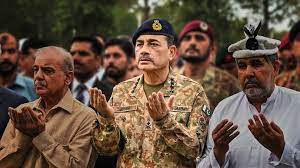
On June 18, 2025, U.S. President Donald Trump hosted a rare and controversial meeting with Pakistan’s Chief of Army Staff, General Asim Munir, at the White House. The two-hour lunch, which took place without any representatives from Pakistan’s civilian leadership, triggered widespread geopolitical debate. The phrase “you scratch my back, I scratch yours” has surfaced in online discourse. While the meeting was presented as a gesture of gratitude for Pakistan’s role in de-escalating recent India-Pakistan tensions, the circumstances, tone, and implications of the event go far beyond mere diplomacy. Potential fallout of this bizarre engagement could signal a reconfiguration of regional alliances and a confirmation of Trump’s transactional diplomacy.


Analytical Perspective

Context: Post-War De-escalation and Unorthodox Diplomacy. The Trump–Munir meeting comes just weeks after a volatile conflict between India and Pakistan that erupted in early May 2025. For several tense days, both nations exchanged missile and drone attacks, raising fears of a full-scale war between two nuclear-armed neighbours. In the June 18 lunch, Trump publicly credited General Munir for helping to prevent a full-blown war between India and Pakistan. This approach reflects Trump’s foreign policy style, which prioritises deal-making, personal connections, and pragmatic alliances over institutional norms or long-term strategic planning.

Unprecedented Format. This was not an ordinary diplomatic meeting. For the first time, a U.S. president hosted a foreign military leader at the White House without including any civilian government officials from that country. Pakistani Prime Minister Shehbaz Sharif and Foreign Minister Ishaq Dar were conspicuously absent. Their exclusion drew immediate criticism from both within Pakistan and abroad, highlighting the enduring imbalance between Pakistan’s military and civilian institutions. By engaging directly with Munir, Trump sent a clear message that he considers the Pakistani military, and not its elected leadership, as the country’s true center of power. This is not a new perception, but such overt validation from a major global power (that champions and supports democratic values worldwide) is rare and diplomatically risky.

Pakistan: Military Strengthened, Civilian Leadership Marginalised. In Pakistan, the reaction was mixed. Supporters of the military celebrated the meeting as a diplomatic win and a sign that General Munir is elevating Pakistan’s global profile. However, many others viewed the event as a glaring example of the country’s persistent “military-first” governance model. Political commentators and opposition figures criticised Prime Minister Shehbaz Sharif for being sidelined and described the episode as humiliating. Some accused the military of bypassing civilian institutions in foreign policy and seeking direct international legitimacy. The episode has further strained civil-military relations within Pakistan, with fears that the military is consolidating even more power at the expense of democratic norms and constitutional roles.

Undermining Civilian Institutions. The overt exclusion of Pakistan’s civilian leadership from a meeting of this magnitude may set a dangerous precedent. It sends a signal, not just to Islamabad but to other nations, that direct engagement with military leaders is not only acceptable but perhaps preferable. This undermines the principle of democratic civilian oversight and can weaken global efforts to promote governance reforms in countries with fragile democratic institutions.

U.S.–Pakistan Rapprochement. Just months ago, U.S.–Pakistan relations were marked by scepticism, primarily due to lingering mistrust over Islamabad’s historical links to extremist groups, as well as its close ties to China. However, this meeting suggests a dramatic shift. Trump praised Pakistan’s intelligence services for capturing the perpetrator of the 2021 Kabul airport bombing, a symbolic gesture indicating renewed U.S. trust in Pakistan’s counterterrorism efforts. Pakistan’s military, in its official statement, highlighted that the conversation also covered trade, economic cooperation, cryptocurrencies, artificial intelligence, energy resources, and rare-earth minerals. These are key sectors for a future-oriented partnership, suggesting that both parties are looking beyond traditional military and security cooperation.

The Iran Angle. An equally important but more understated aspect of the meeting was its potential connection to rising tensions in the Middle East, specifically between Israel and Iran. Trump reportedly remarked that “Pakistan knows Iran very well,” and indicated that Islamabad could play a key role in future diplomatic or covert operations involving Tehran. This is particularly significant as the U.S. appears to be exploring regional support for managing, or possibly confronting, Iran. Given Pakistan’s geographic proximity, historical ties to Iran, and deep intelligence networks, it is plausible that Washington sees Islamabad as a useful intermediary or asset in this context. For Trump, such a partnership would align with his transactional style: if Pakistan helps the U.S. manage Iran, the U.S. could reciprocate by offering economic or political rewards to Pakistan.


Strategic Implications

Transactional Realignment, Not Strategic Partnership. While the meeting suggests a thaw in U.S.–Pakistan ties, the underlying dynamic appears transactional rather than strategic. Trump is known for valuing short-term gains and personal relationships over long-term institutional alliances. In this case, the “mutual back-scratching” attitude reflects a deal-based mindset: Pakistan helps with Iran’s intelligence sharing, and the U.S. acknowledges its role and discusses potential economic partnerships. Such diplomacy can deliver quick results, but it often lacks the staying power that is based on democratic values or mutual trust.

Potential Iran Confrontation Strategy. By engaging Pakistan now, the U.S. could be preparing for a broader containment strategy against Iran. If tensions between Israel and Iran re-escalate into direct conflict, the U.S. may look to regional partners for logistical support, intelligence sharing, or diplomatic mediation. Pakistan, with its strategic location and regional experience, becomes a valuable partner in this context. However, such an alignment carries risks. Iran and Pakistan share a border, and any overt Pakistani support for U.S. actions against Iran could destabilise Baluchistan and strain Islamabad’s internal security.

India: Strategic Alarm. In India, the Trump–Munir lunch was met with alarm and criticism. Defence Secretary Rajesh Kumar Singh labelled the event “an embarrassment” for Pakistan’s civilian government. Indian officials were quick to reject Trump’s claim of him helping avert war, insisting that the May ceasefire was a direct call from Pakistan, asking for a ceasefire with no U.S. involvement. Shashi Tharoor,  senior Congress leader, reminded observers about Pakistan’s past harbouring of Osama bin Laden and cautioned the U.S. against viewing Pakistan as a trustworthy long-term partner. The general sentiment in Indian strategic circles is that the meeting signifies an unbalanced U.S. approach that undermines democratic institutions in the region and encourages military dominance in Pakistan.


Conclusion

The Trump–Munir meeting represents a symbolic moment in U.S.–Pakistan relations and South Asian geopolitics. It highlights Trump’s characteristic deal-making style, the enduring dominance of Pakistan’s military in foreign affairs, and the shifting focus of U.S. strategic interests toward rapid, transactional engagements. For the U.S., this may be a way to quickly regain influence in South Asia and prepare for broader conflicts in the West Asia. For Pakistan, it is a short-term diplomatic victory that risks further marginalising civilian institutions. For India, this is a cause for concern and a call to monitor the shifting U.S. priorities closely. The long-term consequences will depend on whether this meeting marks the beginning of a more profound realignment or is simply another small move in the ever-evolving saga of geopolitical chess.

Please Add Value to the write-up with your views on the subject.


1879
Default rating

Please give a thumbs up if you  like The Post?


Link to the article on the website:-

The Trump-Munir Meeting: Transactional Diplomacy Or A Geopolitical Quid Pro Quo?

For regular updates, please register your email here:-

Subscribe


References and credits

To all the online sites and channels.

Pics Courtesy: Internet

Disclaimer:

Information and data included in the blog are for educational & non-commercial purposes only and have been carefully adapted, excerpted, or edited from reliable and accurate sources. All copyrighted material belongs to respective owners and is provided only for wider dissemination.

References:-

  1. The Guardian. (2025, June 19). The thawing of relations between Pakistan and the US raises eyebrows in India.
  1. Times of India. (2025, June 19). ‘Must be an embarrassment’: Defence secretary’s jibe at Shehbaz Sharif over Trump–Munir lunch; warns of China-Turkey nexus.
  1. India Times. (2025, June 18). Donald Trump hosts General Asim Munir for a White House lunch, credits him with ending the India–Pakistan war; here’s what we know.
  1. Dawn News. (2025, June 18). The military confirms that General Munir meets with Donald Trump to discuss strategic cooperation and regional stability.
  1. Al Jazeera. (2025, June 19). US-Pakistan talks signal shifting alliances in South Asia amid tensions with Iran.
  1. Reuters. (2025, June 18). Trump thanks Pakistan Army chief for avoiding war with India, eyes trade ties. Retrieved from
  1. NDTV. (2025, June 20). India rejects US mediation claims, stating that the ceasefire was a bilateral agreement reached between the parties.
  1. BBC News. (2025, June 18). Trump meets General Munir: What it means for Pakistan’s democracy.
  1. “Trump Hosts Pakistan Army Chief Asim Munir at White House, Discusses India-Pakistan Tensions.” Hindustan Times, June 19, 2025.
  1. “Unorthodox White House Lunch: Trump and Munir Talk Trade and Peace.” The News International, June 19, 2025.
  1. “Trump’s Transactional Diplomacy: A Look at His Foreign Policy Style.” Foreign Affairs, January 202
English हिंदी