
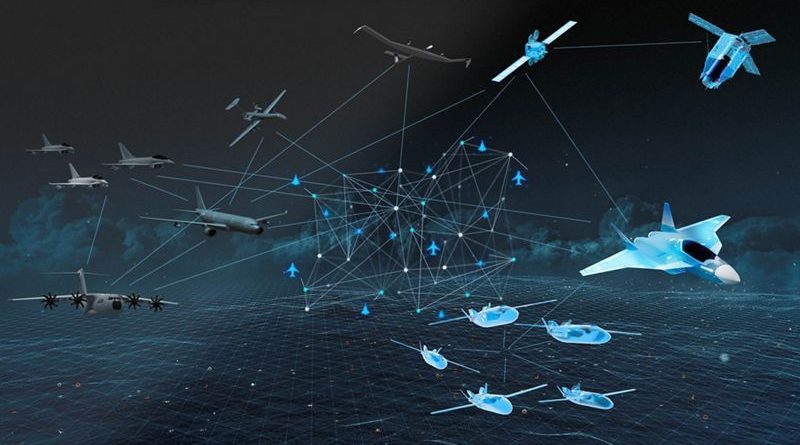
542: UNVEILING ANĀLAKṢHYA: CLOAKING TECHNOLOGY


Sputnik News,  a Russian news agency and radio broadcast  service, sought inputs on the Analakshya Project.


Article on the subject:-


UNVEILING ANĀLAKṢHYA: CLOAKING TECHNOLOGY


IIT Kanpur recently unveiled the Anālakṣhya Project, a ground-breaking initiative to advance metamaterial surface cloaking technology. The project, led by IIT Kanpur’s researchers, promises to enhance the strategic capabilities of the Indian defence sector by incorporating advanced technology that can protect vital equipment from detection by radar or other surveillance methods. This innovative project aims to revolutionise defence applications by developing cloaking systems that render objects invisible or significantly reduce their detectability. The Anālakṣhya Project utilises metamaterials—engineered materials with properties not found in naturally occurring substances—to manipulate electromagnetic waves, thus providing new ways to conceal military assets. The Anālakṣhya Project by IIT Kanpur represents a transformative step in India’s defence innovation and positions India at the forefront of next-generation defence systems.


Metamaterial Surface Cloaking System (MSCS). The backbone of the Anālakṣhya project is its metamaterials, engineered to manipulate electromagnetic waves, particularly radar signals. A Metamaterial Surface Cloaking System (MSCS) is a technology that uses metamaterials to effectively “cloak” or hide objects by manipulating light or other electromagnetic waves around them. Metamaterials are artificial materials engineered to have properties not found in naturally occurring materials. These properties often include the ability to control the propagation of electromagnetic waves, such as light, in ways that traditional materials cannot. Traditional radars work by emitting radio waves that reflect off objects; however, metamaterials absorb or deflect these waves, significantly reducing the object’s radar cross-section (RCS). This technology is crucial in making fighter jets, naval ships, drones, and military installations undetectable to radar-guided systems, enhancing their survivability in conflict zones.


Key features.  The system absorbs radar waves and effectively minimises radar reflections, reducing detection probability. It features adaptive cloaking by dynamically adjusting to different radar frequencies, ensuring comprehensive stealth. Its lightweight and scalable design integrates various platforms, from drones to large platforms (Land, sea and air).


Implications for India’s Defence Capabilities. Enhanced Stealth Operations: The Anālakṣhya technology will enhance stealth operations by enabling the covert deployment of high-value military assets. Fighter jets equipped with this system could conduct missions deep into enemy territory without detection, providing a significant tactical edge. Often exposed in open waters, naval ships benefit from reduced detectability, strengthening India’s maritime defence. The ability to operate undetected will give a boost to asymmetric warfare capabilities. It will enhance the missile defence by countering radar-guided threats. The stealth technology would allow surprise manoeuvres, enhancing operational unpredictability, a critical advantage in modern warfare. Fighter aircraft and naval vessels equipped with Anālakṣhya could operate deeper into contested regions without early detection. Integrating Anālakṣhya into multiple platforms will be a force multiplier, allowing fewer assets to achieve a more significant impact. This is particularly beneficial for missions involving long-range reconnaissance, intelligence gathering, and targeted strikes.


Anālakṣhya and India’s Defence Standing. Anālakṣhya is a testament to India’s growing emphasis on self-reliance in defence technologies (Atmanirbhar Bharat). India would reduce import dependence by developing Indigenous stealth solutions and strengthening its domestic defence industry. The successful deployment of this technology would open avenues for India to emerge as an exporter of stealth technologies. Countries seeking advanced, cost-effective, radar-evasive solutions may consider India a viable partner. India’s cutting-edge technology development would enhance its geopolitical influence, making it an attractive partner for defence collaborations.


Challenges and Future Prospects. Adapting Anālakṣhya to various military platforms, from fighter jets to maritime and land-based platforms, requires overcoming engineering and logistical challenges. Ensuring seamless integration while maintaining operational efficiency will be a crucial focus. Along with stealth technologies, counter-radar detection systems would also evolve. Continuous research and development will be essential to stay ahead of emerging threats. The future of Anālakṣhya lies in its synergy with AI-driven systems, allowing real-time adjustments to stealth parameters based on changing battlefield conditions. This integration will make India’s military platforms more adaptive and autonomous.


Conclusion. The Anālakṣhya Project represents a landmark achievement for India, showcasing the country’s capability to develop state-of-the-art defence technologies. By enhancing stealth capabilities and reducing the vulnerability of critical assets, Anālakṣhya fortifies India’s national security and elevates its standing in the global defence arena. As the technology matures, it will serve as a cornerstone for India’s future military strategies, reinforcing its role as a defence innovator and strategic power in the evolving global landscape.


Inputs:-

(The views expressed are of the Individual, not IAF or GOI).

    • The Anālakṣhya project, developed by IIT Kanpur, strengthens India’s defence against radar-guided missile threats by employing a Met material Surface Cloaking System (MSCS).
    • This advanced technology uses engineered materials to absorb and deflect radar waves, making military assets such as drones, aircraft, and missiles nearly undetectable.
    • By reducing radar cross-sections, Anālakṣhya enhances stealth capabilities, which is crucial for evading radar-based targeting and improving survivability in hostile environments.
    • This innovation offers India a strategic advantage in modern warfare scenarios involving electronic and radar-guided threats.
    • The deployment of Anālakṣhya will significantly enhance India’s defence capabilities by providing stealth protection for high-value assets like fighter jets, naval ships, and military installations.
    • This cloaking technology will make these assets nearly invisible to enemy radar systems, reducing the effectiveness of radar-guided missiles and improving survivability in conflict zones.
    • In military tactics and operational planning, Anālakṣhya will allow for the covert deployment of assets, surprise manoeuvres, and more resilient defensive postures.
    • It will also support asymmetric warfare by making Indian forces less detectable, thus enhancing strategic deterrence and operational flexibility.​
    • The Anālakṣhya project positions India as a key innovator in the global defence landscape by advancing stealth and radar-evasive technologies.
    • Its deployment signals India’s shift towards next-generation military capabilities, aligning with global leaders in defence innovation like the U.S., China, and Russia.
    • This enhances India’s strategic deterrence, boosts its Indigenous defence manufacturing capacity, and strengthens its standing in defence exports and partnerships.
    • Moreover, Anālakṣhya’s integration with AI and autonomous systems highlights India’s growing role in cutting-edge military research and self-reliance in defence technologies (Atmanirbhar Bharat).


Your valuable comments are most welcome.


1943
Default rating

Please give a thumbs up if you  like The Post?


For regular updates, please register your email here:-

Subscribe


References and credits

To all the online sites and channels.

References:-


  1. IIT Kanpur Official Website. Anālakṣhya Project Announcement. IIT Kanpur Press Release.


  1. “IIT Kanpur Develops Metamaterial-Based Cloaking Technology”. The Economic Times.


  1. “IIT Kanpur’s Anālakṣhya: The Next Frontier in Defense Cloaking Technology”. India Today.


  1. “The Science of Cloaking: How Metamaterials Are Changing the Future of Defense”. Science Daily.


  1. “Defense Innovation: Metamaterials and Cloaking”. Ministry of Defense, India.


  1. The Future of Metamaterials: Cloaking and Beyond. (2024). IEEE Spectrum.


  1. Shalaev, V. M. (2007). Optical Negative Refraction: From Metamaterials to Metadevices. Journal of Optics A: Pure and Applied Optics, 9(4), S8.


  1. Zhang, S., & Zhang, L. (2014). Metamaterials for Cloaking and Beyond. Springer.


  1. Hussein, H. H., & El-Sayed, M. A. (2021). Recent Advances in Metamaterial-Based Cloaking Technology. Journal of Electromagnetic Waves and Applications, 35(10), 1251–1272.


Disclaimer:

Information and data included in the blog are for educational & non-commercial purposes only and have been carefully adapted, excerpted, or edited from reliable and accurate sources. All copyrighted material belongs to respective owners and is provided only for wider dissemination.


541: COLD WAR REDUX: TRAITS AND DRIVERS OF COLD WAR 2.0


My Article published on the Indus International Research Foundation website on 27 Nov 24.


“Cold War 2.0” describes the re-emergence of intense geopolitical competition between major powers, mainly the U.S. and China, and Russia’s increasingly assertive foreign policy. This framework parallels the original Cold War, which saw the United States and the Soviet Union locked in ideological and strategic rivalry. However, the current scenario has distinctive traits shaped by global interconnectedness, economic interdependence, and digital warfare.


Economic Interdependence and Competition. Unlike the U.S.-Soviet rivalry, the current era is marked by deep financial ties between rival states. For instance, the U.S. and China have significant trade and investment links, creating a complex relationship between competitors and economic partners. This has led to policies like “decoupling” and “friend-shoring,” where nations look to limit economic dependencies with strategic rivals, especially in critical sectors like technology and energy.


Tech and Cyber Dominance. The competition now prominently features digital spaces and technological development. China’s rise in artificial intelligence, 5G networks, and quantum computing has led the U.S. and its allies to push for greater control over digital infrastructure and intellectual property. Cyber security is another battlefield, with accusations of hacking and surveillance shaping security policies and alliances.


Military Posturing and Arms Races. The military build-up is also central to Cold War 2.0. While nuclear capabilities remain crucial, the focus has expanded to space warfare, hypersonic missiles, and advanced drone technology. For example, the U.S. Indo-Pacific Strategy counters China’s growing military influence in Asia. At the same time, Russia’s recent actions in Ukraine have led NATO to strengthen its military presence on Europe’s eastern flank.


Ideological Clashes. While less ideological than the original Cold War, there is a growing divergence between the democratic and authoritarian governance models, particularly as China promotes its model as an alternative to Western liberalism. This has led to ideological contestation in digital governance, human rights, and trade rules, with each power attempting to influence international norms and institutions to reflect its values.


Strategic Alliances and Blocs. The current rivalry sees the emergence of new alliances and a revival of older ones, such as NATO and the Quadrilateral Security Dialogue (Quad) among the U.S., Japan, India, and Australia, which aims to counterbalance China’s influence in the Indo-Pacific. Similarly, China and Russia are strengthening their ties, often working together in the United Nations and other forums to counter Western initiatives.


Resource Control and Economic Leverage. Access to resources such as rare earth metals, energy, and food is another area of strategic competition. China’s Belt and Road Initiative (BRI), which funds infrastructure projects across Asia, Africa, and Latin America, is seen as expanding its influence by creating economic dependencies. The U.S. counters with its initiatives, such as the Build Back Better World (B3W) program, which offers alternatives for development financing.


Impacts on Global Relations. The emergence of Cold War 2.0 has led to shifting alliances, with some nations choosing sides and others attempting a non-aligned approach to maintain autonomy. Middle powers like India, Brazil, and South Africa find themselves balancing between the two giants, shaping new multilateral dynamics. Meanwhile, the increased emphasis on national security in trade and technology policies is reshaping globalisation, potentially leading to more isolated economic blocs.


Comparison of Drivers of the Earlier and Current Cold War


The drivers of the original Cold War (1947–1991) between the U.S. and the Soviet Union differ from those of today’s “Cold War 2.0,” primarily between the U.S. and China, with Russia playing a significant but secondary role. These geopolitical, ideological, and technological rivalries reveal continuities and marked differences.


Sl No Drivers Differences
1 Ideological Rivalry

Earlier Cold War: The U.S. and the Soviet Union were divided by sharply contrasting ideologies: capitalism and democracy versus communism and authoritarianism. Each superpower sought to promote its ideology globally, often through proxy wars, propaganda, and cultural influence campaigns.

Current Cold War: Although there’s still an ideological component, the divide is less rigid. The U.S. advocates liberal democracy, while China’s governance model blends authoritarianism and state-led capitalism. Rather than openly promoting its ideology as a direct alternative, China emphasises economic development and “pragmatic” governance as models for stability and growth. There’s less overt ideological export and more influence through economic interdependence and development projects like the Belt and Road Initiative (BRI).

2 Geopolitical Power Struggles


Earlier Cold War: The rivalry largely revolved around Europe, with proxy conflicts extending to Asia, Latin America, and Africa. The focus was to prevent either side from gaining influence in these regions, as seen through U.S. and Soviet interventions in Korea, Vietnam, Afghanistan, and other hotspots.

Current Cold War: The U.S. and China focus on the Indo-Pacific region as the primary sphere of influence, with attention to Southeast Asia, Taiwan, and the South China Sea. The U.S. is strengthening alliances with Japan, Australia, India (QUAD), and other Indo-Pacific partners, while China is extending its influence through its BRI and increasing its military presence in disputed territories. Russia, meanwhile, has focused on asserting control in Eastern Europe, as seen in the Ukraine conflict, though this rivalry is more geographically constrained.

3 Economic Rivalry and Interdependence


Earlier Cold War: The U.S. and Soviet Union had limited economic interactions, creating two largely independent blocs. Economic influence was exerted through aid programs (like the U.S. Marshall Plan) and political-economic treaties with allied countries. Global trade and economies were less intertwined, allowing for distinct capitalist and socialist economic systems.

Current Cold War: Economic interdependence is a defining factor. China and the U.S. are each other’s largest trading partners, and both economies are deeply embedded in global supply chains. Despite economic competition, each depends heavily on the other. This dynamic has led to “selective decoupling,” where each side aims to reduce dependence on critical technologies and resources without severing all economic ties. This is especially prominent in sectors like semiconductors, 5G, and renewable energy technologies.

4 Technology and Cyber Warfare


Earlier Cold War: The technological competition focused on space, nuclear capabilities, and conventional military technology. The “Space Race” and “Arms Race” were significant components, with the Apollo moon landing and arms treaties like SALT (Strategic Arms Limitation Talks) symbolising the intense scientific and military rivalry.

Current Cold War: The focus has shifted to advanced technologies like artificial intelligence (AI), quantum computing, and cyber security. Cyber warfare has become a core area of conflict, with cyber-attacks, espionage, and influence operations playing significant roles. There’s competition for dominance in 5G networks and critical infrastructure control, with concerns about digital sovereignty, surveillance, and influence operations on social media. This “Tech Race” lacks the clear-cut technological “wins” of the Space Race, but it’s arguably more pervasive and impactful on civilian and governmental life worldwide.

5 Military Strategies and Posturing


Earlier Cold War: The focus was on nuclear arms buildup and deterrence through Mutually Assured Destruction (MAD), with proxy wars to avoid direct confrontation. NATO and the Warsaw Pact were established, and military posturing often involved nuclear tests, displays of military hardware, and highly symbolic confrontations (e.g., the Cuban Missile Crisis).

Current Cold War: While nuclear deterrence remains, military competition now involves a broader range of strategies, including space militarisation, hypersonic missile development, and significant advancements in drone and cyber warfare. China is focused on expanding its naval capabilities and power projection in the South China Sea, while the U.S. strengthens its presence in the Indo-Pacific. Russia’s invasion of Ukraine has led to a renewed focus on NATO’s defensive posture in Europe.

6 Alliances and Proxy Conflicts


Earlier Cold War: Alliances like NATO and the Warsaw Pact formalised the division of East and West. Many proxy conflicts emerged, particularly in developing regions, where both superpowers supported opposing sides to prevent ideological shifts. Examples include the Korean and Vietnam Wars and the Soviet invasion of Afghanistan.

Current Cold War: Alliances are less rigid, and there’s an emphasis on “flexible” partnerships. The U.S. builds security frameworks like the Quad and AUKUS (Australia, the U.K., and the U.S.) while strengthening alliances like NATO. China, meanwhile, does not engage in formal military alliances but leverages economic influence through the BRI and diplomatic coalitions like the Shanghai Cooperation Organization (SCO). Russia uses its influence in post-Soviet states and controls Eastern Europe and the Middle East.

7 Propaganda and Influence Operations


Earlier Cold War: The U.S. and Soviet Union engaged in direct propaganda campaigns, including Radio Free Europe, cultural exchanges, and global information wars to win hearts and minds.

Current Cold War: Information warfare is more complex and digital. Social media platforms have become battlegrounds for influence, with disinformation campaigns, election interference, and social polarisation strategies targeting rivals. China and Russia conduct sophisticated operations, leveraging global media channels, online platforms, and soft power to shape narratives. The U.S., in turn, supports global media initiatives that promote democratic governance and transparency.


Cold War 2.0 has introduced new complexities into international relations, where intertwined economies, advanced technology, and a globalised world order shape competition. The drivers of today’s “Cold War 2.0” reflect a multi-dimensional competition that diverges from the earlier Cold War in its deep economic interdependence, technology-centric rivalry, and more fluid alliances. The ideological divide is softer but still significant, with the U.S., China, and Russia vying for global influence. This rivalry unfolds in a digitally connected world where technology and information warfare play unprecedented roles, resulting in a complex geopolitical landscape with intensified tensions and interdependencies. Unlike the bipolar world of the original Cold War, today’s scenario is multipolar, involving several influential states that resist being drawn entirely into either camp. The result is a fluid, high-stakes environment that demands careful diplomacy and strategic restraint.


Your valuable comments are most welcome.


1943
Default rating

Please give a thumbs up if you  like The Post?


For regular updates, please register your email here:-

Subscribe


References and credits

To all the online sites and channels.

References:

  1. George Takach. “Cold War 2.0: The Battle Between Democracies and Autocracies.” The Diplomat, June 2024.
  1. Ferguson, Niall. “The Rise of Cold War II.” Milken Institute Global Conference, May 2022.
  1. Mayer, Maximilian, and Kavalski, Emilian. “Cold War 2.0 and European Security.” Intereconomics Journal, July 2022.
  1. Traub, James. “A New Non-Aligned Movement in a Divided World.” Foreign Policy, July 2022.
  1. Bishara Marwan. “And so, Cold War II begins”, Al Jazeera, 24 February 2022.
  1. Westad Odd Arne “Has a New Cold War Really Begun?”, Foreign Affair, 09 February 2019.
  1. Smith Nicholas Ross, “A New Cold War: Assessing the Current US-Russia Relationship”, Wayback Machine. Springer, 23 March 2021.
  1. Woodward Jude, “The US Vs China: Asia’s New Cold War? Manchester University Press, 2017.
  1. Zhao Minghao, “Is a New Cold War Inevitable? Chinese Perspectives on US-China Strategic Competition”. The Chinese Journal of International Politics, 2019.
  1. Willy Wo-Lap Lam, “The New Cold War that Threatens to Turn Hot”, The Jamestown Foundation 2023.

Disclaimer:

Information and data included in the blog are for educational & non-commercial purposes only and have been carefully adapted, excerpted, or edited from reliable and accurate sources. All copyrighted material belongs to respective owners and is provided only for wider dissemination.

538:CHINA UNVEILS LYNX ROBOT: BROADER SHIFT TOWARDS UNMANNED WARFARE

Pic Courtesy: Net


My Article published on The EurAsian Times Website on 24 Nov 24


The Chinese company Deep Robotics recently unveiled the “Lynx ” advanced quadruped robot.” This robot is designed for rugged, off-road environments and showcases its versatility by navigating extreme terrain and performing stunts like backflips and sharp turns. The robot’s robust design allows it to move at high speeds across rugged landscapes, enhancing its utility in real-world applications like disaster response and exploration.​ The robot represents a significant move in China’s broader strategy of embracing unmanned warfare.


Lynx Robot


Pic Courtesy: Net


Deep Robotics, founded in 2017, has made a name for itself with its innovative quadruped robots, and the Lynx represents a leap forward in terms of versatility and performance. The Lynx has all-terrain wheels, allowing it to cover uneven ground easily. Thanks to its waterproof design, it can operate in challenging conditions, including temperatures ranging from -20°C to 55°C, and in wet environments. The Lynx can autonomously navigate challenging environments for up to 4 hours on a single charge. This robot has garnered attention for its practical applications in search and rescue, mapping, inspection, and potential military uses.


Possible Military application.


The Lynx robot by Deep Robotics, with its rugged capabilities, mobility, and autonomous navigation of extreme terrains, presents several potential military applications. These features make it suitable for a range of tactical and logistical operations in military contexts, from reconnaissance missions in complex environments to providing logistical support in combat zones.


Reconnaissance and Surveillance. The Lynx’s ability to traverse complex environments—such as rough, mountainous terrain or urban rubble—makes it ideal for reconnaissance missions. Its autonomous navigation capabilities allow it to gather intelligence in areas that are too dangerous or difficult for human soldiers to access, providing real-time data without risking lives​.


Logistical Support. The robot’s capacity to carry heavy loads and its off-road agility make it a potential asset in logistical operations, particularly in combat zones. It could transport supplies, ammunition, and equipment across uneven terrain, ensuring that military units are well-supplied in challenging environments.​


Search and Rescue Operations. Given its versatility and ability to function in extreme conditions, the Lynx could be used in military search and rescue operations. It can be deployed in environments where traditional vehicles may struggle, such as collapsed buildings or hazardous zones after combat.​


Explosive Ordnance Disposal (EOD). The robot’s agility, ability to handle rough terrain, and precision could make it a valuable tool in EOD operations. It would allow military personnel to remotely detect and disarm explosives in hostile areas without exposing humans to danger.


The Lynx’s robust design and all-terrain features lend it to military applications. As with many advanced robotic systems, its military potential could be seen as a means to reduce human casualties and enhance combat capabilities.


Future Warfare with Unmanned Systems


Unmanned systems, encompassing unmanned aerial vehicles (UAVs) and unmanned ground vehicles (UGVs), are rapidly transforming the landscape of modern warfare. With technological advancements, these systems have moved from the periphery of military operations to the forefront, providing unprecedented surveillance, reconnaissance, logistics, and combat capabilities. This article explores the tactical applications of unmanned systems in future warfare, illustrated with examples, insights from military experts, and a look at the implications for global security.


The Evolution of Unmanned Systems. The concept of unmanned systems is not new; however, their application has dramatically evolved over the past two decades. Initially utilised primarily for reconnaissance missions during the Cold War, UAVs gained prominence in the 1990s and early 2000s, particularly in the U.S. military’s operations in the Middle East. The 2001 invasion of Afghanistan and the subsequent Iraq War marked a turning point where UAVs like the MQ-1 Predator and MQ-9 Reaper became integral to combat operations, enabling real-time intelligence gathering and targeted strikes without risking pilot lives. A 2021 U.S. Defence Innovation Board report states, “Unmanned systems are reshaping how wars are fought, enabling forces to conduct operations with greater precision, efficiency, and reduced risk to personnel” (Defence Innovation Board, 2021).


Tactical Applications of Unmanned Aerial Vehicles (UAVs)


Surveillance and Reconnaissance. One of the primary applications of UAVs is for surveillance and reconnaissance missions. The ability to gather intelligence over vast areas without risking human life is invaluable. For example, during the 2012 conflict in Mali, French forces employed UAVs to monitor enemy movements and gather intelligence on insurgent groups. This enabled precise ground operations planning, significantly improving their forces’ effectiveness.


Precision Strikes. UAVs have also become crucial in delivering precision strikes against high-value targets. The use of drones for targeted killings has been a controversial yet effective tactic. Israel’s use of UAVs in conflicts, such as the 2006 Lebanon War, demonstrated the effectiveness of drones in both surveillance and combat roles. The Israeli Air Force’s use of the Heron and Hermes UAVs allowed for persistent monitoring and targeted strikes, significantly impacting Hezbollah’s capabilities.


Logistics and Resupply. Unmanned systems are also revolutionising military logistics. The U.S. Army has begun to deploy UAVs for logistical support, delivering supplies to frontline troops.  This capability was notably highlighted during the 2020 Nagorno-Karabakh conflict, where Azerbaijani forces utilised UAVs not only for combat but also for logistical operations, effectively resupplying troops in the field while minimising the risk of ground convoys being attacked.


Tactical Applications of Unmanned Ground Vehicles (UGVs)


Combat Support and Logistics Unmanned ground vehicles (UGVs) are increasingly integrated into combat operations. These systems can perform various tasks, including surveillance, logistics, and direct enemy forces engagement. The U.S. Army’s Robotic Combat Vehicle (RCV) program exemplifies this trend, as it aims to develop UGVs that can operate alongside manned units to enhance combat effectiveness. The UGVs deployed in recent military exercises have demonstrated their ability to scout ahead of troop formations, providing critical intelligence without endangering soldiers.


Counter-Improvised Explosive Device (C-IED) Operations. UGVs are particularly effective in counter-IED operations, where they can safely detect and disarm explosive devices. The U.S. military has employed systems like the PackBot and Talon, successfully reducing casualties among dismounted troops. During operations in Afghanistan, UGVs were instrumental in clearing routes for ground convoys by detecting and neutralising IED threats.


Humanitarian Assistance and Disaster Relief (HADR). UGVs are also involved in humanitarian assistance and disaster relief operations. In the aftermath of natural disasters, these vehicles can be deployed to assess damage, locate survivors, and deliver supplies. For instance, after the 2011 earthquake and tsunami in Japan, UGVs were used to navigate debris and assess the condition of affected areas, demonstrating their versatility beyond traditional military applications.


Future Warfare and the Role of Unmanned Systems.


As warfare continues to evolve, the role of unmanned systems will only expand. Integrating artificial intelligence (AI) and machine learning into unmanned systems will enhance their capabilities, enabling them to operate autonomously in complex environments. This shift toward autonomy presents both opportunities and challenges for military planners.


Enhanced Decision-Making. Integrating AI into unmanned systems will facilitate improved decision-making in combat scenarios. AI algorithms can analyse vast amounts of data from multiple sources, providing commanders with actionable intelligence and recommendations for operations. The future battlefield will be defined by speed and the ability to process information faster than the enemy.


Ethical Considerations. However, the increasing reliance on unmanned systems raises significant ethical questions. The use of drones for targeted killings has sparked debate over accountability and the rules of engagement. As military operations become more automated, the question of human oversight becomes critical. Experts argue that while unmanned systems can enhance operational efficiency, they must be governed by strict ethical guidelines to prevent misuse and collateral damage.


Global Security Implications. The proliferation of unmanned systems is reshaping global security dynamics. As countries like China and Russia invest heavily in their drone capabilities, the balance of power is shifting. The use of UAVs in conflicts such as the Syrian Civil War and the ongoing tensions in the South China Sea highlights the strategic importance of these systems in contemporary military strategies.


China’s Investment in Unmanned Systems


China has heavily invested in unmanned systems as part of its broader goal to modernise its military and lead in technological innovation. These investments are spread across several key sectors, including unmanned aerial vehicles (UAVs), unmanned underwater vehicles (UUVs), and unmanned surface vessels (USVs). These technologies have military, commercial, and strategic implications that extend beyond China’s borders.

Unmanned Aerial Vehicles (UAVs). China is a global leader in UAV technology, mainly through the success of companies like DJI. DJI dominates the global drone market, controlling up to 70% of the worldwide share. China’s military has also developed advanced UAVs, including surveillance, reconnaissance, and strike capabilities. The Wing Loong series, for example, is a family of Chinese UAVs designed for intelligence gathering and targeted strikes. These UAVs are being developed for domestic consumption and export purposes, making China a significant player in the global defence drone market.


Unmanned Surface Vessels (USVs). China is making significant strides in developing USVs, which are used for maritime surveillance, reconnaissance, and mine detection. These unmanned vessels are seen as cost-effective alternatives to manned naval operations, offering the ability to patrol contested waters like the South China Sea without risking human life. USVs also help maintain a constant presence in strategic maritime regions. These vessels align with China’s broader naval ambitions to assert its presence and power projection capabilities in the Indo-Pacific.​

Unmanned Underwater Vehicles (UUVs). China’s investment in UUVs has been critical to its maritime strategy, particularly in the South China Sea and other key waterway areas. These vehicles are essential for underwater surveillance, anti-submarine warfare, and potentially offensive operations against rival naval forces. China’s UUV technology has evolved to encompass various capabilities, from scientific exploration to military applications, such as the Haisi underwater vehicle series.​


Strategic and Military Applications. China’s investments are strategically aimed at bolstering its military capabilities, enhancing its surveillance capabilities, and reducing operational risks. By focusing on unmanned systems, China can maintain a technological edge in surveillance, reconnaissance, and potential combat operations. The country’s Military-Civil Fusion policy further accelerates the integration of civilian technological advances into the military, making these unmanned systems even more pivotal for national defence and global influence.​


Global Influence and Export Strategies. China’s dominance in the unmanned systems market has implications for its foreign policy and international influence. While Western countries like the U.S. have stricter export controls on unmanned systems, China’s more flexible approach allows it to export these technologies widely, especially to developing countries. This has led to China’s increasing presence in markets previously dominated by Western companies, positioning it as a critical player in the global defence and technology sectors.


China’s strategic investments in unmanned systems are part of a broader national ambition to lead in defence technology while reducing reliance on traditional military platforms. The country’s dominance in the drone market and advancements in USVs and UUVs make unmanned systems a cornerstone of China’s military modernisation efforts and broader geopolitical ambitions. These investments strengthen China’s defence capabilities and enhance its influence across global markets, particularly in rising geopolitical tensions in the Indo-Pacific and other strategic regions.


The increasing use of unmanned systems by state and non-state actors presents a new paradigm in warfare, challenging traditional military doctrines and necessitating a re-evaluation of defence strategies. As nations continue to develop and deploy unmanned systems, it is imperative to strike a balance between leveraging their capabilities and ensuring accountability in their use. These technologies will undoubtedly shape the future of warfare, making it essential for military leaders and policymakers to understand their implications for global security.


Your valuable inputs are most welcome.

1943
Default rating

Please give a thumbs up if you  like The Post?


For regular updates, please register your email here:-

Subscribe


References and credits

To all the online sites and channels.

References:

  1. Aviation Week Network. (2019). UAVs in Mali: The Role of Drones in Modern Warfare. aviationweek.com.
  2. Center for Strategic and International Studies (CSIS). (2020). The Future of Unmanned Systems in Global Security. csis.org
  3. Cohen, R. (2021). Logistical Innovations in Warfare: Lessons from the Nagorno-Karabakh Conflict. Military Review.
  4. Defence Innovation Board. (2021). The Future of Warfare: Unmanned Systems and Autonomous Operations. defenseinnovationboard.gov
  5. Dunford, J. (2016). Counter-IED Operations: Lessons Learned from Afghanistan. Joint Force Quarterly.
  6. McGhee, J. (2018). The Evolution of Unmanned Aerial Systems in Combat. Air Force Journal.
  7. McRaven, W. A. (2020). The Role of Robotics in Modern Warfare. Military Affairs.
  8. Shay, S. (2019). Drones in Israel’s Military Strategy: A Case Study. Journal of Military Strategy.
  9. Singer, P. W. (2019). Ethics of Drone Warfare: A Contemporary Debate. Ethics & International Affairs.
  10. Walker, W. J. (2022). Artificial Intelligence and the Future of Warfare. Army Command and General Staff College.
  11. Yasuda, T. (2012). The Role of Unmanned Systems in Disaster Response: Case Study of Japan. Disaster Management Journal.

Disclaimer:

Information and data included in the blog are for educational & non-commercial purposes only and have been carefully adapted, excerpted, or edited from reliable and accurate sources. All copyrighted material belongs to respective owners and is provided only for wider dissemination.

English हिंदी