“Not all women wear pearls and shoes to work; some wear dog tags and combat boots.”
-Author Unknown
Women’s participation in the armed forces has evolved significantly over the years worldwide, with a growing recognition of their valuable contributions to the defence and security of the country. Many countries now allow women to serve in the armed forces in numerous roles. The extent of participation and roles vary from country to country, depending on cultural norms, legal frameworks, and military policies.
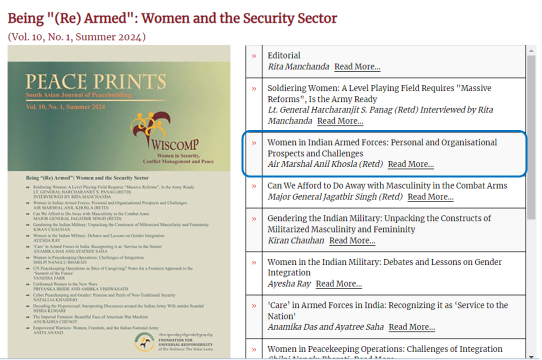
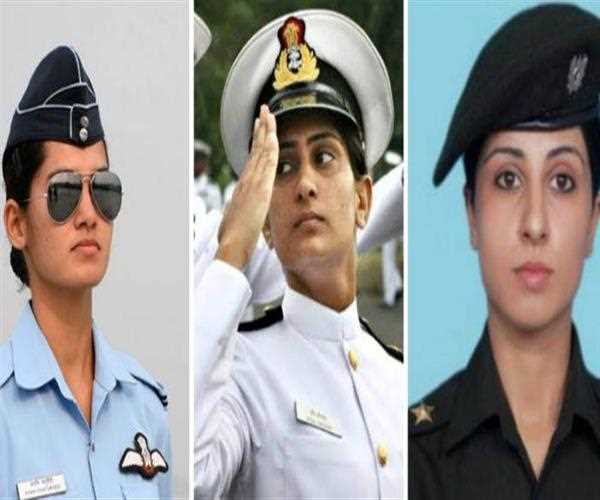
Traditionally, the Indian armed forces have also been predominantly male-dominated; however, the inclusion of women was inevitable with changes in societal norms and perceptions. The roles and opportunities for women have expanded over the years, with women now serving as pilots, engineers, and administrators, among others. Associating changes in military policies preceding or succeeding these decisions.
The history of women in the Indian defence services is a story of gradual progress and increasing participation from support services and roles to combat and command roles. The Indian Air Force, for instance, has implemented various initiatives to promote gender equality and equal opportunities for women. These include recruitment drives, training programs, and policy changes. IAF has been relatively more progressive than the three services in gender mainstreaming, with significant strides made in recent years towards achieving gender equality and providing equal opportunities for women in the workforce.
While including women in the armed forces brings several benefits, specific challenges and barriers still exist. These include aspects related to cultural and societal norms, such as traditional gender roles and expectations, which can hinder women’s acceptance and integration into the armed forces. Career opportunities and progression, physical and psychological suitability for combat roles and leadership positions, gender integration, gender equality, gender bias, and gender discrimination are some of the critical challenges. The Indian Air Force, like other branches, has been working to address these issues, but there is still work to be done. Harassment prevention, redressal mechanisms, judicial recourse, physical and mental fitness norms, etc., need to be reviewed periodically for mid-course corrections.
“You have to decide your life’s priorities, and then you have to live them.”
– Oliver Blatt
Rule: If it doesn’t matter in five Years/months/weeks, don’t spend more than five hours/minutes/seconds on it.
Trivial vis-à-vis Enriching. Our lives are finite, and our time on this earth is precious. In our consumer-driven, fast-paced lives, we often find ourselves caught up in a whirlwind of worries, desires, and countless material possessions. However, these concerns fade into insignificance after pausing and reflecting on what truly matters. One should focus on what truly enriches our lives rather than obsessing over trivial matters without lasting significance.
Misnomer. Material possessions are transient and cannot be taken with us. Accumulating them often leads to more stress and less happiness, so measuring success or happiness with material possessions is misleading.
“The best things in life aren’t things.”
– Art Buchwald
What Truly Matters. Personal growth and memories are more valuable than objects. The experiences we gain and the relationships we build are the true treasures of life. Emotional bonds with family and friends outlast material things. Making a positive impact on society and the lives of others is enduring and fulfilling.
Hakuna Matata. “No trouble”, “no worries”, and “take it easy”. Let go of anxieties about things that won’t matter in the long term. Live in the present moment and avoid placing too much importance on material wealth. This will bring a sense of relief and peace to your life.
Focus on.
Seek wisdom. Look at life, events, and responses from a broader perspective.
Align your actions with your actual values and life goals. This will give you a sense of direction and control over your life, empowering you to make decisions that are in line with your true self.
Prioritise and live in the present.
Accept things for what they are. Every negative emotion is self-created, caused by our resistance to reality.
Let go of material desires and embrace a minimalist lifestyle.
Invest in relationships and spend time nurturing connections.
Practice gratitude and be thankful for what you have rather than longing for more.
Seek fulfilment by engaging in activities that bring joy and meaning to your life.
Take care of your mental and physical well-being.
Follow the five-by-five rule, liberate yourself from needless worry and live a more purposeful, fulfilling life. Ask yourself if what you’re worried about will matter in five years. If the answer is yes, carry on. But if the answer is no, give yourself five minutes to fret, then move on.
Information and data included in the blog are for educational & non-commercial purposes only and have been carefully adapted, excerpted, or edited from reliable and accurate sources. All copyrighted material belongs to respective owners and is provided only for broader dissemination.
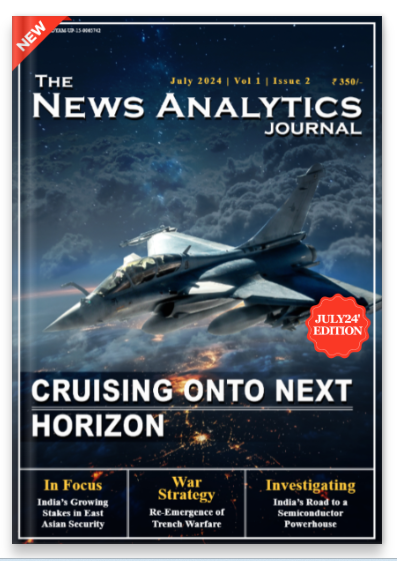
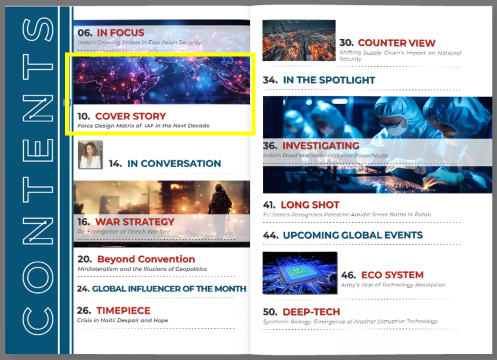
My Article published in the News Analytics Journal Jul 2024.
India faces two nuclear-powered inimical neighbours. China is emerging as a major regional power with the aspiration to be a global power, and her desire to dominate Asia and, finally, the world has implications for India. India’s relations with China have changed from cooperative to competitive to combative. China sees India as a competitor and would like to keep India off-balance. On the other hand, Pakistan remains a security threat and continues to use non-state actors to maintain a situation of unrest. Asymmetric warfare will remain an instrument of its state policy. These two countries have a close and longstanding strategic partnership that includes cooperation even in areas of defence and security. Pakistan openly boasts of collusive support from China in case of a war with India. Due to its unique geographical location and geopolitical environment, India faces a collusive threat with significant chances of military conflict. Therefore, her national interest dictates that the country be able to deter her inimical neighbours from any military misadventure, either singly or collusively.
China’s warfare strategy focuses on developing a modern and capable force to support its national security interests and regional/global ambitions. The Chinese forces are undergoing significant modernisation and expansion at a rapid pace, with particular emphasis on developing advanced technologies and capabilities. China’s investment and progress in space-based systems, quantum technology, unmanned platforms, hypersonic weapons, directed energy weapons, etc., will give it surveillance and precision strike capability with lightning speeds.
India’s military aspirations must align with its socioeconomic condition and likely threats. The path forward for India is clear: it must enhance its deterrence capability while investing in future war-fighting technologies. With its significant offensive potential and responsiveness, air power is the most crucial arm of military action. The Indian Air Force (IAF), like air power in the last century, has evolved to reflect changes in technology, doctrine, and strategic priorities. However, it must continuously adapt to the existing and changing environment to build focused capabilities. The IAF will have to create deterrence and be able to dominate the air. The IAF must remain adaptive and agile to win wars in a network-centric battlefield with conflicts varying across the complete threat spectrum. Identifying focus areas and developing assets, platforms, facilitators, and infrastructure is essential. While several issues are vital requirements, the main pillars are trained manpower, combat leadership, combat sustenance resources, and sound strategy. The IAF must focus on capability building and adopt a multidisciplinary and integrated war-fighting approach.
The IAF should expand its investments in advanced munitions, combat support aircraft, electronic warfare, and physical infrastructure. Boosting the IAF’s fighter force strength should be a top priority, maintaining a balance between quantity and quality. An adequate number of combat support platforms should follow. Air Defence has evolved from point defence to offensive defence, with the spectrum expanding to cater for sub-conventional threats to long-range hypersonic weapons. Appropriate weapons, systems, and networks need to be added. The weapon list should provide various options, including high-tech, long-range smart weapon systems with increased accuracy and assurance. Air combat support and protective infrastructure are essential. The IAF’s networking capability has evolved well and is applied to air defence, air ops planning, maintenance, and logistics functions. However, there is still room for further progress and integration of new inductions.
The Indian Air Force, as a technology-intensive service, must continuously incorporate modern, cutting-edge equipment and technology. Technology’s profound influence on air strategy is a significant driver of innovation and evolution. Investing in emerging technologies is necessary and exciting, opening up new possibilities. Future technologies impacting the air war, such as Quantum computing, Hypersonic weapon systems, Artificial Intelligence, Robotics, Nanotechnology, Unmanned platforms, Drones and swarm technology, and Network-centric environment / Internet of things/system of systems, are on the horizon. Impetus is also required for some of the existing aviation-related programs like fifth-generation fighters, Transport aircraft (for civil and military requirements), Development of gas turbines and engines, sensors and seekers, stealth, metallurgy and composites, unmanned platforms and swarms, AI-enabled autonomous systems and long-range vectors.
A strategic focus is required for a medium-term and long-term technology plan supported by adequate budget allocation. A suitable ecosystem needs to be developed to harness these dual-use technologies. IAF must define a defence science and technology strategy with a vision to harness technology and convert it into decisive capability. The following focus areas are advocated, with a particular emphasis on Indigenous defence production capability:-
Situational Awareness & Decision Making. One effect of advanced technology on air warfare is the increased pace and intensity of air operations. In such a scenario, the decision-making process must quickly keep up with the OODA cycle. The three most important contributing factors are high situational awareness, a robust and fast network system for information sharing, and AI-based decision-support systems.
Space-Based Capabilities. The term airpower has changed to aerospace power, with the aerial warfare envelope expanding to the space domain. Space-based systems and applications are embedded in every aspect of aerial warfare. The involvement of space-based equipment and systems is even more significant in Grey zone warfare. Space-based systems are becoming increasingly crucial in air warfare, providing capabilities such as navigation, targeting, communication, early warning of missile launches and space-based surveillance. The integration of these systems with air assets is expected to continue, providing new opportunities for crucial offensive and defensive operations.
Hypersonic Weapons. The development of hypersonic weapons is likely to impact air strategy significantly. Hypersonic weapons provide new opportunities for rapid response and long-range strike capabilities with precision. They also pose new challenges in terms of protection and air defence. The high speed and unpredictability of hypersonic weapons will require the development of new air defence strategies, as traditional air defence systems may be unable to detect or intercept these weapons. This could lead to the development of new technologies, such as directed energy weapons or advanced sensors, to counter the threat posed by hypersonic weapons. Also, protective infrastructure would be required to withstand these weapons’ destructive power.
Unmanned Platforms. The use of unmanned platforms and systems is growing in warfare. This shift is expected to continue as technology advances and the capabilities of unmanned systems improve further. Drones of various sizes and capabilities are taking over the tasks of conventional platforms. Their use is spread across the entire spectrum of threats, ranging from sub-conventional and conventional to long-range attacks. Investment in anti-drone systems is also a need of the hour.
Sixth Generation Aircraft. Sixth-generation aircraft are still in the development phase; however, based on current trends in air technology, sixth-generation aircraft will likely have several key features that will shape air strategy in the future. They are likely to have increased automation with advanced AI and machine learning algorithms that will enable autonomous decision-making and allow them to adapt to changing situations quickly. They would also have enhanced stealth capabilities, making them virtually invisible to radar and other detection systems. Integrated sensor systems in these aircraft will provide comprehensive situational awareness and the ability to engage targets with great precision. Sixth-generation aircraft are expected to significantly impact air strategy in the future, with their advanced capabilities enabling air forces to operate with greater autonomy and strike enemy targets with unprecedented precision and speed. However, as with any new technology, challenges may be associated with introducing sixth-generation aircraft, including developing new tactics, training programs, and support infrastructure to realise their full potential.
Loyal Wing Man Concept. Both piloted and unmanned platforms have their respective advantages and disadvantages. The thought process for the next generation of platforms is to harness the benefits of both and develop networked systems wherein both can work in an integrated manner. Research is being done in many countries on the “loyal wingman” concept.
Indian Air Force has always encouraged the development of indigenous defence production capability, and it is one of its key result areas. It has played an essential role in creating an aerospace ecosystem in India and has been operating indigenously built aircraft and aircraft built in India under licence production. This has given impetus to indigenous industry in the past and will continue to support it in future. The critical thing to remember is that while supporting self-reliance, the minimum level of deterrence capability must always be maintained.
Perceived threats and challenges to national security, calling for immediate and substantial measures to enhance IAF’s war-fighting capacity and capability. Capability building entails a long gestation period. The IAF should continue prioritising modernisation efforts, including acquiring advanced aircraft, weapons systems, and sensors. This will enable the IAF to maintain a technological edge over potential adversaries and respond effectively to emerging threats. The IAF should concentrate on new areas of capability development, such as unmanned aerial vehicles (UAVs), cyber warfare, and space-based systems. These capabilities will enhance its ability to conduct various operations, from intelligence gathering to precision strikes. Operational preparedness includes reviewing doctrines, strategy and tactics, organisational structures, human resource adaptation, training, and maintenance and logistics concepts.
IAF must think differently to tackle various asymmetric and non-traditional security threats. This would require more innovative, out-of-the-box solutions that leverage the prevalent technology. Overall, the IAF should strive to balance traditional air power capabilities and emerging areas of strategic importance. This will enable the IAF to defend India’s air space and national security interests while contributing to the broader role of nation-building, regional stability and humanitarian assistance.
Air Marshal Anil Chopra (Retd), “Air Power Transformational Challenges India”, Air Power Asia.
Basic Doctrines of the Indian Air Force 1995, 2012 and 2022.
Ashley J Tellis, “Troubles They Come In Battalion”, Carnegie Endowment for International Peace, 2016.
Air Mshl Anil Chopra (Retd), “IAF modernisation challenges ahead”, South Asia defence and strategic review.
Vivek Kapur, “IAF Equipment & Force Structure Requirements to Meet External Threats, 2032”, MPIDSA, 2014.
“Interview with CAS and articles in IAF”, IAF anniversary issue of Chanakya Aerospace, defence and maritime review, 2018.
Gp Capt AK Sachdeva(Retd), “Rebuilding the IAF fighter fleet”, SP’s Aviation issue 2, 2019.
Sanjay Badri-Maharaj, “Indian Air Force at 86: options and challenges”, Vayu V/2018.
Gp Capt J Noronha (Retd), “Strength lies in numbers: Rebuilding the combat fleet of IAF”, Indian Defence Review Oct-Dec 18.
Air Marshal Dhiraj Kukreja, “IAF 2020 and beyond”, Indian Defence Review, Jan – Mar 17.
Disclaimer:
Information and data included in the blog are for educational & non-commercial purposes only and have been carefully adapted, excerpted, or edited from reliable and accurate sources. All copyrighted material belongs to respective owners and is provided only for wider dissemination.