Information and data included in the blog are for educational & non-commercial purposes only and have been carefully adapted, excerpted, or edited from reliable and accurate sources. All copyrighted material belongs to the respective owners and is provided only for broader dissemination.
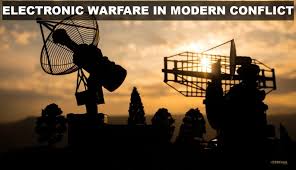
Electronic warfare (EW) encompasses all strategies and technologies used to exploit the electromagnetic spectrum, including radio waves, microwaves, infrared, visible light, ultraviolet light and X-rays. The spectrum is an integral part of various military operations and serves as the backbone for communication, navigation and targeting.
Contemporary combat isn’t just about deploying and using weapons; it is also about disrupting communications, radars, and navigation systems. EW works quietly in the background, manipulating the invisible waves that are essential to modern warfare. It represents the clash of invisible forces that can determine the outcome of conflicts.
EW tactics have evolved from niche techniques to core elements of military strategy. Their significance has increased alongside technological advancements and the growing availability of affordable tools, making engagement in spectrum warfare more feasible. EW has rapidly emerged as a crucial yet often underestimated element of contemporary warfare. This shift has led militaries to rethink their electronic strategies.
Electronic Warfare
Electronic warfare aims to deny the enemy the use of the Electronic spectrum, while ensuring that friendly forces can operate freely within it. EW includes proactive actions, such as jamming, deceiving, and electromagnetic attacks. It also includes protective measures, such as electronic shielding and countermeasures. EW can be carried out from the air, land, sea, or space, using both manned and unmanned systems. EW is built on three main pillars.
Electronic Attack (EA – Electronic Attack) or Electronic Counter Measures (ECM – Electronic Counter Measures). Electronic attack techniques seek to disrupt, deceive, or destroy the enemy’s electronic systems. For instance, high-power microwave systems can render electronics inoperable from a distance, effectively disabling drones or missiles. Electronic Jamming is done by emitting radio frequency signals to saturate enemy receivers and hinder or prevent their ability to receive or transmit information. Spoofing is sending false signals to the enemy to confuse or deceive their electronic systems.
Electronic Protection (EP – Electronic Protection) or Electronic Counter Measures (ECCM – Electronic Counter Measures). EP/ECCM is actions taken to protect personnel, facilities, equipment or weapon systems from any effect of own or enemy use of the electromagnetic spectrum. EP utilises techniques like encryption, frequency hopping, or anti-jamming technologies. Modern EP utilises adaptive algorithms that automatically adjust frequencies to minimise interference.
Electronic Support (ES) or Electronic Support Measures (ESM). ESM is Actions taken to search for, intercept, identify and locate sources of intentional or unintentional electromagnetic energy. This pillar often feeds into broader intelligence operations, enabling predictive strikes. The primary technique is Signals Intelligence (SIGINT), a form of information gathering that involves intercepting signals.
Terrestrial and airborne EW. EW capabilities are traditionally categorised into two distinct categories: terrestrial and airborne. Each has its respective advantages and disadvantages, making it imperative for militaries to use both. Ground EW capabilities were traditionally used to intercept and jam enemy radio and radar signals. Terrestrial EW sensors and jammers have their limitations. Variance in the terrain in which they operate hinders their effects. Airborne EW is primarily employed to intercept, decrypt, and disrupt communications, radars, and other command and control (C2) systems over huge areas. However, these capabilities are limited by aircraft endurance. Modern-day military operations also rely on satellite-based EW capabilities, including for broad area surveillance and early-warning, communications, and C2.
Effects. On a tactical level, EW can degrade the enemy’s situational awareness by disrupting their communications. Deception techniques, such as inserting false data into sensors or communications systems, can mislead enemy forces. Attacks against airborne, ground-based, and space-based enemy sensors can blind air defences, delay decision cycles, creating windows for kinetic strikes. The integration of AI has made these operations quicker and more accurate, affecting the decision-making cycle.
EW in Recent Conflicts
Strategic Doctrines of Major Powers. EW doctrines adopted by global powers vary due to their differing goals and priorities. NATO focuses on integrated and interoperable EW systems due to its philosophy of collective security. Chinese doctrine advocates achieving information dominance by leveraging EW in a networked environment. Russia employs an EW strategy of strategic flexibility by integrating EW with hybrid warfare. These divergent methods used by the global powers highlight EW’s role as a force multiplier tailored to their respective geopolitical contexts.
Nagorno-Karabakh War. The Nagorno-Karabakh conflict highlighted the critical role of EW in modern warfare. Azerbaijan tried to overwhelm the Armenian defences with precision strikes using the Turkish Bayraktar TB2 drones. Armenia countered them with the Russian Polye-21 EW systems. These systems disrupted the Azerbaijani drone signals and command and control (C2) for several days. However, drone swarms ultimately were able to saturate the defences. The conflict exposed the EW’s vulnerability to massed aerial attacks and highlighted the need for integrated EW counter-drone systems.
Syrian Civil War. Syria has been pronounced as the “most aggressive EW environment on Earth.” Russian forces jammed the U.S. and NATO communications, disrupting their operations. In 2020, Turkey’s Koral EW system neutralised Syrian air defences, blinding their radars and enabling drone incursions. Pro-government “electronic armies” employed cyber-EW hybrids to target opposition networks. The conflict highlighted EW’s dual-use in hybrid warfare.
Russia-Ukraine War. The Russia-Ukraine War represents EW’s maturation in peer-level conflict. Russia positioned extensive EW systems, including jammers and aerial decoys, to disrupt Ukrainian and NATO surveillance radars. Ukraine captured a few of these assets for allied analysis and development of appropriate countermeasures. Reportedly, Russian EW systems have caused significant Ukrainian drone losses, primarily through GPS scrambling and radio-control link jamming. Meanwhile, Ukraine’s targeting of Russian EW assets has been a priority to enable counteroffensives. Both sides have been adapting dynamically.
These wars demonstrate EW’s potential to break the asymmetry, where superior Electronic spectrum control increases the effectiveness of kinetic strikes. Future forces must prioritise resilient, AI-augmented EW systems to dominate this invisible battlefield.
Future Trajectory
Trends. Three trends have amplified EW’s importance. First, systems (military and civilian) are far more networked. Precision-guided munitions, networked sensors, and satellite-enabled navigation make modern systems efficient but also vulnerable. Second, the commercial space and telecom sectors have proliferated capabilities, including small satellites and broadband networks, creating numerous new targets and vectors for disruption. Third, inexpensive technologies (software-defined radios, low-cost drones, and portable jammers) lower the cost of mounting effective EW attacks, allowing smaller actors to impose outsized effects.
AI and Automation. AI-driven EW systems can rapidly detect, analyse, and jam signals, reducing response times. Machine learning is also used to predict and counter enemy EW tactics. The AI integration is propelling the EW market growth amid geopolitical tensions.
Miniaturisation. Smaller, less expensive EW systems, such as those on drones, enable even non-state actors to disrupt advanced militaries.
Cyber-EW Convergence. EW increasingly overlaps with cyber warfare, targeting networked systems. For example, hacking into radar systems can complement traditional jamming.
Space as a Battleground. Satellites, critical for communication and navigation, are vulnerable to EW attacks like signal jamming or spoofing. China and Russia have demonstrated anti-satellite EW capabilities.
Resilience Needs. Militaries are investing in spectrum-agile systems, low-probability-of-intercept communications, and redundant networks to counter EW threats. Trends include dual-use technologies and cybersecurity enhancements.
Future Outlook. Military forces will face a myriad of challenges in the area of electronic warfare as the underlying technologies continue to advance quickly. Emerging challenges, such as spectrum congestion, the threat of cyber intrusions, and the development of countermeasures, will introduce new challenges. Advances in quantum, photonic, and space-based technologies will drive the growth of EW. Quantum computing will enable precise navigation without reliance on GPS, while implementations of post-quantum cryptography will secure communications against future threats. By 2030, we anticipate that quantum technology will disrupt EW with unbreakable encryption and more realistic battlefield simulations. We will see notable effects of AI, machine learning, offensive cyber capabilities, and directed energy weapons on the EW systems.
Conclusion
Emerging technologies are really shaping the development of EW strategies. The impact of electromagnetic denial or deception is expected to grow stronger as battlefield systems become increasingly automated and equipped with advanced sensors. Militaries need to enhance their resilience and adaptability in the realm of electronic warfare. Investing in AI, quantum technologies, and integrating across different domains—like combining EW with cyber and kinetic operations—will be key to success in the future. Training and doctrines will also need to evolve, making the invisible just as important as the visible. Moving forward, it will take technical solutions, creative operational ideas, and teamwork across military, industry, and civil sectors to stay effective and safe.
Recent conflicts have underscored the importance of investing in electronic warfare (EW) and spectrum management strategies, which are just as vital as traditional firepower in achieving battlefield success. As new technologies like quantum computing and AI become more common in warfare, embracing innovative EW techniques has become more important than ever, helping us stay ahead and be prepared.
Please Add Value to the write-up with your views on the subject.
For regular updates, please register your email here:-
Information and data included in the blog are for educational & non-commercial purposes only and have been carefully adapted, excerpted, or edited from reliable and accurate sources. All copyrighted material belongs to respective owners and is provided only for wider dissemination.
References:-
John R. Hoehn, Defence Primer: Electronic Warfare, Congressional Research Service, 2022.
Sydney J. Freedberg Jr, When Facing Electronic Warfare in Ukraine, Small Drones Quantity Is a Quality, Breaking Defence, 2023.
Russia’s jamming of US-supplied rocket systems complicates the war effort in Ukraine, Alex Marquardt, Natasha Bertrand, and Zachary Cohen, Ukraine, CNN, May 6, 2023.
Bennett, A. The Role of Electronic Warfare in Modern Military Operations, Military Review, 2021.
Drew, K. Adapting to the Invisible Battlefield: The Evolution of Electronic Warfare, Journal of Military Strategy, 2020.
Friedman, N, The Chessboard of Electronic warfare: Strategies and Capabilities. U.S. Naval Institute Press, 2022.
Burgener, M, Electronic Warfare in the Age of Drones: Nagorno-Karabakh in Retrospect. The International Journal of Drone Policy, 2021.
Gottfried, G. The Electronic Battlefield of the Syrian Civil War: A new wave of War? Middle East Journal of International Affairs, 2020.
Hollis, A., The Resurgence of Electronic Warfare in the Modern Conflict. Military Review, (2021).
Johnson, L, The Development of Electronic Warfare Strategy in modern conflicts. Armed Forces & Society, 2023.
Shari, S, Turning the Tide: The Role of Electronic Warfare in the Russia-Ukraine War. Eurasian Security Studies, 2023.
Article published in the Issue 9 – 2025 e-magazine of the
SP’s Aviation
Combat helicopters have become vital assets in modern warfare, revolutionising military operations with their versatility, agility, and firepower. They provide critical capability across a wide range of combat scenarios. Their ability to hover, manoeuvre in complex terrains, and operate at low altitudes allows them to engage targets with unmatched precision, often in environments inaccessible to fixed-wing aircraft. Combat helicopters enhance battlefield dominance, while their real-time intelligence-gathering capabilities bolster situational awareness. In asymmetric warfare, they counter insurgent threats by delivering swift, targeted strikes. However, vulnerabilities to advanced anti-aircraft systems pose a challenge. As militaries integrate unmanned systems and network-centric warfare, combat helicopters continue to evolve, incorporating cutting-edge technologies to maintain their strategic relevance. Their adaptability and lethality ensure they remain a cornerstone of modern military doctrine, shaping the dynamics of contemporary battlefields.
Main Roles of Combat Helicopters
Helicopters have revolutionised modern warfare, offering unparalleled mobility, versatility, and firepower. Their adaptability allows them to serve in various roles, ensuring operational success in dynamic combat environments. In combat, attack helicopters have redefined battlefield tactics. Their agility and firepower make them indispensable for suppressing threats. Modern technological advancements have further enhanced the capabilities of combat helicopters. Night vision systems, stealth features, and advanced avionics allow them to operate effectively in diverse conditions, from deserts to dense urban landscapes. Their roles include:-
Suppression / Destruction of Enemy Air Defences (SEAD/DEAD). Neutralising enemy radar and surface-to-air missile sites with precision weapons to create safe corridors.
Air Interdiction. Disrupting enemy logistics, troop movements, and supply lines by striking behind enemy lines.
Escort Operations. Shielding utility helicopters during assault or insertion missions, suppressing enemy air defences and ground fire.
Counter-Insurgency & Counter-Terrorism. Executing precision strikes in mountainous and jungle terrains, supporting rapid insertion/extraction and surgical attacks against insurgents or terrorists.
Battlefield Air Support (CAS). Delivering direct firepower (rockets, cannons, guided missiles) to support ground troops in battle, targeting enemy infantry, bunkers, armoured vehicles, and fortifications.
Anti-Tank / Anti-Armour Operations. Attack helicopters equipped with anti-tank guided missiles (ATGMs) are crucial for countering enemy armour in high-intensity conflicts.
Combat Search and Rescue (CSAR). Extracting downed aircrew or trapped soldiers from hostile zones under fire, often providing covering fire with advanced sensor support.
High-Altitude Operations. Operate in low-oxygen environments at high altitudes, ensuring mobility and firepower in the toughest terrains.
Urban Warfare Support. Offering precision and agility for fire support, hard-target destruction, and support to fast-moving urban operations in close quarters.
Difference between Attack and Armed Helicopters
These two terms are often used interchangeably, but they refer to distinct categories based on design, purpose, and combat capabilities. Attack helicopters are specialised platforms built for offensive combat, whereas armed helicopters are modified utility helicopters equipped with weapons for secondary combat roles. Understanding their differences is key to appreciating their roles.
Attack Helicopters. These aircraft are purpose-built for combat, designed to engage targets on the ground and in the air. These helicopters are equipped with heavy armaments, including the 30mm/20mm guns, rockets and (Hellfire/Helina) missiles. Equipped with advanced avionics, including radar, FLIR, and night-vision systems, they excel in high-threat environments. Attack helicopters prioritise firepower and armour over utility, typically featuring a two-crew configuration (pilot and gunner) and lacking troop-carrying capacity, making them expensive and maintenance-intensive yet highly effective in combat roles.
Armed Helicopters. These are modified utility helicopters adapted for combat while retaining multi-role capabilities. Unlike attack helicopters, armed helicopters have lighter armour and simpler avionics, relying on agility rather than heavy countermeasures. Their cost-effectiveness and flexibility enable the air forces to deploy them in diverse roles; however, they are less suited for high-intensity combat compared to dedicated attack platforms.
The Indian Air Force (IAF) employs both attack and armed helicopters to fulfil diverse operational needs, from precision strikes to multi-role support.
Survivability and Viability of Combat Helicopters in Contested Airspace
Combat helicopters remain essential in modern warfare; however, their survivability and viability in contested airspace are getting increasingly challenged due to the proliferation of advanced air defences (MANPADS and SAMs). The Russia-Ukraine War highlights these vulnerabilities. Their vulnerability lies in operations at low altitudes and speeds. MANPADS account for significant losses, which are compounded by GPS jamming and small arms fire in urban or mountainous terrain.
Countermeasures to enhance survivability include infrared suppressors, laser-based systems such as Northrop Grumman’s CIRCM, and armoured fuselages. Stealth features, such as radar-absorbent materials, enhance evasion but add weight and complexity to the design. Manned-Unmanned Teaming (MUM-T) with drones for reconnaissance and strikes reduces exposure, while AI-driven sensor fusion improves threat detection.
Tactically, helicopters require a favourable environment with Suppression of enemy air defence systems. Additionally, robust protection and air cover are necessary. Short-duration sorties, night operations, terrain masking and nape of the earth flying profile further mitigate risks; however, poor tactical discipline can prove fatal.
Ultimately, helicopters remain indispensable for specific missions but demand thorough planning, multi-layered defences, and joint force integration. Without radical innovation, their role might evolve from being the primary attackers to supporting roles in multi-domain operations. This change necessitates balancing their unique capabilities with the challenging and often dangerous realities of contested airspace.
Combat Helicopter in the IAF.
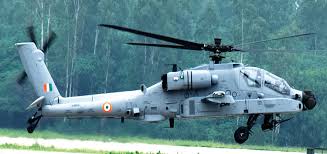
India’s fleet has evolved from legacy Soviet Mi-24/35 Hind helicopters to modern systems, including the Boeing AH-64E Apache and indigenous helicopters such as the HAL Light Combat Helicopter (LCH) Prachand and Rudra. While Apache, Prachand, and Hind fall into the attack helicopter category, Rudra and Mi-17 are armed helicopters.
AH-64E Apache. Cutting-edge imported attack helicopters, with advanced sensors, Hellfire missiles, Stinger AAM, and 360° radar, used in offensive strike, BAS, anti-armour, escort, and SEAD roles.
HAL LCH (Prachand). Indigenous aircraft with stealth features, good high-altitude performance, networked avionics, and advanced survivability. Used in Anti-armour, SEAD, CSAR, SHBO escort, and Anti-Armour roles.
Mi-24/Mi-35. Russian heavily armoured gunship, a legacy system with diminishing use and soon to be phased out, used for troop lift, heavy attack, BAS, and COIN.
HAL Rudra. Weaponised ALH Dhruvs with Integrated EW, EO sensors, Mistral AAM, Helina ATGM, used for multirole missions like recce, troop transport, anti-tank, BAS, COIN, and escort
Mi-17. A versatile Russian-origin helicopter, primarily for transport but occasionally armed for combat roles. The Mi-17V-5 variant can be equipped with rocket pods, machine guns, and anti-tank missiles for light attack missions. Used in counterinsurgency operations and disaster relief, these helicopters support troop transport and casualty evacuation, while also providing fire support.
Force Structuring and Capability Enhancement
Combat helicopters are pivotal to flexible air combat across diverse terrains, from deserts to the mountains. The Indian Air Force inducted 22 Boeing AH-64E Apache attack helicopters in 2019 to replace its ageing fleet of 15 Mi-24/Mi-35 gunships, acquired from Russia in the 1980s and 1990s. The Apache’s induction enhanced precision strikes and night-fighting capabilities, modernising India’s aerial combat effectiveness.
In the Indian context, combat helicopters play a critical role in high-altitude operations, particularly in the Himalayan regions along the borders with China and Pakistan. Operating at altitudes above 15,000 feet, such as in Ladakh or Arunachal Pradesh, presents unique challenges due to the thin air, extreme weather conditions, and rugged terrain. The Light Combat Helicopter (LCH) Prachand was developed in response to lessons learnt from the 1999 Kargil War. It is uniquely capable of operating at 20,000 feet with a full weapon load, making it critical for high-altitude warfare in regions such as Siachen and Ladakh. These helicopters remain vital for deterrence, rapid response, and maintaining operational superiority in India’s high-altitude battlefields. They are being inducted by both the Indian Air Force and the Indian Army.
The Indian Multi-Role Helicopter (IMRH), a 12.5-tonne twin-engine platform being developed by Hindustan Aeronautics Limited (HAL), is conceived as a versatile replacement for the ageing Mi-17 fleet. The IMRH reportedly would excel in high-altitude operations, troop transport for up to 24 personnel, combat search and rescue, evacuation, and under-slung cargo carriage of 5 tonnes. Its advanced avionics, automatic flight controls, and modular mission systems would enable seamless adaptation to utility, armed, and Special Forces roles, enhancing the IAF’s tactical battlefield operational capability.
The development and induction of ALH Rudra, LCH Prachand, and IMRH in the future indicates a push towards indigenisation, aiming for self-reliance, addressing challenges in scaling production, and reducing import dependency. All these platforms also enhance the high-altitude operation capability.
Future Trajectory of Combat Helicopters
The future of combat helicopters in fast-evolving aerial warfare hinges on their ability to adapt to rapidly advancing technologies, shifting battlefield dynamics, and emerging threats. As militaries worldwide integrate artificial intelligence (AI), unmanned systems, and network-centric warfare, combat helicopters and future platforms must evolve to remain relevant. Their traditional strengths, versatility, precision, and manoeuvrability in complex terrains will be augmented by cutting-edge innovations to counter increasingly sophisticated adversaries.
One significant trend is the integration of AI and autonomy. Future combat helicopters may operate in tandem with unmanned aerial vehicles (UAVs) through manned-unmanned teaming (MUM-T). This would allow helicopters to control drones for reconnaissance, targeting, or electronic warfare, reducing risks to human pilots. AI-driven systems will enhance situational awareness by processing vast amounts of sensor data in real-time, enabling faster decision-making in dynamic combat zones. For instance, advanced targeting systems could autonomously identify and prioritise threats, improving response times.
Another critical evolution is in stealth and survivability. Modern air defences, including surface-to-air missiles (SAMs) and directed-energy weapons, pose significant threats. To counter these, next-generation helicopters would have to incorporate low-observable designs, advanced electronic countermeasures, and adaptive camouflage. Upgraded propulsion systems, such as hybrid-electric engines, promise greater speed, range, and fuel efficiency, enabling operations in contested environments. Additionally, modular designs will allow rapid upgrades of avionics, weapons, and sensors, keeping pace with technological advancements without requiring entirely new platforms.
Cyber and communication security will also play a pivotal role. As helicopters become nodes in networked battlefields, protecting their systems from cyber-attacks is paramount. Robust encryption and resilient communication links will ensure operational integrity.
Conclusion
Combat helicopters remain crucial in modern warfare, offering exceptional versatility, accuracy, and mobility to control various battle zones. They perform critical functions such as delivering precise strikes, deploying troops quickly, and supporting reconnaissance, air interdiction, and counterinsurgency missions. Although they face threats from advanced air defences, innovations such as AI, stealth, and Manned-Unmanned Teaming (MUM-T) enhance their survivability and performance. In India, platforms such as the Apache, ALH Rudra, LCH Prachand, and the emerging IMRH highlight a move toward indigenisation and high-altitude capability. As warfare advances, combat helicopters will incorporate state-of-the-art technologies to maintain their importance in multi-domain operations.
Please Add Value to the write-up with your views on the subject.
For regular updates, please register your email here:-
Information and data included in the blog are for educational & non-commercial purposes only and have been carefully adapted, excerpted, or edited from reliable and accurate sources. All copyrighted material belongs to respective owners and is provided only for wider dissemination.
References:-
Bolkcom, C. (2005). Combat helicopters: Roles and capabilities in modern warfare. Congressional Research Service.
Jane’s Information Group. (2023). Jane’s All the World’s Aircraft: Development & production. IHS Markit.
Singh, R. (2021). Indian Air Force modernisation: The role of indigenous combat helicopters. Journal of Defence Studies, 15(3), 45–67.
Smith, J. A., & Brown, T. R. (2022). Manned-unmanned teaming in aerial warfare: Emerging trends. Military Technology Review, 28(4), 112–130.
Northrop Grumman. (2022). Common Infrared Countermeasures (CIRCM): Next-generation helicopter survivability.
Yadav, A. (2020). HAL’s Light Combat Helicopter: India’s answer to high-altitude warfare. Air Power Journal, 15(2), 89–104.
Army Technology. (2023). Attack helicopters: Roles, technologies, and future developments. GlobalData Plc.