
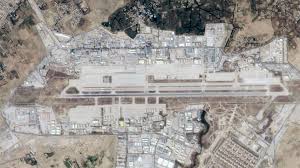
Bagram airbase is situated about 50 kilometers north of Kabul in Afghanistan’s Parwan Province. The fortified base has two runways and a vast support infrastructure. It has been a nerve center for every significant foreign military power to occupy the country since the Cold War. It was constructed in the 1950s and expanded significantly during the Soviet era. It became the main hub for Soviet military operations in Afghanistan during their 1979–1989 occupation.
Following the events of 9/11, the airfield was transformed into the centerpiece of the U.S.-led coalition’s operations in Afghanistan. At its peak, the facility featured runways capable of handling large transport and bomber aircraft, more than one hundred revetments, massive logistical and support infrastructures, and housed thousands of troops and aircraft. It was the launchpad for drone strikes, intelligence missions, and air support operations.
On 2 July 2021, after almost twenty years of continuous U.S. control of Bagram Airfield, the control was handed over to the Afghan authorities, marking a key moment in the coalition’s withdrawal from Afghanistan. Bagram became a symbol of the chaotic U.S. withdrawal from Afghanistan.
Four years later, the airbase has again attracted global attention. But this time, the debate isn’t about counterterrorism. It’s about geopolitical competition, regional sovereignty, and a changing balance of power in Asia.
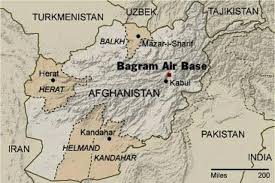
A Strategic Asset. Bagram’s strategic appeal is noticeable. Located less than an hour’s flight from China’s western Xinjiang province and within reach of Iran, Pakistan, and Central Asia, it offers unparalleled access to some of the most contested airspace in the world. The base has two runways capable of hosting heavy bombers and long-range reconnaissance aircraft, along with hardened hangars, and infrastructure enough to house thousands of personnel. For the United States, regaining access to such a facility could restore a foothold in Central Asia. The region is now dominated by Chinese and Russian influence. For the Taliban, retaining control over it is both a matter of pride and sovereignty. For neighbouring countries, Bagram represents a potential spark that could reignite competition and instability.
Bagram’s Symbolic Power. Besides military significance, Bagram airbase has become a symbolic battlefield in the narrative wars. For the Taliban, it is a monument to victory. It symbolises foreign retreat and the restoration of national control. Military parades featuring captured U.S. hardware have been staged there annually since 2022, turning the base into both a propaganda tool and a training hub. For Western observers, Bagram remains a haunting reminder of how two decades of war ended with little enduring infrastructure or political legacy.
Renewed US Interest. In September 2025, former U.S. President Donald Trump reignited the debate over Bagram by declaring that the U.S. is “trying to get it back.” Trump, while speaking at a joint press conference (with UK Prime Minister Keir Starmer), contended that the vital airbase was “given up for nothing”. His subsequent post on his social media escalated the rhetoric. He claimed that the base needs to be reclaimed. Otherwise, the “enemies of freedom” would consolidate power across the region. The Taliban called these comments delusional. Afghanistan spokesperson Zabihullah Mujahid stated that Bagram belongs to Afghanistan and not a meter of our land will return to foreign occupation.” However, the US president’s statement rekindled speculation about Washington’s interest in regaining influence in Afghanistan. Analysts feel that any U.S. attempt to retake the base would be an undertaking politically and strategically implausible in the current climate.
The Regional Chessboard. Bagram’s fate is not just a bilateral issue between Washington and Kabul. It sits at the intersection of larger geopolitical currents.
-
- China views any U.S. return as a potential surveillance threat to its Belt and Road investments and its sensitive Xinjiang region.
- Russia, seeking to expand its influence across Central Asia, has made clear that it will not tolerate new Western military outposts in the region.
- Iran shares similar concerns and has strengthened its ties with the Taliban, providing limited economic and diplomatic backing.
- Pakistan is caught between its complex relationship with the Taliban and with Washington.
- For India, interest in the airbase is governed by factors such as location & connectivity, regional competition, and Afghanistan’s sovereignty & stability.
Regional Powers Push Back. The strongest rebuke came from Afghanistan’s neighbours. On October 7–8, 2025 (at the 7th Moscow Format Consultations on Afghanistan), Russia, China, Iran, India, Pakistan, and the Central Asian republics issued a joint declaration. They collectively rejected the idea of any foreign military presence on Afghan soil. The statement was obviously directed at Trump’s remarks and potential U.S. ambitions. The declaration reflected a fear about upsetting the stability in Afghanistan. Moscow and Beijing view any American return as a strategic encroachment. Islamabad is concerned about the growing influence of domestic insurgents. India publicly supported Afghanistan’s sovereignty and rejected the idea of foreign bases. Indian officials emphasised the need for “regional solutions” over external interventions.
Disinformation Drive. Rumours of U.S. (even Indian) control of Bagram airbase are circulating online. A social media post purported that the Taliban had transferred limited control of Bagram to US Special Forces. The report was debunked by both Taliban and U.S. officials. Similar speculation suggested that India might be using the base. The Afghan Foreign Ministry dismissed the rumours as a disinformation campaign and reaffirmed that there is no foreign presence.
Firm Taliban Control. All official reports indicate that Bagram Airbase is firmly under Taliban control. No confirmed signs of U.S., Indian, or any other foreign presence have emerged. In official statements, Taliban leaders have pledged to maintain the base for Afghanistan’s defence forces and reject “any form of shared control.” This stance enjoys regional support, even among nations that remain wary of Taliban governance.
Spotlight Remains. The Bagram issue captures the Afghan post-war era dilemma. It is a clash between its sovereignty and strategic interest. The airbase has become a measuring stick for regional order. As of now, no U.S. re-involvement appears imminent. But the rhetoric surrounding Bagram indicates how Afghanistan continues to serve as both a symbol and a stage in the contest for influence between the world powers (Washington, Beijing, and Moscow). For Afghans, it also serves as a reminder that even during a supposed state of peace, the fight for control in Afghanistan is not yet over.
Please Add Value to the write-up with your views on the subject.
For regular updates, please register your email here:-
References and credits
To all the online sites and channels.
Pics Courtesy: Internet
Disclaimer:
Information and data included in the blog are for educational & non-commercial purposes only and have been carefully adapted, excerpted, or edited from reliable and accurate sources. All copyrighted material belongs to respective owners and is provided only for wider dissemination.
References:-
- Grau, Lester W, and Michael A, “The Soviet-Afghan War: How a Superpower Fought and Lost”, University Press of Kansas, 2002.
- Jones, Seth G, “In the Graveyard of Empires: America’s War in Afghanistan”, New York: W.W. Norton & Company, 2009.
- Department of Defence. “Bagram Airfield Infrastructure Overview”, Washington, DC: U.S. Government Printing Office, 2010.
- Gul, Imran, “The Fall of Bagram: Symbol of a Chaotic Exit”, Foreign Affairs, August 15, 2021.
- Wilder, Andrew, and Stuart Gordon, “Money Can’t Buy America Love: US Aid to Afghanistan and Its Unintended Consequences”, Afghanistan Analysts Network, 2021.
- Trump, Donald J, “Remarks on Afghanistan and Regional Security”, Joint Press Conference (with UK Prime Minister), Sep 2025.
- Cordesman, and Anthony H, “Reassessing US Options in Afghanistan: The Bagram Enigma”, Center for Strategic and International Studies (CSIS), Policy Brief, Oct 2025.
- Pant, Harsh V, “India’s Stake in Afghan Stability: Bagram as a Regional Litmus Test”, The Diplomat, Nov 2025.
- Moscow Format Consultations, “Joint Declaration on Afghanistan: Rejecting Foreign Military Presence”, Official Communiqué, Oct 2025.
- Fair, C Christine, “Pakistan’s Taliban Dilemma: Balancing Washington and Kabul Over Bagram”, Global Politics and Strategy 67, no. 5 (2025): 123–145.
- Afghan Ministry of Foreign Affairs, “Debunking Rumours of Foreign Control at Bagram Airfield”, Official Statement, Oct 2025.