
Article published in the Nov 25 issue of
“The News Analytics Journal”
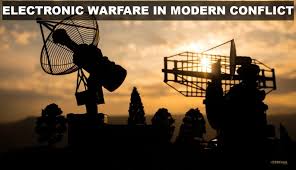
Electronic warfare (EW) encompasses all strategies and technologies used to exploit the electromagnetic spectrum, including radio waves, microwaves, infrared, visible light, ultraviolet light and X-rays. The spectrum is an integral part of various military operations and serves as the backbone for communication, navigation and targeting.
Contemporary combat isn’t just about deploying and using weapons; it is also about disrupting communications, radars, and navigation systems. EW works quietly in the background, manipulating the invisible waves that are essential to modern warfare. It represents the clash of invisible forces that can determine the outcome of conflicts.
EW tactics have evolved from niche techniques to core elements of military strategy. Their significance has increased alongside technological advancements and the growing availability of affordable tools, making engagement in spectrum warfare more feasible. EW has rapidly emerged as a crucial yet often underestimated element of contemporary warfare. This shift has led militaries to rethink their electronic strategies.
Electronic Warfare
Electronic warfare aims to deny the enemy the use of the Electronic spectrum, while ensuring that friendly forces can operate freely within it. EW includes proactive actions, such as jamming, deceiving, and electromagnetic attacks. It also includes protective measures, such as electronic shielding and countermeasures. EW can be carried out from the air, land, sea, or space, using both manned and unmanned systems. EW is built on three main pillars.
-
- Electronic Attack (EA – Electronic Attack) or Electronic Counter Measures (ECM – Electronic Counter Measures). Electronic attack techniques seek to disrupt, deceive, or destroy the enemy’s electronic systems. For instance, high-power microwave systems can render electronics inoperable from a distance, effectively disabling drones or missiles. Electronic Jamming is done by emitting radio frequency signals to saturate enemy receivers and hinder or prevent their ability to receive or transmit information. Spoofing is sending false signals to the enemy to confuse or deceive their electronic systems.
-
- Electronic Protection (EP – Electronic Protection) or Electronic Counter Measures (ECCM – Electronic Counter Measures). EP/ECCM is actions taken to protect personnel, facilities, equipment or weapon systems from any effect of own or enemy use of the electromagnetic spectrum. EP utilises techniques like encryption, frequency hopping, or anti-jamming technologies. Modern EP utilises adaptive algorithms that automatically adjust frequencies to minimise interference.
-
- Electronic Support (ES) or Electronic Support Measures (ESM). ESM is Actions taken to search for, intercept, identify and locate sources of intentional or unintentional electromagnetic energy. This pillar often feeds into broader intelligence operations, enabling predictive strikes. The primary technique is Signals Intelligence (SIGINT), a form of information gathering that involves intercepting signals.
Terrestrial and airborne EW. EW capabilities are traditionally categorised into two distinct categories: terrestrial and airborne. Each has its respective advantages and disadvantages, making it imperative for militaries to use both. Ground EW capabilities were traditionally used to intercept and jam enemy radio and radar signals. Terrestrial EW sensors and jammers have their limitations. Variance in the terrain in which they operate hinders their effects. Airborne EW is primarily employed to intercept, decrypt, and disrupt communications, radars, and other command and control (C2) systems over huge areas. However, these capabilities are limited by aircraft endurance. Modern-day military operations also rely on satellite-based EW capabilities, including for broad area surveillance and early-warning, communications, and C2.
Effects. On a tactical level, EW can degrade the enemy’s situational awareness by disrupting their communications. Deception techniques, such as inserting false data into sensors or communications systems, can mislead enemy forces. Attacks against airborne, ground-based, and space-based enemy sensors can blind air defences, delay decision cycles, creating windows for kinetic strikes. The integration of AI has made these operations quicker and more accurate, affecting the decision-making cycle.
EW in Recent Conflicts
Strategic Doctrines of Major Powers. EW doctrines adopted by global powers vary due to their differing goals and priorities. NATO focuses on integrated and interoperable EW systems due to its philosophy of collective security. Chinese doctrine advocates achieving information dominance by leveraging EW in a networked environment. Russia employs an EW strategy of strategic flexibility by integrating EW with hybrid warfare. These divergent methods used by the global powers highlight EW’s role as a force multiplier tailored to their respective geopolitical contexts.
Nagorno-Karabakh War. The Nagorno-Karabakh conflict highlighted the critical role of EW in modern warfare. Azerbaijan tried to overwhelm the Armenian defences with precision strikes using the Turkish Bayraktar TB2 drones. Armenia countered them with the Russian Polye-21 EW systems. These systems disrupted the Azerbaijani drone signals and command and control (C2) for several days. However, drone swarms ultimately were able to saturate the defences. The conflict exposed the EW’s vulnerability to massed aerial attacks and highlighted the need for integrated EW counter-drone systems.
Syrian Civil War. Syria has been pronounced as the “most aggressive EW environment on Earth.” Russian forces jammed the U.S. and NATO communications, disrupting their operations. In 2020, Turkey’s Koral EW system neutralised Syrian air defences, blinding their radars and enabling drone incursions. Pro-government “electronic armies” employed cyber-EW hybrids to target opposition networks. The conflict highlighted EW’s dual-use in hybrid warfare.
Russia-Ukraine War. The Russia-Ukraine War represents EW’s maturation in peer-level conflict. Russia positioned extensive EW systems, including jammers and aerial decoys, to disrupt Ukrainian and NATO surveillance radars. Ukraine captured a few of these assets for allied analysis and development of appropriate countermeasures. Reportedly, Russian EW systems have caused significant Ukrainian drone losses, primarily through GPS scrambling and radio-control link jamming. Meanwhile, Ukraine’s targeting of Russian EW assets has been a priority to enable counteroffensives. Both sides have been adapting dynamically.
These wars demonstrate EW’s potential to break the asymmetry, where superior Electronic spectrum control increases the effectiveness of kinetic strikes. Future forces must prioritise resilient, AI-augmented EW systems to dominate this invisible battlefield.
Future Trajectory
Trends. Three trends have amplified EW’s importance. First, systems (military and civilian) are far more networked. Precision-guided munitions, networked sensors, and satellite-enabled navigation make modern systems efficient but also vulnerable. Second, the commercial space and telecom sectors have proliferated capabilities, including small satellites and broadband networks, creating numerous new targets and vectors for disruption. Third, inexpensive technologies (software-defined radios, low-cost drones, and portable jammers) lower the cost of mounting effective EW attacks, allowing smaller actors to impose outsized effects.
-
- AI and Automation. AI-driven EW systems can rapidly detect, analyse, and jam signals, reducing response times. Machine learning is also used to predict and counter enemy EW tactics. The AI integration is propelling the EW market growth amid geopolitical tensions.
-
- Miniaturisation. Smaller, less expensive EW systems, such as those on drones, enable even non-state actors to disrupt advanced militaries.
- Cyber-EW Convergence. EW increasingly overlaps with cyber warfare, targeting networked systems. For example, hacking into radar systems can complement traditional jamming.
-
- Space as a Battleground. Satellites, critical for communication and navigation, are vulnerable to EW attacks like signal jamming or spoofing. China and Russia have demonstrated anti-satellite EW capabilities.
-
- Resilience Needs. Militaries are investing in spectrum-agile systems, low-probability-of-intercept communications, and redundant networks to counter EW threats. Trends include dual-use technologies and cybersecurity enhancements.
Future Outlook. Military forces will face a myriad of challenges in the area of electronic warfare as the underlying technologies continue to advance quickly. Emerging challenges, such as spectrum congestion, the threat of cyber intrusions, and the development of countermeasures, will introduce new challenges. Advances in quantum, photonic, and space-based technologies will drive the growth of EW. Quantum computing will enable precise navigation without reliance on GPS, while implementations of post-quantum cryptography will secure communications against future threats. By 2030, we anticipate that quantum technology will disrupt EW with unbreakable encryption and more realistic battlefield simulations. We will see notable effects of AI, machine learning, offensive cyber capabilities, and directed energy weapons on the EW systems.
Conclusion
Emerging technologies are really shaping the development of EW strategies. The impact of electromagnetic denial or deception is expected to grow stronger as battlefield systems become increasingly automated and equipped with advanced sensors. Militaries need to enhance their resilience and adaptability in the realm of electronic warfare. Investing in AI, quantum technologies, and integrating across different domains—like combining EW with cyber and kinetic operations—will be key to success in the future. Training and doctrines will also need to evolve, making the invisible just as important as the visible. Moving forward, it will take technical solutions, creative operational ideas, and teamwork across military, industry, and civil sectors to stay effective and safe.
Recent conflicts have underscored the importance of investing in electronic warfare (EW) and spectrum management strategies, which are just as vital as traditional firepower in achieving battlefield success. As new technologies like quantum computing and AI become more common in warfare, embracing innovative EW techniques has become more important than ever, helping us stay ahead and be prepared.
Please Add Value to the write-up with your views on the subject.
For regular updates, please register your email here:-
References and credits
To all the online sites and channels.
Pics Courtesy: Internet
Disclaimer:
Information and data included in the blog are for educational & non-commercial purposes only and have been carefully adapted, excerpted, or edited from reliable and accurate sources. All copyrighted material belongs to respective owners and is provided only for wider dissemination.
References:-
John R. Hoehn, Defence Primer: Electronic Warfare, Congressional Research Service, 2022.
Sydney J. Freedberg Jr, When Facing Electronic Warfare in Ukraine, Small Drones Quantity Is a Quality, Breaking Defence, 2023.
Russia’s jamming of US-supplied rocket systems complicates the war effort in Ukraine, Alex Marquardt, Natasha Bertrand, and Zachary Cohen, Ukraine, CNN, May 6, 2023.
Bennett, A. The Role of Electronic Warfare in Modern Military Operations, Military Review, 2021.
Drew, K. Adapting to the Invisible Battlefield: The Evolution of Electronic Warfare, Journal of Military Strategy, 2020.
Friedman, N, The Chessboard of Electronic warfare: Strategies and Capabilities. U.S. Naval Institute Press, 2022.
Burgener, M, Electronic Warfare in the Age of Drones: Nagorno-Karabakh in Retrospect. The International Journal of Drone Policy, 2021.
Gottfried, G. The Electronic Battlefield of the Syrian Civil War: A new wave of War? Middle East Journal of International Affairs, 2020.
Hollis, A., The Resurgence of Electronic Warfare in the Modern Conflict. Military Review, (2021).
Johnson, L, The Development of Electronic Warfare Strategy in modern conflicts. Armed Forces & Society, 2023.
Shari, S, Turning the Tide: The Role of Electronic Warfare in the Russia-Ukraine War. Eurasian Security Studies, 2023.