
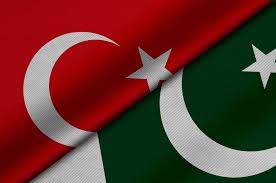
My Article published on the “Indus International Research Foundation” website on 18 Jul 25.
In the grand theater of global geopolitics, alliances and rivalries shape the dynamics of diplomacy. Over the past decade, Turkey under President Recep Tayyip Erdoğan has pursued an increasingly assertive foreign policy that extends well beyond its traditional spheres of influence. One of the most intriguing and consequential elements of this strategy is Turkey’s deepening engagement with India’s neighbours. Turkey’s relations with India’s immediate neighbours form a complex web of strategic, military, economic, and ideological engagements. Turkey has pursued a neo-Ottoman foreign policy, leveraging historical ties, Islamic solidarity, and defence exports to expand its influence in South Asia. This “strategic tango” has significant implications for South Asia’s balance of power, particularly from New Delhi’s perspective.
Turkey and Pakistan: Ideological Brotherhood beyond Diplomacy
The relationship between Turkey and Pakistan is characterised by its closeness and growing complexity, grounded in a shared Islamic identity, historical connections, and reciprocal geopolitical backing. Under the leadership of Erdoğan, these ties have developed into a strong strategic partnership.
The two nations have engaged in collaboration concerning military training, defence manufacturing, and joint naval exercises. Turkey ranks as Pakistan’s second-largest arms supplier, following China, providing sophisticated military equipment, including Bayraktar TB2 and Asisguard Songar drones, corvettes, missile systems, and enhancements for Pakistan’s F-16 fleet. These exports have strengthened Pakistan’s military capabilities, notably in drone warfare, which constitutes an increasing concern for India along the Line of Control (LoC) and other unstable border regions. During the recent India-Pakistan conflict (Operation Sindoor), reports suggest Turkey supplied Pakistan with between 300 and 400 drones, along with other military assistance, thereby intensifying tensions.
Turkey has also supported Pakistan’s stance on Kashmir, frequently raising the issue at the United Nations and other international forums. Ankara has consistently condemned India’s 2019 abrogation of Article 370, which nullified the special status of Jammu and Kashmir, and has articulated this position at various international platforms, including the United Nations. Conversely, Pakistan endorses Turkey on issues such as the Cyprus dispute and Azerbaijan’s stance in the Nagorno-Karabakh conflict, thereby reinforcing their strategic alliance.
By clearly aligning with Pakistan on a sensitive bilateral matter, Turkey has indicated its readiness to confront India on the international stage. This has led to a strong Indian reaction, with tourism bookings to Turkey decreasing by 60% and cancellations increasing by 250% in 2025, along with calls for trade boycotts.
Bangladesh: Growing Engagement and Deepening Ties.
Turkey’s diplomatic relations with Bangladesh have markedly strengthened, primarily due to defence collaboration and economic prospects. Ankara has employed a strategic approach incorporating humanitarian assistance, cultural diplomacy, and religious outreach to foster rapport with Dhaka. The Turkish Cooperation and Coordination Agency (TIKA) has been actively engaged in Bangladesh, financing educational institutions, healthcare facilities, and infrastructure developments. Furthermore, the administration of President Erdoğan has adopted a firm stance regarding the Rohingya crisis, providing refuge to displaced persons and vocally criticising Myanmar’s policies. This stance aligns closely with the perspectives held by Bangladesh.
Bangladesh has reportedly acquired Turkish Bayraktar TB2 drones. These drones, whilst augmenting Bangladesh’s military capabilities, evoke concerns in India regarding their possible deployment along the shared 4,096-kilometre border. Economically, Turkey has actively engaged with Bangladesh through trade and infrastructure initiatives, capitalising on Dhaka’s expanding economy and strategic positioning. Turkey’s neo-Ottoman ambitions align with certain political factions within Bangladesh, notably those sympathetic to Islamist rhetoric, thereby further fortifying bilateral relations.
This ideological alignment, coupled with defence cooperation, has raised concerns in New Delhi, which fears that Turkey’s influence could destabilise its eastern neighbourhood.
Emerging Engagements With Other Neighbours
Turkey has also expanded its focus to smaller South Asian nations, including Nepal, Sri Lanka, Bhutan, Myanmar, and the Maldives. These countries, often overlooked in global strategic considerations, possess significant geopolitical importance due to their strategic locations and vulnerability to external influences.
In Nepal, Turkey’s influence is predominantly diplomatic and cultural. Ankara has increased its embassy presence, provided scholarships, and facilitated interfaith dialogue through its Diyanet Foundation. Although not explicitly political, these initiatives form part of Turkey’s broader strategy to extend its influence via cultural engagement and religious diplomacy.
Turkey’s engagements with Sri Lanka are less pronounced but strategically significant. Turkey has pursued economic ties and limited defence cooperation, including potential drone exports. In Bhutan, Turkey’s presence is primarily economic, with investments in infrastructure and trade.
Myanmar, notwithstanding its political instability, has experienced Turkey’s outreach through humanitarian aid and limited defence negotiations, capitalising on shared Islamic affiliations with specific communities. Although these efforts are less advanced than those with Pakistan and Bangladesh, they demonstrate Turkey’s broader strategy to augment its presence in India’s vicinity.
The Maldives, a small island nation located in the Indian Ocean, has attracted interest from numerous international actors, including China, India, and currently Turkey. The government led by Erdoğan has enhanced bilateral engagements and extended development aid. As the archipelago increasingly assumes a pivotal position in the contest for influence within the Indian Ocean, Turkey’s engagement signifies its aspiration to participate actively in regional maritime geopolitics.
The China Factor: Converging Interests, Diverging Identities
While not a neighbour in the strict sense, China has a significant influence on India’s strategic outlook and is becoming increasingly important for Turkey as well. Ankara and Beijing share common viewpoints in criticising Western dominance and promoting multipolarity. Turkey participates in China’s Belt and Road Initiative (BRI), though with varying enthusiasm. Economic needs have motivated Erdoğan to pursue Chinese investment, especially during Turkey’s ongoing financial instability.
Nevertheless, the relationship encounters some friction. Turkey has historically been a vocal critic of China’s treatment of the Uighurs, a Turkic Muslim minority in Xinjiang. Erdoğan previously characterised Chinese policies as “genocide,” although such rhetoric has become less prominent in recent years as economic pragmatism has gained precedence.
From India’s perspective, Turkey’s ties with China heighten concerns. Both nations have shown a readiness to oppose India on Kashmir and support Pakistan. Although their ideological bases differ—Turkey with its neo-Ottoman and Islamist inclinations, and China with its authoritarian state capitalism—their strategic interests sometimes align, especially in efforts to counter Indian influence.
Strategic Implications for India
Turkey’s neo-Ottoman ambitions, propelled by President Erdoğan’s vision of global Islamic leadership, frequently conflict with India’s secular, multipolar foreign policy. Turkey’s increasing engagement with India’s neighbouring countries carries strategic implications that New Delhi must carefully consider. Although Turkey does not possess the economic strength or geographical proximity to directly challenge India, its ideological assertiveness and alignment with adversarial interests render it a disruptive presence in South Asia.
Ankara’s vocal endorsement of Pakistan regarding Kashmir elevates the issue to an international level, countering India’s stance that it is a bilateral matter. This not only strengthens Pakistan’s position but also offers diplomatic protection for narratives that contest India’s territorial sovereignty.
The Turkey-Pakistan alliance, fortified through defence cooperation and shared stances on issues such as Kashmir, remains highly contentious. Turkey’s provision of advanced weapons, including drones and naval equipment, boosts Pakistan’s military strength, directly challenging India’s security along its western border. Additionally, Turkey’s defence collaborations with Bangladesh and the Maldives pose a threat to India’s influence in South Asia and the Indian Ocean Region.
Turkey’s soft power efforts, particularly in Muslim-majority areas, aim to establish Ankara as a leader within the Islamic world. This contrasts with India’s approach, which focuses on building ties with Muslim-majority nations through economic and developmental partnerships, rather than religious solidarity.
Turkey’s growing collaboration with China and Pakistan may constitute a loose yet influential axis characterised by common objectives to curtail Indian influence. While the establishment of a formal alliance appears improbable, convergences on particular issues, such as opposing India’s ascent or supporting anti-Indian narratives, could pose a persistent strategic challenge.
India’s Options
In response to Turkey’s assertiveness, India needs to adopt a multifaceted strategy. India’s displeasure needs to be signalled by reducing high-level diplomatic exchanges, and through economic levers such as trade and tourism advisories. Another option is to strengthen ties with countries that view Turkish policies with suspicion. Enhancement of defence and economic cooperation with Greece, Armenia, Cyprus, Israel, and the United Arab Emirates (UAE) would convey the right message. Closer at home, India needs to leverage its cultural diplomacy, economic strength, and infrastructure investments to counter Turkish influence in neighbouring countries. Initiatives like the BIMSTEC (Bay of Bengal Initiative for Multi-Sectoral Technical and Economic Cooperation) and the Indo-Pacific outreach provide platforms that could be used to build alternative narratives to Ankara’s Islamic solidarity approach.
Conclusion
Turkey’s strategic engagement with its neighbours in South Asia, often described metaphorically as a Tango, appears to be more than mere diplomatic manoeuvring. It seems to constitute a deliberate effort to reshape regional alliances and enhance Ankara’s influence within the Muslim world and beyond. For India, this diplomatic dance presents both a challenge and an opportunity: a challenge to its strategic environment and regional influence, and an opportunity to refine its diplomatic strategies and foster resilient partnerships. India must navigate these intricate geopolitical developments with vigilance to safeguard its regional interests. By fortifying its alliances and leveraging its economic and military capacities, India should endeavour to ensure that Turkey’s actions do not destabilise the delicate balance of power in South Asia.
Please Add Value to the write-up with your views on the subject.
Link to the article on the website:-
Turkey’s Tango with India’s Neighbours: A Strategic Dance with Regional Implications
For regular updates, please register your email here:-
References and credits
To all the online sites and channels.
Pics Courtesy: Internet
Disclaimer:
Information and data included in the blog are for educational & non-commercial purposes only and have been carefully adapted, excerpted, or edited from reliable and accurate sources. All copyrighted material belongs to respective owners and is provided only for wider dissemination.
References:-
- Hindu, T. (2025, March 10). India Sees 60% Drop in Tourism to Turkey Amid Kashmir Tensions.
- Dawn. (2025, February 15). Turkey Supplies 300–400 Drones to Pakistan During Operation Sindoor, Sources Say.
- Jane’s Defence Weekly. (2024, November 20). Turkey’s Defence Exports to Pakistan: Bayraktar TB2 and Beyond.
- Ministry of External Affairs, India. (2024). India’s Response to Turkey’s Stance on Kashmir at the UN. New Delhi: Government of India.
- Reuters. (2025, January 5). Bangladesh Acquires Turkish TB2 Drones, Raising Concerns in India.
- Sharma, A. (2023). Turkey’s Neo-Ottoman Ambitions in South Asia. New Delhi: Observer Research Foundation.
- Siddiqui, N. (2024). Pakistan-Turkey Strategic Partnership: Defence and Diplomacy. Islamabad: Institute of Strategic Studies.
- Times of India. (2025, April 2). 250% Surge in Cancellations of Turkey Travel Bookings After Operation Sindoor.
- Yilmaz, I., & Shakil, K. (2023). Turkey’s Foreign Policy Under Erdoğan: The Rise of Neo-Ottomanism. Journal of South Asian Studies, 46(3), 231–245.
- The Diplomat. (2023). Turkey’s Growing Footprint in South Asia: Soft Power or Strategic Intent?
- Asia Foundation. (2022). Turkey’s Soft Power Diplomacy in Bangladesh and the Rohingya Crisis.
- Pantucci, R. (2022). China-Turkey Relations: A New Axis of Authoritarian Influence? Royal United Services Institute (RUSI).
- Sharma, R. (2021). India’s Strategic Realignment in the Eastern Mediterranean: Balancing Turkey’s Outreach. Institute of Peace and Conflict Studies (IPCS).
- Kugelman, M. (2020). Turkey and Pakistan: A Budding Strategic Alliance? Wilson Center.
- Anadolu Agency. (2020). Erdoğan Says Kashmir Is as Important to Turkey as It Is to Pakistan.
- Raja Mohan, C. (2020). The Rise of Turkey in Asia: A Challenge to India’s Regional Position? Carnegie India.
- Yavuz, M. H., & Hakan, M. (2019). Erdoğan’s Vision and the Transformation of Turkish Foreign Policy. Middle East Critique, 28(3), 217–232.