
756: HYBRID WAR IN THE BALTICS: AT RISK – CRITICAL INFRASTRUCTURE


Article Published in the Oct 25 Issue of The News Analytics Journal.


Hybrid operations, unlike traditional warfare, bridge martial coercion with non-military measures like sabotage, cyberattack, disinformation, interference in elections, energy blackmail, and weaponised migration. These processes are intentionally vague, cheap but high-impact, allowing state / non-state actors to destabilise their competitors without crossing transparent thresholds.

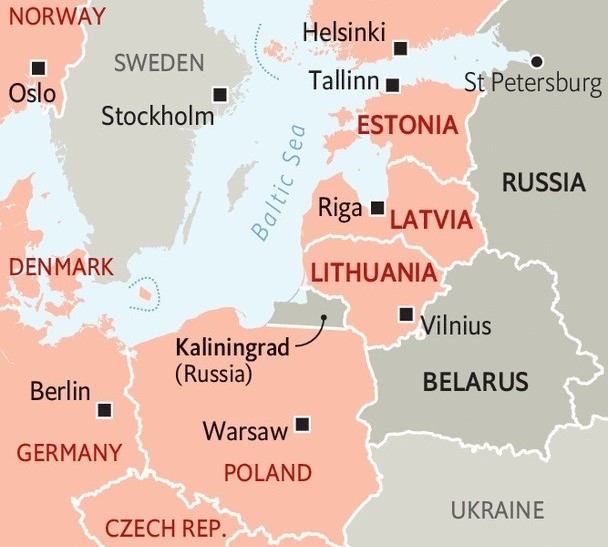
The Russian hybrid war strategy has been a security concern for the Baltic states of Estonia, Latvia, and Lithuania. They are improperly exposed to geography, population, and history relative to Russia. But the danger does not end there in the Baltics: Poland, Finland, and Germany are also at risk from shared energy and digital infrastructure, political interdependence, and disinformation.

Critical infrastructure, notably submarine cables, energy supplies, and digital networks, has also been a key target. With an assault upon such an asset requiring minimal effort but with the ripple effect containing security, economic, and psychological consequences, at least 11 North and Baltic Sea underwater cables have been severed since 2023, both demonstrating the technical possibility and the deniable nature of such an act. This article examines hybrid war strategy across the Baltic states, quantifying regional resiliency and defining policy measures to be taken in defence of their infrastructure.


Hybrid Threats and Activities

Hybrid war threatens Estonia, Latvia, and Lithuania seriously, attacking the cohesion of society, infrastructure, and democratic procedures using methods of sabotage, cyberattacks, disinformation, and disruptions of energy supplies. These are intended to destabilise the Baltic States without triggering traditional war, exploiting vulnerabilities in linked systems.

Information Warfare and Propaganda. Disinformation works extremely well in hybrid warfare, often used through AI-generated content, deepfakes, and tailored social media campaigns on Telegram, TikTok, and local networks. All are designed to produce narratives around specific strategic interests, and linguistic or cultural minorities are the target to be manipulated into divisions. For example, messages can utilise themes of discrimination, nostalgia for the past, or suspicion of international coalition-building. Cultural projects, including patronage of institutions that advance other narratives, can build dual information spaces that undermine social cohesion. Classic cases such as the 2003 Lithuanian presidential foreign-linked funding scandal illustrate how external actors exploit political weaknesses. Current disinformation operations are more likely to derogate support for active conflicts, destabilise international partnership trust, and amplify societal fault lines.

Subversion and Sabotage. Low-tech sabotage can be thoroughly debilitating to social cohesion and infrastructure. For example, the 2024 arson assault on a Vilnius storage facility disclosed weakness in key logistics networks. Likewise, the demolition of historic monuments across regions has been utilised as a means of stirring ethnic or cultural tensions. Deployment of incendiary devices transported through logistics networks in attacks also demonstrates the capabilities for covert disruption. Attacks on key infrastructure, e.g., submarine cables carrying transatlantic communications, financial transactions, and military communications, are conventionally attributed to an accident but cause concern about intentional sabotage. These attacks highlight the asymmetric benefits pursued through precision disruption, taking advantage of vulnerabilities in interdependent systems.

Cyberattacks. Cyber war is a key component of a hybrid strategy, and organisations often conduct distributed denial-of-service (DDoS) attacks on government buildings, energy organisations, and public services. For instance, in 2022, a cyberattack on a Baltic energy organisation disconnected thousands of customers’ services. In showpiece events, as for the 2023 Vilnius NATO Summit, cyberattacks were conducted on public websites and ministries to cause embarrassment and instability.

Espionage. Espionage is used to support these activities, with nationals being said to be recruited to collect intelligence or conduct minor sabotage operations. These activities are intended to erode confidence and destabilise institutions by taking advantage of insider access or local dissatisfaction.

Energy Security Risks. Energy infrastructure is the main target in hybrid warfare as well, and physical and cyberattacks are employed to discredit confidence in alternative energy sources. Diversification policies like Baltic connection to the EU power grid in 2024 or construction of LNG terminals and pipelines have mitigated these risks. Nevertheless, ongoing attacks on critical infrastructure are employed to point towards the long-term problem of safeguarding energy networks against hybrid methods.

Organised Migration. Organised waves of migration, such as the 2021 EU border crisis, demonstrate that humanitarian crises can be manipulated for strategic motives. Migrants from war-torn areas were redirected to border areas, swamping indigenous governments and challenging regional security responses. Such crises are intended to challenge global coalitions and politicise public discussion of migration and security, exerting pressure on governments and societies.

Military Intimidation and Amplification of Support for Hybrid Operations. A display of military strength in strategic regions can serve to enhance hybrid strategies by providing the context of a credible threat. Mass movements, mimicking rapid penetrations into extensive areas of terrain or clandestine activities in border regions, increase tensions and augment the impact of clandestine operations. They capitalise on geographical proximity and cultural ties to vulnerable areas, thereby enhancing the perceived threat of escalation.

Election Interference. Election interference is a popular hybrid method that employs cyberattacks, the leakage of sensitive information, and disinformation as tools to influence public opinion. Social media mobilisation campaigns predicated on the amplification of controversial issues—whether nationalist feelings or ethnic grievances—can influence closely fought elections. They seek to de-legitimise the democratic institutions and undermine those governments amenable to confronting strategic interests.


Preparedness and Reactions of the Baltic States

Despite the seriousness of the threat, the Baltic States have largely been resilient. They have come a long way in countering such vulnerabilities with modernisation, social integration, and neighbourhood cooperation. Investments in energy diversification, for instance, Lithuania’s terminal for liquefied natural gas and Baltic disconnection of old energy grids in 2024, have been curtailing reliance on the outside world. Nevertheless, critical infrastructure such as underwater cables, energy networks, and democratic systems is an attractive target for low-cost, deniable assaults.

Societal and Institutional Resilience. The NATO Cooperative Cyber Defence Centre of Excellence (CCDCOE) is hosted by Estonia. Cyber defence and information warfare coordination are instead functions of Lithuania’s National Cyber Security Centre and Latvia’s Strategic Communications Centre of Excellence. Civil defence institutions—such as Estonia’s 15,000-strong National Guard—facilitate rapid mobilisation in times of crisis.

Energy Independence. Integration of the Baltic States’ power grid with European grids, the Świnoujście terminal in Poland, and the Klaipėda LNG terminal are achievements of energy security. These steps limit Moscow’s influence and bolster NATO’s strategic depth.

Integration of Russian speakers. Rights of citizenship have been granted, investments made in learning the Russian language, and the recognition of cultural identities. These steps reduce alienation, but existing tensions between policies of integration and nationalist explanations that emphasise linguistic homogeneity.

Interagency Coordination. Interagency coordination is weak. Border control, crisis management, and intelligence exchange often do not operate in a coordinated manner. Latvia’s border guards, for example, have been criticised compared to more advanced Estonian and Nordic counterparts. NATO and American surveillance capabilities compensate to some extent, but reform at the national level remains to be accomplished.


Strengthening Baltic Defences against Hybrid Threats

Strengthening Baltic defences against hybrid threats involves building inclusive integration, establishing a Comprehensive Resilience Ecosystem (CORE), protecting critical infrastructure, modernising electricity laws, enhancing transparency, and strengthening regional and international cooperation. The following are recommendations:

Facilitate Inclusive Integration. Enlarge programmes to provide equal civic, economic, and political opportunities to cultural and language minorities to build national unity in Estonia, Latvia, and Lithuania.

Envision a Comprehensive Resilience Ecosystem (CORE). Design an integrated system among the defence, cybersecurity, energy, and communications sectors to develop national resilience in the context of hybrid threats, tailored to Baltic priorities and imperatives.

Guard Critical Infrastructure. Prioritise the protection of submarine communications cables and offshore energy installations, taking advantage of regional cooperation in protecting these critical networks.

Modernise Legal Frameworks. Encourage the modernisation of international treaties, such as the UN Convention on the Law of the Sea (UNCLOS), to counter hybrid threats to maritime and critical infrastructure, with the Baltic States coordinating regional action.

Increase Transparency in Deployments. Clearly inform Baltic citizens of regional defence measures to reassure them while dissuading potential aggressors, highlighting national sovereignty.

Upgrade Specialised Forces. Upgrade the Baltic special forces and civilian defence units with assistance from premier intelligence and surveillance capabilities in cooperation with allied countries.

Upgrade Regional Exercises. Regularly conduct exercises such as BALTOPS and Baltic Sentry, which include cyber, maritime, and information warfare exercises, to attain greater readiness and interoperability of the Baltic forces.

Launch Multilingual Campaigns. Develop multiple-language communication strategies to address different communities, counter fake information, and foster social cohesion across Baltic communities.

Enhance Monitoring and Reaction. Collaborate with national cyber units and regional allies to track disinformation in real-time, quickly discredit fakes, and possess a Baltic-led reaction.

Enhance Intelligence Sharing. Enhance Baltic States and European and Indo-Pacific partner cooperation to enhance early warning and reaction to hybrid threats.

Advance Global Norms. Advance global norms to safeguard crucial infrastructure such as submarine cables and cyberspace, and make the Baltic States leaders in securing the global commons.


Conclusion

Defending Estonia, Latvia, and Lithuania against hybrid war is not a regional security problem, but ensuring democratic nations and preserving resilience in a conflict-filled environment that insinuates informational, digital, and physical space. By investing in societal cohesion, infrastructure security, and regional cooperation, the Baltic States can put the solution to hybrid threats and ensure long-term stability.


Please Add Value to the write-up with your views on the subject.


1818
Default rating

Please give a thumbs up if you  like The Post?


For regular updates, please register your email here:-

Subscribe


References and credits

To all the online sites and channels.

Pics Courtesy: Internet

Disclaimer:

Information and data included in the blog are for educational & non-commercial purposes only and have been carefully adapted, excerpted, or edited from reliable and accurate sources. All copyrighted material belongs to respective owners and is provided only for wider dissemination.


References:-

  1. Financial Times, “Russia’s Hybrid Playbook Targets NATO’s Weak Spots”, Dec 2024.
  2. Financial Times, “Why Underwater Cables in the Baltic Sea Are Vital and Vulnerable”, Jun 2025.
  3. Reuters, “Baltic Governments Strengthen Cyber Defence Amid Hybrid Threats”, Apr 2025.
  4. Chivvis C. S, “Understanding Russian Hybrid Warfare and What Can Be Done About It”, Santa Monica, CA: RAND Corporation, 2017.
  5. European Council on Foreign Relations, “Russian Influence and Hybrid Strategies in the Baltic Sea Region”, Policy Brief, 2023.
  6. Kasekamp A, “Baltic Security Strategy Report”, Tallinn: International Centre for Defence and Security (ICDS), 2019.
  7. Åtland K, “Russia’s Hybrid Warfare and the Baltic States: An Assessment of Threats and Responses”, Journal of Slavic Military Studies, 36(2), 123–145, 2023.
  8. Bērziņa I, “The Baltic States’ Response to Russian Hybrid Threats”, Defence Studies, 22(3), 345–367, 2022.
  9. Berzins J, “The Baltic Security Dilemma: Hybrid Threats and NATO’s Response”, Riga: Latvian Institute of International Affairs, 2024.
  10. Clark, D. & Hakala, E, “Submarine Cable Security in the Baltic Sea: Vulnerabilities and NATO’s Role”, NATO Review, 15(4), 1–12, 2023.
  11. Galeotti M, “Hybrid War and Little Green Men: How It Works and How to Counter It,” The Journal of Slavic Military Studies, 29(3), 401–423, 2016.
  12. Kofman M. & Rojansky M, “Russia’s Hybrid Warfare Toolkit: Lessons from the Baltics and Ukraine”, Foreign Affairs, 102(5), 78–90, 2023.
  13. Pynnöniemi K. & Saari S, “Russia’s Information Warfare in the Baltic States: Actors, Tools, and Impacts”, Helsinki: Finnish Institute of International Affairs, 2022.airs, 2022.



626: ARTIFICIAL INTELLIGENCE IN MODERN WARFARE: OPPORTUNITIES AND CHALLENGES


My Article was published on the Indus International Research Foundation Website on 20 Mar 25.


In the modern battlefield, timely and accurate information is paramount. Artificial Intelligence (AI) has emerged as a transformative force in various sectors, and its integration into the military is particularly notable. AI’s integration into strategic and tactical decision-making transforms military operations by enabling leaders to anticipate potential threats, optimise resource allocation, and make faster, data-driven decisions. AI rapidly becomes a core tool for enhancing military decision-making, revolutionising strategies, and operational efficiency. It reshapes how military leaders approach battlefield tactics, logistics, and strategic planning through rapid data processing, sophisticated simulations, and predictive analysis. As armed forces worldwide increasingly adopt AI technologies, the implications for strategy, tactics, and operational efficiency are profound. While AI offers unprecedented benefits, its integration in military contexts introduces ethical concerns and strategic challenges that are central to its future role.


The Evolution of AI in Military Applications. The military’s interest in AI is not recent; it dates back several decades. The initial exploration of AI technologies in military contexts began in the 1950s and 1960s, focusing on simulations and rudimentary decision support systems. Over the years, advancements in machine learning, data analytics, and computational power have dramatically enhanced the capabilities of AI systems. In the 1960s, AI research focused on symbolic reasoning and game theory, with early applications in strategic simulations. The Cold War era spurred investments in AI research as nations sought technological advantages. The Gulf War in the early 1990s highlighted the importance of information superiority. AI technologies began integrating command and control systems, enabling real-time data analysis and enhanced situational awareness. The development of drones and unmanned systems marked a significant shift, with AI increasingly applied to operational contexts. Today, AI applications in the military encompass various areas, including autonomous vehicles, predictive analytics, intelligence gathering, and combat simulations. Countries like the United States, China, and Russia are investing heavily in AI research to enhance their military capabilities.


Benefits of AI in Military. Integrating AI into the military offers significant benefits, including increased efficiency, accuracy, and situational awareness. AI technologies streamline processes and enhance operational efficiency. By automating routine tasks, military personnel can focus on strategic planning and execution. AI systems improve the accuracy of military operations by providing data-driven insights that reduce human error. Analysing data in real time enhances decision-making, particularly in high-stakes environments. AI technologies improve situational awareness by integrating data from various sources, providing commanders with a comprehensive understanding of the battlefield. These practical advantages underscore the importance of AI in military decision-making.


AI in Military Contexts.

AI in the military can be broadly classified as data analytics, autonomous systems, decision support, and cyber defence. Its ability to quickly process large volumes of data and identify patterns has made AI a powerful tool for intelligence analysis, operational planning, and logistics optimisation.


Data Analytics and ISR (Intelligence, Surveillance, and Reconnaissance). AI-driven data analytics enhance ISR capabilities by analysing satellite images, social media data, intercepted communications, and more to identify potential threats. AI systems analyse real-time ISR data, recognising patterns that may indicate enemy movements or hidden threats. Machine learning models trained on historical data help predict potential adversarial actions, giving military leaders a tactical advantage. For example, deep learning models analyse satellite and drone imagery, identifying military installations, troop movements, or equipment locations with minimal human input. By providing commanders with this intelligence in near real-time, AI reduces the time needed to make informed tactical decisions.


Simulation and War Gaming. AI-powered simulations are invaluable for testing different scenarios in war gaming exercises. These simulations incorporate diverse factors, including adversary capabilities, weather, and terrain, to provide a realistic projection of possible outcomes. Such tools allow leaders to plan and rehearse operations, identify weaknesses, and refine strategies. AI simulations support large-scale strategic planning and small-unit tactics, helping teams understand the consequences of their actions before taking them on the battlefield. War gaming simulations also train and prepare soldiers and officers for complex and high-stress situations through realistic, AI-generated scenarios.


Predictive Maintenance and Logistics Optimisation. AI enhances logistics by predicting when vehicles or other equipment may need maintenance, ensuring that military assets are operational when required. Predictive maintenance uses AI to analyse sensor data from equipment, forecasting failures before they happen and reducing operational downtime. For instance, AI predicts tank engine wear or helicopter rotor fatigue based on operational data, allowing maintenance teams to perform pre-emptive repairs, which can be critical in conflict scenarios. This application is more efficient and potentially life-saving, a testament to the significant role AI plays in military operations.


Autonomous and Semi-Autonomous Systems. Autonomous systems driven by AI are reshaping the modern battlefield. Drones, ground robots, and other unmanned systems operate with varying degrees of autonomy, performing ISR, transport, and combat tasks that traditionally require human soldiers. These systems extend operational capabilities, allowing military forces to engage in high-risk missions with minimal direct exposure to human personnel.


Unmanned Aerial and Ground Vehicles. AI enables drones and unmanned ground vehicles (UGVs) to operate autonomously in complex environments. Equipped with computer vision and machine learning algorithms, these systems navigate hostile terrain, conduct reconnaissance, and sometimes engage targets without direct human intervention. These AI-driven vehicles can also perform multi-mission roles, often shifting from reconnaissance to combat, depending on mission needs. This flexibility allows commanders to adapt real-time strategies, using the same resources for multiple purposes, improving efficiency, and extending operational reach.


Swarm Technology. Swarm technology, in which groups of autonomous systems work collaboratively, represents a new frontier in military robotics. AI allows swarms of drones to communicate, make collective decisions, and adapt to changing environments, enabling them to overwhelm defences, conduct coordinated surveillance, and jam enemy signals. In a combat situation, drone swarms could confuse adversary radar systems or execute diversionary tactics, creating openings for human-operated forces. This level of coordination and adaptability would be almost impossible without AI, which processes environmental data and adjusts the swarm’s behaviour in real-time.


Autonomous Combat Systems and the Kill Chain. One of the most controversial uses of AI in the military is automating the “kill chain”, the sequence of decisions from target identification to engagement. While current norms generally require human oversight, there is a growing interest in developing systems that can autonomously engage targets under specific circumstances. This application raises profound ethical and legal questions, as fully autonomous combat systems could operate beyond human control, making decisions with lethal consequences. Concerns over accountability, discrimination between combatants and civilians, and the potential for accidental escalation of conflicts are central to debates on the future of such technologies.


Cyber Defence and Information Warfare. Cyber warfare is a crucial area where AI aids in protecting military assets from digital threats. With its ability to rapidly detect anomalies, AI helps military cyber teams identify potential intrusions and respond to cyber attacks, significantly improving defence against increasingly sophisticated adversaries.


Threat Detection and Response. AI-powered systems monitor military networks, identifying unusual activities and rapidly flagging potential threats. These systems can differentiate between normal and malicious behaviour by analysing network patterns, user behaviour, and system performance. Machine learning models constantly adapt to new tactics and techniques cyber adversaries use, making them crucial in mitigating advanced persistent threats (APTs). AI also plays a role in “active defence,” where it identifies an intruder and takes countermeasures, potentially isolating affected systems or misleading the adversary. Such rapid response mechanisms enhance cyber security in ways that are challenging to achieve with human teams alone.


Information Warfare and Disinformation Detection. Information warfare has become a critical aspect of military operations, with adversaries frequently spreading misinformation to undermine morale and erode public trust. AI-driven tools can identify disinformation patterns by analysing social media and other communications platforms and flagging content designed to mislead or destabilise. AI’s ability to monitor, detect, and counteract information attacks helps protect soldiers and civilians from psychological manipulation while countering adversarial narratives that aim to weaken resolve or incite division.


Decision Support Systems (DSS). AI-based DSS provides commanders with actionable insights, predicting adversary behaviour and logistics needs and suggesting strategies to address dynamic battlefield conditions. AI’s benefits in military decision-making are substantial, enhancing speed, accuracy, and operational readiness. AI allows faster decision-making by processing information and identifying threats quicker than human operators. This speed is critical in time-sensitive combat situations where delayed responses can mean the difference between success and failure.


AI-enabled Systems.

Project Maven. Initiated by the U.S. Department of Defence in 2017, Project Maven aims to leverage AI to enhance the military’s ability to analyse drone footage and other visual data. By employing machine learning algorithms, Project Maven can automatically identify objects and activities in video feeds, significantly improving the speed and accuracy of intelligence analysis. According to the DoD, “Project Maven enables the Department of Defence to leverage AI and machine learning to make sense of vast amounts of data.” This project exemplifies the practical application of AI in military operations, transforming how intelligence is gathered and analysed.


Aegis Combat System. The Aegis Combat System is an advanced naval weapons system used by the U.S. Navy and allied forces. It employs AI to enhance threat detection, tracking, and engagement capabilities. Aegis integrates data from multiple sensors to provide real-time situational awareness, enabling rapid decision-making in combat scenarios.


Lethal Autonomous Weapons Systems (LAWS) are a controversial application of AI in military operations. These systems can select and engage targets without human intervention, raising ethical and legal concerns. Proponents argue that LAWS can reduce risks to human soldiers and increase operational efficiency. However, critics warn that lacking human oversight in lethal decision-making could lead to unintended consequences. The United Nations has called for discussions on regulating autonomous weapons, emphasising the need for human accountability in such systems.


Challenges and Concerns.

Implementing AI in the military involves several practical challenges, including ethical concerns, data quality, adversarial threats, and potential over-reliance on technology. While AI presents significant opportunities for military decision-making, several challenges and ethical considerations must be addressed.


Data Privacy and Security. Integrating AI into military operations raises concerns about data privacy and security. Collecting and analysing vast amounts of data, including personal information, can lead to potential misuse or unauthorised access. Ensuring data integrity and protecting sensitive information are critical challenges for military organisations. Cyber security measures must be robust to prevent adversaries from exploiting vulnerabilities in AI systems.


Data Quality and Integration. AI systems require high-quality, structured data to make accurate decisions. Military data sources are often fragmented, making integrating and ensuring data quality difficult. If AI systems operate on poor or incomplete data, they may produce incorrect or unreliable decisions, which could have dire consequences.


Reliability and Trust. AI systems are not infallible and can be prone to errors, particularly in complex and dynamic environments. Building trust in AI systems is crucial for military personnel to rely on them in high-stakes situations. Ensuring the reliability and accuracy of AI algorithms requires continuous testing and validation. Military organisations must establish protocols to assess the performance of AI systems before deployment.


Ethical Implications, Accountability and Responsibility. Despite its benefits, AI in military decision-making raises moral and legal concerns, particularly regarding autonomy, accountability, and adherence to international laws. The potential for machines to make life-and-death decisions without human intervention raises concerns about accountability and moral responsibility. Accountability can be ambiguous in AI-driven operations. If an autonomous weapon causes unintended harm, it is often unclear whether responsibility falls on the AI developer, the commanding officer, or the operator. Establishing clear accountability is essential to prevent the misuse of AI technologies and to ensure legal and ethical conduct in military operations. The moral implications of using AI in warfare have led to calls for regulatory frameworks to govern the development and deployment of autonomous systems. Experts argue that human oversight is essential to maintain ethical standards in military operations.


Compliance with International Law. Many AI applications in warfare, such as autonomous drones and weaponised robots, may challenge existing international treaties, including the Geneva Conventions, which govern the conduct of war and protect non-combatants. The potential for autonomous systems to make lethal decisions without human oversight raises questions about compliance with these international norms.


Adversarial AI and Deception.  The potential for adversaries to exploit AI technologies poses a significant threat to military operations. Hostile entities can exploit cyber security vulnerabilities in AI systems to disrupt operations or manipulate data. For example, an adversary might feed false data into an AI system or use techniques to mislead autonomous systems, potentially leading to harmful or counterproductive decisions. Military organisations must develop counter-AI strategies and robust cyber security measures to safeguard their systems from adversarial threats. Collaboration with industry and academia can enhance resilience against emerging threats.


Dependence on Technology and Operational Vulnerability. Over-reliance on AI could create vulnerabilities, particularly if these systems are compromised or disabled in combat. If soldiers and commanders become too dependent on AI-based decision support, they may lack the necessary skills or resilience to operate without these tools in high-stress situations.


Future of AI in Military Decision-Making

As AI technology evolves, its role in military decision-making will expand. Several key areas warrant attention for future developments. The trajectory of AI in military decision-making suggests further integration, with increased autonomy in combat systems, more sophisticated predictive capabilities, and enhanced collaboration between human and AI decision-makers. However, the future of AI in military contexts will depend on addressing current ethical concerns, refining regulatory frameworks, and developing global agreements on autonomous weaponry.


Ongoing Research and Development. Continued research and development in AI technologies will be critical for addressing military applications’ challenges and ethical implications. Collaboration between military organisations, academia, and industry can drive innovation. Governments and defence agencies should invest in research programs exploring AI’s ethical, operational, and technological aspects in military contexts. This approach will ensure that AI systems are developed responsibly and effectively.


Human-AI Teaming Models and Collaboration. The future of military decision-making will likely involve greater collaboration between humans and AI systems. AI can augment human decision-making by providing data-driven insights, while human operators can offer contextual understanding and ethical considerations. This human-AI teaming approach leverages AI’s data processing and pattern recognition strengths while preserving human oversight and moral judgment. Developing effective collaboration models will be crucial for maximising AI’s benefits in military operations.


Advanced Training and Adaptation. As AI tools evolve, military training will adapt to integrate AI-based decision-making into officer training and war gaming exercises. Future military professionals must understand AI’s capabilities and limitations to ensure they can use these tools effectively and ethically. Enhanced training programs are essential to prepare military personnel to integrate AI technologies. Training should focus on developing skills in data analysis, AI ethics, and human-machine collaboration.


Regulatory Frameworks. The rapid advancement of AI technologies necessitates the establishment of regulatory frameworks to govern their use in military operations. Such frameworks should address ethical considerations, accountability, and oversight in autonomous systems. International cooperation is essential for developing norms and standards regarding the use of AI in warfare. Establishing treaties or agreements can help mitigate the risks of autonomous weapons and promote responsible AI use.


International Collaboration and AI Arms Control. International collaboration and regulation will be essential to manage the risks associated with military AI. Nations may need to negotiate treaties similar to those that govern nuclear and chemical weapons, establishing protocols and limits for AI-driven autonomous weapons.


Conclusion

 Integrating AI into military decision-making reshapes how armed forces operate, strategise, and engage in combat. While AI offers significant benefits regarding efficiency, accuracy, and situational awareness, it also raises significant ethical and operational challenges. As military organisations continue to explore AI technologies, addressing these concerns will ensure responsible and effective use in the field. Balancing AI’s benefits with the principles of international law and ethical warfare will be essential to shaping a future where AI is a responsible and effective partner in military decision-making. The future of military decision-making will depend on finding the right balance between leveraging AI’s capabilities and maintaining human oversight and accountability. As AI technology advances, ongoing research, regulation, and collaboration will ensure that its deployment in military contexts aligns with humanity’s broader goals and values.

Please Do Comment.


1818
Default rating

Please give a thumbs up if you  like The Post?


For regular updates, please register your email here:-

Subscribe


References and credits

To all the online sites and channels.

Pics Courtesy: Internet

Disclaimer:

Information and data included in the blog are for educational & non-commercial purposes only and have been carefully adapted, excerpted, or edited from reliable and accurate sources. All copyrighted material belongs to respective owners and is provided only for wider dissemination.


References: –

  1. U.S. Department of Defence. (2017). Project Maven. Retrieved from DoD Website.
  1. Richardson, J. M. (2016). “The Future of Naval Warfare.” Proceedings of the U.S. Naval Institute, 142(5), 24-30.
  1. U.S. Army. (2019). Army Artificial Intelligence Strategy. Retrieved from Army.mil.
  1. Scharre, P. (2018). Army of None: Autonomous Weapons and the Future of War. New York: W.W. Norton & Company.
  1. United Nations. (2019). Report of the Secretary-General on Lethal Autonomous Weapons Systems. Retrieved from UN Website.
  1. Hodge, N. (2017). “The Impact of Artificial Intelligence on Military Strategy.” Journal of Military Ethics, 16(4), 303-319.
  1. Defence Advanced Research Projects Agency. (2021). AI Next Campaign. Retrieved from DARPA.mil.
  1. Lin, P. (2016). “Why Ethics Matters for Autonomous Cars.” Autonomously Driven Cars: Ethical Implications of the Technology. Washington, D.C.: The Brookings Institution.
  1. Altmann, J., & Sauer, F. (2017). “Regulating Artificial Intelligence in Warfare.” The International Journal of Human Rights, 21(2), 147-161.
  1. Cebrowski, A. K., & Gartska, J. J. (1998). “Network-Centric Warfare: Its Origin and Future.” U.S. Naval Institute Proceedings, 124(1), 28-35.

English हिंदी