My Article published on “The EurasianTimes” website on 28 Jul 25
On July 16, 2025, the United States Department of Defence revealed the Low-Cost Uncrewed Combat Attack System (LUCAS) during an exhibition of autonomous systems at the Pentagon courtyard, attended by Secretary of Defence Pete Hegseth. Developed by Spectreworks, based in Arizona, LUCAS is designed to counter the escalating threat of loitering munitions. The system aims to facilitate distributed operations, particularly in the Indo-Pacific region, in light of rising concerns over Chinese drone activities near Japan. Considerable interest has been expressed regarding its development, design, capabilities, and strategic significance.
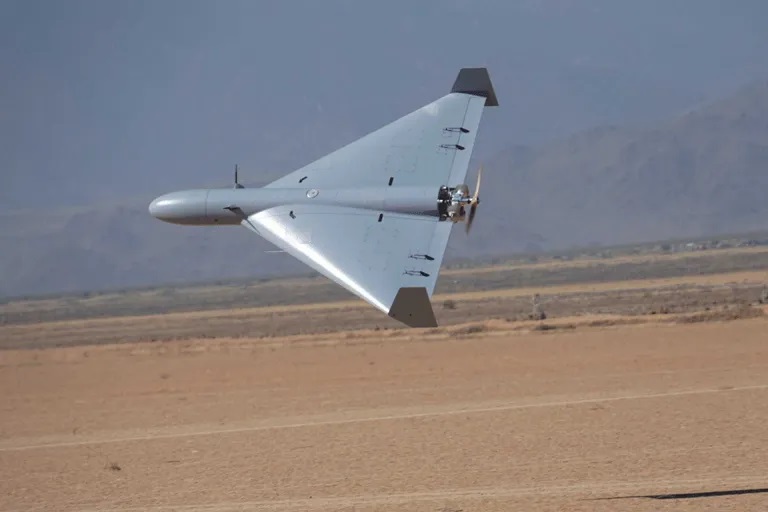
Genesis. The emergence of the LUCAS drone is not a coincidence. It is a direct response to the transformation of modern warfare driven by the global proliferation of low-cost kamikaze drones. Iran’s Shahed-136, a delta-wing kamikaze drone, has served as a notable example, utilised by Russia in Ukraine and by Iran-backed groups in the Middle East to precisely target objectives at a significantly reduced cost compared to traditional munitions. The low cost and extended range of the Shahed-136 exposed a gap in Western arsenals, which have historically depended on expensive, reusable platforms such as the MQ-9 Reaper. The United States’ response materialised as the LUCAS system, a three-category UAS (capable of carrying up to 600 kg and operating at altitudes reaching 5,500 meters).
Analytical Perspective
LUCAS’s design exhibits both visual and functional similarities to the Shahed-136, showcasing a triangular delta-wing configuration optimised for long-range loitering. Nonetheless, it differs significantly in terms of engineering and versatility. Powered by a two-cylinder DA-215 engine (215 cm³), LUCAS contrasts with the Shahed’s four-cylinder Limbach L550E clone, providing enhanced fuel efficiency and a reduced acoustic signature. Its modular and open architecture accommodates various payloads, including reconnaissance sensors, electronic warfare modules, and explosive warheads, thereby facilitating adaptability to a wide range of mission profiles.
The drone’s adaptability constitutes a fundamental advantage. LUCAS accommodates various launch methods, including Rocket-Assisted Take-Off (RATO) and truck-based deployment, thereby facilitating rapid utilisation by personnel with limited specialisation. In contrast to the single-use Shahed-136, LUCAS can be reused in specific configurations, such as reconnaissance missions, thereby improving its cost efficiency. It operates on 28V and 12V power supplies, supporting a wide range of payloads. Its Multi-domain Unmanned Systems Communications (MUSIC) mesh network enables autonomous swarm operations and network-centric strikes. Additionally, this network permits LUCAS to serve as a communication relay, a vital capability in contested environments where conventional communication channels may be disrupted.
The LUCAS system is estimated to cost approximately $100,000 per unit, which is markedly more economical than traditional United States drones, thus aligning with the Pentagon’s objectives regarding cost efficiency. Following successful testing, its readiness for production positions it for swift deployment alongside U.S. and allied forces, particularly in contexts that demand scalable, cost-effective strike capabilities. It embodies a harmonious combination of affordability, lethality, and adaptability. The swarm capabilities, facilitated through the MUSIC network, enable coordinated assaults capable of overwhelming adversary defences. Furthermore, its modular design extends its functional utility beyond kamikaze operations to include roles such as intelligence, surveillance, and reconnaissance (ISR).
The strategic significance of the drone is enhanced by its alignment with the United States’ defence priorities. In the Indo-Pacific region, where China’s expanding drone capabilities present a threat, LUCAS offers an economical countermeasure for distributed operations over extensive distances. Its capacity to operate autonomously or in swarms diminishes dependence on vulnerable centralised command structures, thus making it suitable for contested environments. Furthermore, its truck-mounted launch system enhances mobility, allowing for swift deployment from forward bases or allied territories.
Lucas’s introduction holds significance extending beyond the United States’ borders. Allies within NATO, the Indo-Pacific, and the Middle East, who are confronting comparable drone threats, are expected to demonstrate interest in procuring or jointly producing similar systems. Its cost-effectiveness and adaptability render it an appealing choice for nations that cannot afford advanced platforms such as the F-35 or MQ-9.
India’s Solutions for Low-Cost, High-Impact Drone Warfare
India, confronting analogous drone threats across its borders, has undertaken the development of its own economical yet impactful solutions for contemporary aerial warfare. A key component of India’s strategic response is the creation of indigenous loitering munitions, including the ALFA-S (Air-Launched Flexible Asset – Swarm), Nagastra-1, and the Tactical Advanced Platform for Aerial Surveillance (TAPAS-BH-201). Engineered with an emphasis on cost-effectiveness and scalability, these systems reflect the strategic principles underpinning America’s LUCAS.
Nagastra-1 is a domestically produced, man-portable loitering munition, often referred to as a “kamikaze drone.” Developed by Economic Explosives Limited, a subsidiary of Solar Industries, in collaboration with Z-Motion Autonomous Systems, it is engineered for reconnaissance missions and precision strikes, particularly in asymmetric operational environments.
ALFA-S, or Air-Launched Flexible Asset – Swarm, is an Indian project focused on developing a swarm of drones that can be launched from aircraft or ground launchers. It is part of the larger Combat Air Teaming System (CATS) initiative by Hindustan Aeronautics Limited (HAL) in collaboration with NewSpace Research and Technologies. These drones are designed to operate autonomously, potentially performing tasks like high-altitude surveillance and precision strikes.
TAPAS-BH-201, also called Rustom-II, is an Indian MALE UAV created by DRDO’s Aeronautical Development Establishment. It is built for surveillance and reconnaissance tasks.
India is also advancing its counter-drone capabilities through initiatives such as the DRDO’s D-4 Drone System. The D4 anti-drone system would constitute a comprehensive solution for detecting, tracking, and neutralising unauthorised drones, including micro and small unmanned aerial vehicles (UAVs). It would employ a combination of radar, radio frequency detection, and electro-optical/infrared sensors for threat identification, and utilise both ‘soft kill’ methods, such as RF and GNSS jamming, as well as ‘hard kill’ techniques, including laser-based directed energy weapons, for neutralisation. The system would be engineered for deployment in both stationary and vehicle-mounted configurations.
Conclusion
The LUCAS kamikaze drone signifies a fundamental transformation in the United States’ defence strategy, responding to the worldwide proliferation of low-cost, high-impact aerial systems such as Iran’s Shahed-136. By integrating affordability, modular design, and sophisticated swarm functionalities through the MUSIC network, LUCAS offers a flexible solution for contemporary warfare, particularly in contested regions such as the Indo-Pacific. Its strategic congruence with cost-effective, attritable platforms strengthens the capacity of U.S. and allied forces to counter emerging drone threats. In a similar vein, India’s progress with systems such as Nagastra-1ALFA-S and TAPAS-BH-201 demonstrates a parallel dedication to innovative, scalable drone technologies. These initiatives highlight a global tendency toward economical, network-enabled systems that reinvent aerial combat. They not only address essential capability deficiencies but also herald a future where adaptable, distributed operational methods prevail, ensuring resilience against evolving threats.
Please Add Value to the write-up with your views on the subject.
For regular updates, please register your email here:-
Link to the article on the website:-
References and credits
To all the online sites and channels.
Pics Courtesy: Internet
Disclaimer:
Information and data included in the blog are for educational & non-commercial purposes only and have been carefully adapted, excerpted, or edited from reliable and accurate sources. All copyrighted material belongs to respective owners and is provided only for wider dissemination.
References:–
- Army Recognition. “US Unveils LUCAS Kamikaze Drone to Counter Iran’s Shahed-136.” Army Recognition, July 17, 2025.
- Defence Blog. “SpektreWorks’ LUCAS Drone Enters Production to Bolster US Capabilities.” Defence Blog, July 18, 2025.
- Janes. “US Department of Defence Accelerates Attritable Drone Programs with LUCAS.” Jane’s Defence Weekly, July 19, 2025.
- The Drive. “LUCAS: America’s New Loitering Munition to Counter Drone Threats.” The War Zone, July 16, 2025.
- Breaking Defence. “Pentagon’s Hegseth Pushes for Expendable Drones with LUCAS as Model.” Breaking Defence, July 20, 2025.
- SpektreWorks. “LUCAS: Low-Cost Uncrewed Combat Attack System.” SpektreWorks Official Website, July 2025.
- Center for Strategic and International Studies (CSIS). “The Rise of Attritable Drones: Implications for US Defence Strategy.” CSIS Briefs, August 2024
- International Institute for Strategic Studies (IISS). “Shahed-136 and the Global Proliferation of Loitering Munitions.” IISS Military Balance Blog, March 2025
- U.S. Department of Defence. “DoD Directive on Unmanned Systems Acquisition and Classification.” July 2025.
- Business Insider. (2025, July 18). A new American drone that showed up at the Pentagon looks a lot like the Shaheds Russia uses to bomb Ukraine.
- The Economic Times. (2025, July 18). Did the US just clone Iran’s Shahed? All about LUCAS, America’s ‘cheap and deadly’ kamikaze drone.
- BEL India. (n.d.). Anti-Drone System. Bharat Electronics Limited.
- Economic Times. (2025, May 10). Bhargavastra: Watch India test low-cost drone killer that destroys swarms in seconds—The Economic Times.
- HAL India. (n.d.). CATS – Combat Air Teaming System. Hindustan Aeronautics Limited.
- Times of India. (2025, June 14). The Army orders 450 Nagastra-1R loitering munitions; SDAL touts reusable, precision-strike capabilities. The Times of India.