
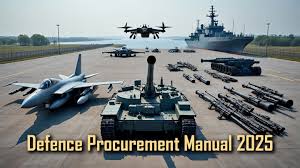
742: REPERCUSSIONS OF KEY CHANGES IN THE NEW DEFENCE PROCUREMENT MANUAL 2025


Presented my views on the subject during a discussion on CNBC News Channel


The Defence Procurement Manual (DPM) 2025 has been approved by Raksha Mantri Shri Rajnath Singh, replacing the 2009 manual. It aims to streamline and simplify revenue procurement processes for the Ministry of Defence, aligning with modern warfare needs and promoting self-reliance under Aatmanirbhar Bharat. The DPM 2025 governs ₹1 lakh crore in revenue procurements for FY 2025, and incorporates technology, fairness, and accountability to meet contemporary public procurement standards. Highlights according to the press release include:-

Enhanced Self-Reliance. A new chapter promotes innovation and indigenisation, encouraging collaboration with private industries, MSMEs, startups, academia, and DPSUs to develop defence items/spares in-house.

Ease of Doing Business. Simplified processes, relaxed penalties (e.g., minimal 0.1% Liquidity Damages post-prototype, capped at 5-10%), and supportive financing options address industry concerns, fostering participation.

Expedited Procurement. Empowers Competent Financial Authorities (CFAs) at lower levels to facilitate faster decision-making, timely payments, and flexibility in extending delivery periods or bid dates, thereby boosting participation.

Support for Innovation. Assured orders for up to 5-10 years, technical support, and handholding for suppliers to ensure successful development.

Operational Efficiency. Allows 15% upfront provision for repair/refit/maintenance to reduce equipment downtime and provisions for limited tendering (up to ₹50 lakh) and proprietary item procurement.

Transparency & Fairness. Aligns with Ministry of Finance guidelines, promotes competitive bidding by removing DPSU No Objection Certificate requirements, and streamlines Government-to-Government procurement.

Jointness & Preparedness. Facilitates coordination among the Armed Forces, ensuring timely resource availability at optimal costs to maintain military readiness.


Repercussions of Key Changes

 Assured guarantee of orders in terms of quantity, up to five years and beyond that, up to another five years in exceptional circumstances: This provides long-term financial predictability for vendors, encouraging investments in production capacity, technology, and workforce. For the industry, it lowers entry barriers for private firms and MSMEs, boosting confidence to participate in defence contracts and fostering sustained supply chains. It could accelerate indigenisation by enabling economies of scale, potentially reducing costs over time. However, it might lock the government into commitments if requirements change, though the special circumstances clause adds flexibility. Overall, this enhances defence readiness by ensuring the timely availability of spares and equipment, reducing procurement uncertainties.


Requirement of obtaining NOC from some DPSUs before open bidding has been dispensed with & tenders will be awarded purely on a competitive basis: By removing the NOC barrier, this levels the playing field between public (DPSUs) and private entities, promoting fair competition and potentially driving down costs through broader bidding. For private industry, it increases opportunities to win contracts, encouraging more participation from startups and non-traditional players, which could spur innovation and efficiency. DPSUs may face heightened competition, pushing them to improve performance but possibly eroding their traditional advantages. The repercussion on procurement is faster and more transparent processes, reducing bureaucratic hurdles. This supports defence readiness by diversifying suppliers and mitigating risks from over-reliance on a few entities, though it could initially lead to adjustment challenges for DPSUs.


Upfront provision of 15% in growth of work to be allowed in maintenance of various aerial & naval platforms to reduce equipment downtime: This flexibility accounts for evolving maintenance needs, such as increased complexity or fleet expansions, allowing contracts to adapt without renegotiation. It directly improves operational readiness by minimising downtime for critical assets like aircraft and ships, ensuring higher availability during missions. For the industry, it provides revenue stability and encourages specialised service providers to invest in skills and infrastructure. Potential downsides include slightly higher upfront costs for the government, but the focus on efficiency could offset this through reduced long-term disruptions. This change aligns with modern warfare demands, enhancing the armed forces’ agility.


Liquidated Damages will not be levied during the development phase: Eliminating penalties in the early R&D stage reduces financial risks for developers, particularly startups and innovators experimenting with new technologies. This encourages bolder participation in prototype development, fostering innovation and accelerating indigenisation efforts. For the procurement process, it shifts focus from punishment to collaboration, potentially shortening development timelines by removing fear of harsh repercussions. However, it might lead to laxity if not monitored, though overall it boosts industry confidence and supports defence readiness by speeding up the introduction of advanced systems.


Minimal liquidated damages of 0.1% will be levied post-development of the prototype: This lenient post-prototype penalty (far below typical rates) incentivises vendors to prioritise quality over rushed delivery, while still maintaining some accountability. It makes contracts more attractive to industry players, especially smaller firms, by minimising financial exposure during scaling-up phases. Repercussions include enhanced innovation through reduced risk, but it could slightly prolong timelines if vendors exploit the leniency. For defence readiness, it ensures reliable prototypes transition smoothly to production, contributing to better-equipped forces without excessive delays.


Maximum liquidated damages to be levied have been lowered to 5% & in case of inordinate delays, a maximum penalty of 10% will be levied: Capping penalties at 5% (with 10% only for extreme cases) protects vendors from crippling financial losses, making defence contracts more viable and encouraging broader industry involvement. This could lower overall bid prices as risks decrease, benefiting procurement efficiency. Implications for innovation are positive, as firms can invest more in R&D without fearing disproportionate penalties. However, it might weaken deterrence against delays, potentially affecting timelines if not paired with strong oversight. On defence readiness, it ensures continuity in supply chains, prioritising long-term partnerships over short-term punitive measures.


In summary, these changes collectively aim to streamline procurement, reduce delays, and promote self-reliance, with broad positive repercussions for private industry growth and military efficiency. They could transform India’s defence ecosystem by attracting more domestic players, though careful implementation will be key to balancing leniency with accountability.


Historical Evolution of the DPM

The Indian government’s defence procurement policies have evolved significantly since the introduction of the Defence Procurement Procedure (DPP-2002), driven by the need to streamline military hardware acquisition and enhance self-reliance. This evolution, spurred by post-Kargil War recommendations, reflects a shift toward indigenous design, development, and manufacturing, aligning with initiatives such as ‘Make in India’ and ‘Aatmanirbhar Bharat’. The policies have progressed from DPP-2002 to the Defence Acquisition Procedure (DAP-2020) and the Defence Procurement Manual (DPM-2025), with each iteration emphasising transparency, efficiency, and indigenisation.


Early History and DPP-2002. Following the Kargil War, the Group of Ministers recommended a structured procurement process, leading to the DPP-2002. This policy aimed to ensure the timely, transparent, and competitive acquisition of equipment for the Armed Forces while fostering self-reliance in defence manufacturing.

Evolution and Revisions. The DPP was revised multiple times (e.g., DPP-2005, DPP-2013) to address practical challenges and emerging needs. A significant milestone was DPP-2016, which replaced DPP-2013 and prioritised indigenous design, development, and manufacturing (IDDM) to reduce dependence on imports.

Defence Acquisition Procedure (DAP-2020). In October 2020, DPP-2016 was superseded by DAP-2020, which further emphasised self-reliance. Developed through consultations with foreign and domestic industries, DAP-2020 streamlined procurement processes and reinforced the focus on indigenous manufacturing.

Defence Procurement Manual (DPM). The DPM-2009 was the first comprehensive manual to guide procurement, offering flexibility while aligning with government regulations. Updates, including DPM-2010, followed it. The latest, DPM-2025, approved in September 2025, introduces a dedicated chapter to promote self-reliance through innovation, indigenisation, and collaboration with industries, academia, and public/private sectors. It also provides assured orders to support long-term development.


Key Trends in Policy Evolution

Self-Reliance. The ‘Aatmanirbhar Bharat’ initiative has been central, with policies increasingly prioritising domestically produced defence systems.

Indigenisation. Emphasis on IDDM systems has grown, encouraging private sector participation and reducing reliance on imports.

Streamlined Processes. Continuous efforts have been made to simplify procedures, reduce delays, and enhance responsiveness to the Armed Forces’ needs.

This progression from DPP-2002 to DAP-2020 and DPM-2025 reflects India’s commitment to building a robust, self-reliant defence ecosystem through innovation, collaboration, and efficient procurement practices.


Please Add Value to the write-up with your views on the subject.

1818
Default rating

Please give a thumbs up if you  like The Post?


For regular updates, please register your email here:-

Subscribe

References and credits

To all the online sites and channels.

Pics Courtesy: Internet

Disclaimer:

Information and data included in the blog are for educational & non-commercial purposes only and have been carefully adapted, excerpted, or edited from reliable and accurate sources. All copyrighted material belongs to respective owners and is provided only for wider dissemination.


References:-

  1. Ministry of Defence, Government of India. (2025). “Defence Procurement Manual 2025: Official Release.”
  1. The Times of India. (2025). “Defence minister approves new manual to streamline procurement, boost indigenisation.”
  1. Economic Times. (2025). “Defence Procurement Manual 2025: Key reforms to enhance private sector participation.”
  1. India Today. (2025). “New defence procurement rules to reduce delays, support Aatmanirbhar Bharat.”
  1. The Hindu Business Line. (2025). “New Defence Procurement Manual to boost ease of doing business, promote indigenisation.”
  1. Financial Express. (2025). “DPM 2025: Lower penalties, faster procurement to boost defence industry.”
  1. Business Standard. (2025). “Defence Procurement Manual 2025 to cut downtime, enhance readiness.”
  1. LiveMint. (2025). “New defence procurement rules to drive innovation, reduce risks for vendors.”
  1. Sengupta, P. (2021). “Aatmanirbhar Bharat and Defence Procurement: Evolution of Policy Framework.” Journal of Defence Studies, 15(3), 45-62.
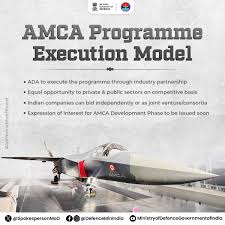
675: AMCA PROGRAMME EXECUTION MODEL: A NEW ERA FOR INDIA’S DEFENCE PRODUCTION


My Article published on the EurasianTimes website on 01 Jun 25.


India’s quest for self-reliance in defence technology has reached a pivotal milestone with the approval of the Advanced Medium Combat Aircraft (AMCA) Programme Execution Model on May 26, 2025. This model, greenlit by Defence Minister Rajnath Singh, introduces a collaborative and competitive framework to accelerate the development of India’s first indigenous fifth-generation stealth fighter jet. Designed by the Aeronautical Development Agency (ADA) under the Ministry of Defence, the AMCA is a 25-tonne, twin-engine, multirole stealth aircraft intended to bolster the Indian airpower capabilities by 2035. The new execution model emphasises private sector involvement, international collaboration, and a competitive bidding process, significantly departing from traditional defence procurement practices.


Advanced Medium Combat Aircraft. AMCA is India’s fifth-generation stealth fighter jet program, developed by the Aeronautical Development Agency (ADA) under the Defence Research and Development Organisation (DRDO). Designed as a multirole, twin-engine aircraft, the AMCA aims to replace ageing fleets such as the SEPECAT Jaguar and Mirage 2000, while complementing the Rafale and future Tejas Mk2 in the Indian Air Force (IAF). The 25-tonne, twin-engine AMCA features stealth shaping, internal weapons bays, and advanced sensor fusion. It is intended to excel in air superiority, deep strike, and electronic warfare missions. It will have an advanced avionics suite, Indigenous AESA radar, and potentially AI-based mission systems. The aircraft is envisioned in two phases: Mark 1 with current-generation technologies and imported engines, and Mark 2 incorporating Indigenous sixth-generation features and an Indian powerplant. The AMCA is strategically significant as it will enhance India’s air combat capabilities and reduce reliance on foreign platforms.

Strategic Significance of AMCA. The AMCA is not just a defence project but a strategic lever and India’s entry ticket into the elite club of fifth-generation fighter operators. The AMCA program is critical to countering regional threats, particularly from China and Pakistan. China’s deployment of J-20 and J-35 stealth fighters, with plans to supply 40 J-35s to Pakistan, underscores the urgency of AMCA’s development. The IAF’s modernisation drive, aiming for 42 squadrons by 2035, relies on the AMCA to maintain a technological edge. The collaborative model’s success could position India among the elite nations with fifth-generation fighters, alongside the US, China, and Russia.


Historical Progress: Bottlenecks. The AMCA program was conceived in the early 2010s as a follow-on to the Light Combat Aircraft (LCA) Tejas. However, despite its strategic importance, progress was tepid due to multiple challenges. Initial timelines projected a first flight by 2020 and production by 2025, but these slipped to 2028 and 2038-39 due to funding constraints and bureaucratic delays. The program’s preliminary design phase began in 2015, with CCS approval only in 2024. The Tejas program’s prolonged development (from the 1980s to the late 2010s) is a cautionary tale, highlighting systemic issues in India’s defence ecosystem. The program lacked an empowered governance structure, slow decision-making, and HAL’s overburdened capacity. The absence of an indigenous high-thrust engine has been a persistent hurdle for the program; the Kaveri engine program’s inability to meet requirements forced reliance on foreign engines, delaying self-reliance. India lacked expertise in advanced technologies and high-thrust engines, necessitating foreign collaboration. The withdrawal from the Indo-Russian FGFA project in 2018 due to disagreements over technology transfer forced a fully indigenous approach, increasing technical risks. The new execution model addresses many of these issues by decentralising authority, attracting capital, and professionalising development.


Boosting the AMCA Program

Collaborative Execution Model. Announced on May 26, 2025, the AMCA Programme Execution Model introduces a public-private partnership (PPP) framework, moving away from the traditional reliance on Hindustan Aeronautics Limited (HAL) as the sole manufacturer. The new model proposes a Special Purpose Vehicle (SPV)-based framework, with a private sector partner who will work alongside the Aeronautical Development Agency (ADA), Hindustan Aeronautics Limited (HAL), and the Indian Air Force (IAF).  Under this model, the ADA will issue an Expression of Interest (EoI) to public and private entities, allowing them to bid independently or as consortia. The model offers flexibility to include global OEMs as technology partners or equity stakeholders in the SPV. This shift signifies a bold experiment breaking free from India’s traditionally state-dominated defence production ecosystem. It promises to enhance project accountability, bring commercial rigour to execution, and facilitate foreign direct investment and technology infusion. The competitive approach aims to streamline development, reduce costs, and integrate cutting-edge technologies. One of the most progressive steps is to move from a nomination-based to a competitive merit-based selection model. The collaborative model is expected to provide several key benefits to the AMCA program.

Encouraging Efficiency and Speed.  By involving private sector firms alongside HAL, the model diversifies the production base, reducing bottlenecks associated with a single manufacturer. Private companies would bring agility, innovation, and financial muscle, which can accelerate manufacturing and delivery timelines. The Ministry of Defence (MoD) has emphasised reducing timelines. Firms will be incentivised to optimise costs and timelines to win bids, reducing the bureaucratic delays that plagued earlier phases of the AMCA program. The Combined Quality Cum Cost Based System (CQCCBS) model will evaluate bids based on technical and financial merits, ensuring high-quality outcomes.

Technology Integration. Including private firms would enable access to advanced manufacturing techniques and expertise in composites, avionics, and AI. The collaboration is expected to enhance the AMCA’s technological edge, aligning it with global fifth-generation standards.

Economic and Industrial Growth. The model would foster a robust domestic aerospace ecosystem, generating employment and technological advancements. By distributing work packages among private firms, the program stimulates investment in infrastructure and skilled workforce development, aligning with India’s “Atmanirbhar Bharat” vision for self-reliance.

Risk Mitigation. The collaborative approach spreads financial and technical risks across multiple stakeholders, reducing the burden on HAL and the government. This is particularly crucial given the program’s history of delays and funding shortages.


Technological Challenges

However, challenges remain. Establishing fighter jet manufacturing facilities requires significant investment, and private firms may face hurdles in acquiring land, infrastructure, and skilled labour. Scepticism persists about their ability to match HAL’s experience, which could lead to initial teething issues. The AMCA’s development involves overcoming significant technological hurdles, particularly in stealth and engine capabilities.

Stealth Technology. Achieving a low radar cross-section (RCS) is critical for the AMCA’s fifth-generation credentials. The AMCA incorporates a twin-tail layout, platform edge alignment, and diverterless supersonic inlet (DSI) with serpentine ducts to conceal engine fan blades. However, refining radar deflection capabilities is essential. India is developing RAM to reduce RCS, with IIT Kanpur’s Anālakṣhya Meta-material Surface Cloaking System (MSCS) enhancing stealth against Synthetic Aperture Radar (SAR). Scaling this technology for industrial production remains a challenge. Stealth design compromises aerodynamics, reducing manoeuvrability. Balancing these aspects requires advanced computational modelling and wind-tunnel testing.

Engine Capabilities. The AMCA’s supercruise and thrust vectoring requirements demand a high-thrust engine, posing significant challenges. India’s lack of indigenous jet engine technology remains a bottleneck. Achieving sustained supersonic flight without afterburners and enabling thrust vectoring for enhanced manoeuvrability requires advanced engine designs. Integrating these systems into the AMCA’s airframe is technically demanding. The Kaveri engine project highlighted the gaps in materials science and manufacturing precision, necessitating foreign expertise.


International Collaboration

The AMCA program’s success hinges on robust private sector and international partners participation. Opening the doors to foreign OEMs and global collaboration is a key differentiator of the new model. Foreign OEMs from Russia, France, the UK, and the US are expected to play a crucial role, particularly in addressing technological gaps. Several roles are envisioned for global partners.

Collaborations ensure technology transfer, critical for building India’s aerospace capabilities. Technology transfer is expected, particularly for stealth shaping, radar-absorbing materials (RAM), advanced avionics, and sensors. Foreign partners can provide expertise in radar-absorbing materials, low-observable designs, and AESA radar systems. The US, with its F-35 program, and Russia, with the Su-57, offer valuable insights, though India’s withdrawal from the Indo-Russian FGFA project in 2018 underscores its focus on indigenous control.

India lacks an indigenous jet engine for the project. The AMCA Mk-1 will use GE Aerospace F414 engines (98 kN), while the Mk-2 requires a 110-120 kN engine. France’s Safran is in advanced talks for co-development, leveraging offset obligations from the Rafale deal. Rolls-Royce has offered to co-design and co-develop, allowing India to retain IP rights. Russia’s expertise in thrust vectoring and the US’s advanced engine technologies are also under consideration. Collaboration with GE (U.S.), Safran (France), or Rolls-Royce (UK) is vital.


Implications for HAL: From Monopoly to Competition

HAL, long seen as India’s defence aviation behemoth, now faces a significant paradigm shift. While HAL will remain a stakeholder in the AMCA program, it will no longer enjoy uncontested leadership. Its role is expected to evolve from sole integrator to collaborator, contributing expertise in production, system integration, and testing infrastructure. This transformation could prove beneficial if HAL adapts proactively.  However, the threat of being sidelined if it fails to remain competitive could motivate internal reforms, increase efficiency, and push HAL toward greater innovation and collaboration. Including foreign OEMs and private firms in the AMCA program will have profound implications for HAL.


Shift from Monopoly to Competition. HAL’s role as the default manufacturer is no longer guaranteed. It must now bid alongside private giants, which could challenge its dominance but also push it to improve efficiency and innovation.

Technology Transfer Opportunities. Collaboration with foreign OEMs like Safran (France) and Rolls-Royce (UK) for engine development offers HAL access to advanced technologies. However, HAL must navigate intellectual property (IP) agreements to ensure India retains significant control.

 Capacity Constraints. HAL’s current workload strains its resources, including 180 Tejas Mk-1A aircraft and four Tejas Mk-2 prototypes. The competitive model would allow HAL to focus on core competencies like final assembly while outsourcing subassemblies to private firms, potentially alleviating pressure.


Challenges Ahead

While the execution model marks a shift, several hurdles remain.

    • SPV Selection & Governance. Choosing the right private partner with financial depth, technical competence, and political neutrality is critical.
    • IP Ownership. Managing intellectual property rights, especially with foreign OEMs, will require legal finesse.
    • Funding Certainty. The AMCA requires an estimated ₹15,000–20,000 crore for development. Ensuring uninterrupted funding from all stakeholders will be vital.
    • Workforce & Skill Gaps. India’s aerospace talent pool must scale up to meet the design, integration, and production demands.
    • Export Potential. Safeguards and foreign collaboration agreements should not hinder India from exporting the platform to friendly nations.


Conclusion

The announcement of a collaborative execution model for AMCA on 26 May 2025 could be the inflexion point the program needed. The model addresses historical delays and technological gaps by fostering competition, involving private firms, and leveraging international expertise. While HAL’s role remains pivotal, shifting toward a diversified production base could redefine India’s defence manufacturing landscape. For a nation striving for strategic autonomy, technological self-reliance, and regional superiority, the success of the AMCA is non-negotiable. However, its execution depends on how well India can manage the complex dynamics of competition, collaboration, and capability development. If the SPV model succeeds, it could become the blueprint for all future high-tech defence platforms in India—from UAVs to next-gen submarines.


Please Add Value to the write-up with your views on the subject.


1818
Default rating

Please give a thumbs up if you  like The Post?


For regular updates, please register your email here:-

Subscribe


References and credits

To all the online sites and channels.

Pics Courtesy: Internet

Disclaimer:

Information and data included in the blog are for educational & non-commercial purposes only and have been carefully adapted, excerpted, or edited from reliable and accurate sources. All copyrighted material belongs to respective owners and is provided only for wider dissemination.


References:-

  1. Ministry of Defence, Government of India. Press Release: “Collaborative Execution Model for AMCA Programme Announced”, 26 May 2025.
  1. Aeronautical Development Agency (ADA). Overview of the Advanced Medium Combat Aircraft (AMCA) Programme.
  1. Pubby, Manu. “India’s AMCA fighter jet project to get private sector partner.” The Economic Times, May 2025.
  1. Unnithan, Sandeep. “How AMCA Will Shape India’s Future Air Power.” India Today Defence, April 2025.
  2. Raju, R. “Challenges in India’s Military Jet Engine Development.” ORF Occasional Paper No. 404, Observer Research Foundation, 2024.
  3. Joshi, Manoj. “India’s Quest for Strategic Autonomy through Defence Indigenisation.” Centre for Policy Research, 2023.
  4. DRDO Annual Report 2023–24. Chapter on Aeronautics R&D and Indigenous Fighter Programs.
  1. GlobalSecurity.org. “AMCA – Advanced Medium Combat Aircraft (India).”
  1. FlightGlobal. “India Eyes Foreign Partners for AMCA Jet Engine Collaboration.” March 2024.
  1. Vivek, Raghuvanshi. “India’s AMCA Jet to Fly with GE Engine Initially, Indigenous Powerplant Planned Later.” Defence News, July 2024.
  2. Roy, Shubhajit. “France’s Safran Proposes Joint Development of Jet Engine for India’s AMCA.” The Indian Express, January 2024.
  3. Singh, Abhijit Iyer-Mitra. “Fifth-Generation Fighter Development: Why India Needs to Rethink.” VIF Brief, Vivekananda International Foundation, 2023.

594: AERO INDIA 2025: CATALYSING ATMANIRBHARTA THROUGH GLOBAL COLLABORATION


My Article published in the News Analytics Journal (Feb 25)


Aero India 2025 is set to be the epicentre of global aerospace and defence collaboration, highlighting India’s evolving role as a pivotal player in international defence partnerships. This 15th edition promises an impressive line-up of global stakeholders, showcasing cutting-edge technologies and fostering bilateral and multilateral agreements. With over 50 countries participating, the event will offer a glimpse into the future of strategic alliances shaping the aerospace and defence sectors.


Aero India 2025 is poised to serve as a testament to India’s growing stature as a global defence manufacturing hub and a reliable partner in the international aerospace and defence market. Expectations include announcements of major defence deals involving technology transfer, new joint ventures and partnerships between Indian and global companies, demonstrations of co-developed and indigenously manufactured platforms, and commitments from global firms to support India’s defence export ambitions.


Support to Indian Initiatives:  Self-Reliance (Atmanirbhar Bharat) and Make in India.


Aero India 2025 is expected to be a critical platform for showcasing India’s advancements in the aerospace and defence sectors, aligning with the Indian government’s self-reliance initiatives (Atmanirbhar Bharat) and Make in India. These programs aim to enhance indigenous manufacturing capabilities while fostering international collaborations to strengthen India’s defence ecosystem. Foreign defence companies will likely play a pivotal role in accelerating India’s self-reliance in defence manufacturing.


    • Technology Transfer. Many global defence companies, such as Boeing, Lockheed Martin, Dassault Aviation, and Saab, have shown interest in transferring cutting-edge technologies to India through Transfer of Technology (ToT) agreements. Technology transfer agreements could include joint development of advanced platforms like fighter jets, UAVs, and missile systems, and transfer of critical avionics and weapon systems for India’s indigenous defence platforms.


    • Joint Ventures. Companies like Airbus, Rafael Advanced Defense Systems, and Thales are expected to partner with Indian firms such as Hindustan Aeronautics Limited (HAL) and Bharat Electronics Limited (BEL) and private-sector players like Tata Advanced Systems and Larsen & Toubro. Joint ventures may involve manufacturing aircraft components, avionics, and even entire platforms domestically. Collaborations like Tata-Airbus for the C-295 transport aircraft and Lockheed Martin-Tata for F-21 fighter production underline these partnerships.


    • Setting Up Manufacturing Facilities. Several foreign firms have already set up or announced plans to establish production units in India under Foreign Direct Investment (FDI) guidelines. Boeing and Tata’s joint venture for producing fuselages for Apache helicopters. Lockheed Martin and Tata’s collaboration for the C-130 transport aircraft components. These facilities are expected to expand under Make in India, with potential investments announced at Aero India 2025.


    • Collaborative R&D. Foreign companies may collaborate with Indian start-ups and DRDO to co-develop technologies tailored to Indian needs, such as AI-powered drones, cyber-security systems, and space-based defence solutions. This would strengthen India’s indigenous capabilities while meeting global standards.


    • Skill Development and Employment Generation. International firms can help train Indian engineers and technicians, creating a skilled workforce for high-tech defence manufacturing. These efforts align with the Make in India initiative by promoting employment and building technical expertise locally by training Indian engineers and technicians.


    • Local Sourcing and Indigenisation. Foreign defence contractors are increasingly sourcing components from Indian MSMEs (Micro, Small, and Medium Enterprises). This not only reduces costs but also integrates Indian companies into the global defence supply chain.


    • Offset Obligations. Foreign companies winning large contracts from India are obligated to reinvest a percentage of the contract value into the Indian economy, typically through local production or technology partnerships. Aero India 2025 will likely witness announcements of new offset agreements contributing to the Atmanirbhar Bharat mission.


    • Support for Export Goals. India aims to become a major exporter of defence equipment. Collaborations with foreign firms can help India achieve this by building export-oriented manufacturing hubs and co-developing products for third-party markets.


Expected Global Partnerships & Collaborations


India-US Defence Technology and Trade Initiative (DTTI). The DTTI serves as a cornerstone for India-US defence cooperation. It focuses on Co-Developing critical technologies such as unmanned aerial systems (UAS), advanced jet engine technologies, AI-driven defence platforms, and joint production of components for fighter jets and rotary-wing aircraft.  At Aero India 2025, announcements around technology transfers and co-production agreements are expected, including developments in the Predator drone program and the possible localisation of parts for advanced F-21 fighter jets. These partnerships are between the Indian Ministry of Defence (MoD), the U.S. Department of Defence, and Major corporations, including Lockheed Martin, Boeing, and General Atomics, underscore India’s growing influence in the Indo-Pacific security architecture and the emphasis on interoperability between the armed forces of both nations.


Indo-French Aerospace Cooperation. India and France share a long-standing defence partnership, highlighted by the success of the Rafale deal.  The focus areas include enhancements to the Rafale fighter aircraft, co-development of next-generation aircraft engines and stealth technologies, and expanding collaboration in space exploration and satellite technologies. Aero India 2025 is expected to unveil agreements between Dassault Aviation, Safran Group, Hindustan Aeronautics Limited (HAL), and ISRO on Rafale upgrades and possibly the joint development of engines for India’s AMCA project. Collaborative efforts in space technologies, especially in reusable launch systems and space situational awareness, will also take center stage.


India-Russia Military Aviation Partnership. Despite shifting geopolitical dynamics, India and Russia maintain strong defence ties. At Aero India 2025, Russia is expected to pitch for the Su-57 and Ka-226T helicopters. Additionally, discussions around BrahMos II hypersonic missile developments will likely underscore this partnership’s (United Aircraft Corporation (UAC), Rostec Corporation, and HAL) technological depth.


UK-India Partnership. The UK-India collaboration in aerospace technology is a time-tested partnership. Convergence may occur between BAE Systems, Rolls-Royce, and India’s Defence Research and Development Organisation (DRDO) towards the co-development of the Tempest 6th-generation fighter jet, integrating advanced radar systems and electronic warfare (EW) technologies, and establishing training and simulation programs for combat readiness. Announcements at Aero India 2025 are expected to include new agreements on technology sharing and localised component production, aligning with India’s Atmanirbhar Bharat vision.


Indo-Israel Defence Collaboration. India-Israel defence cooperation is synonymous with innovation in unmanned systems and precision weaponry. Mutual interests include the development of high-altitude long-endurance (HALE) drones and loitering munitions, the co-production of advanced anti-drone systems and counter-UAV technologies, and enhancing missile defence systems, including Barak-8 upgrades. Aero India 2025 will highlight developments in drone warfare technologies, including AI-driven solutions for countering UAV threats. Collaborative efforts between Israel Aerospace Industries (IAI), Rafael Advanced Defence Systems, and Bharat Electronics Limited (BEL) on missile defence systems are also expected to garner attention.


India-Japan Space and Defence Initiatives. India and Japan’s growing space and defence technologies partnership reflects their shared strategic interests in the Indo-Pacific. Convergence areas include the co-development of satellite-based navigation and communication systems, joint research on space debris management and space situational awareness, and collaboration on robotic lunar exploration missions. Aero India 2025 may feature announcements between the Japan Aerospace Exploration Agency (JAXA), ISRO, and defence ministries of both nations on joint space missions and defence applications of satellite technologies.


European Defence Partnerships. European nations would leverage Aero India 2025 to expand their defence footprint in India. Possible areas could be Eurofighter Typhoon fighter aircraft, co-development of next-generation air-to-air missiles and autonomous combat systems, and establishment of advanced pilot training programs. Expected highlights could include technology transfer agreements and joint ventures between Airbus, MBDA, and HAL to develop autonomous combat systems and advanced missile technologies.


Indo-South Korea Aerospace Ventures. South Korea’s expertise in aerospace and defence aligns with India’s Make-in-India initiative. Mutual areas of interest could include expanding maintenance, repair, and overhaul (MRO) capabilities, developing advanced trainer aircraft and light combat vehicles, and collaborating on naval aviation solutions and anti-submarine warfare technologies. Aero India 2025 could see agreements between Korea Aerospace Industries (KAI) and Tata Advanced Systems Limited (TASL) for co-development projects, including next-generation trainer aircraft and solutions for naval aviation.


Middle Eastern Collaborations. Middle Eastern nations are emerging as key partners in India’s aerospace ecosystem. A collaborative focus could be on co-producing aero-structures and components for UAVs and fighter jets, establishing MRO facilities for military and civilian aircraft, and developing joint UAV systems for surveillance and combat. Aero India 2025 will likely feature agreements between UAE’s EDGE Group, DRDO, and Indian private aerospace firms on joint production and establishing advanced MRO facilities, enhancing regional cooperation.


Emerging Collaborations with African Nations. India’s growing Defence exports to Africa will be a focal point at Aero India 2025. Joint Areas of Focus could be development of cost-effective defence solutions tailored to African security needs, capacity-building initiatives, including training programs for military personnel, and export of Indian defence platforms to African markets. Collaborative efforts between Indian defence exporters and African defence ministries could materialise in training and technology sharing will highlight India’s role as a reliable partner in strengthening Africa’s defence capabilities.


Conclusion. Aero India 2025 is a landmark event that showcases the convergence of global defence technologies and strategic partnerships. It is likely to strengthen the synergy between foreign defence firms and India’s self-reliance goals. The combination of advanced foreign technology and India’s growing defence manufacturing capabilities will not only contribute to the Make in India initiative but also position India as a global defence manufacturing hub. From advanced aerospace systems to AI-driven innovations, the international collaborations will shape the future of defence and security. As India positions itself as a global hub for defence production and technology, the event will be crucial in fostering alliances that strengthen regional and global security.


Please do Comment.


1818
Default rating

Please give a thumbs up if you  like The Post?


For regular updates, please register your email here:-

Subscribe


References and credits

To all the online sites and channels.

References:-

  1. Department for Promotion of Industry and Internal Trade (DPIIT), “Make in India: Strategic Sectors – Defence”, https://makeinindia.com/defence-manufacturing
  1. Sharma, R., & Mishra, P., “Evaluating Technology Transfers in the Indian Defence Sector: Successes and Challenges.” Journal of Defence Studies, 18(3), pp. 45-62. (2024).
  1. Singh, K, “The Role of Foreign Direct Investment in India’s Aerospace Industry.” International Journal of Industrial Development, 15(2), pp. 89-104, (2023).
  1. Mehta, A, “Atmanirbhar Bharat and Defense Modernization: A Strategic Analysis.” Defence Research and Development Journal, 10(1), pp. 21-38. (2022).
  1. The Economic Times, “Global Giants Backing India’s Defense Industry at Aero India 2025.” https://economictimes.indiatimes.com
  1. The Hindu Business Line, “Aero India 2025: Pushing India’s Aerospace Industry into Global Spotlight.” https://thehindubusinessline.com
  1. India Today, “Aero India’s Role in Realising India’s Defense Export Goals.” February 2024.
  1. FICCI (Federation of Indian Chambers of Commerce & Industry), “Catalysing Atmanirbhar Bharat: Defence and Aerospace Sector Vision 2030”.
  1. Aero India 2025 Guide, Published by the Indian Ministry of Defence.

Disclaimer:

Information and data included in the blog are for educational & non-commercial purposes only and have been carefully adapted, excerpted, or edited from reliable and accurate sources. All copyrighted material belongs to respective owners and is provided only for wider dissemination.


English हिंदी