
710: SHAHEEN-3 MISSILE TEST FAILURE: A WAKE-UP CALL FOR PAKISTAN’S MISSILE PROGRAM


My article was published on “The EurasianTimes” website

on 24 Jul 25.


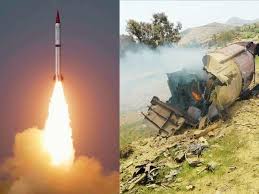
On July 22, 2025, Pakistan’s ambitious ballistic missile program experienced a notable setback and its strategic defence landscape was jolted, by the high-profile failure of its Shaheen-3 ballistic missile test. The incident, occurring near civilian settlements and in dangerously proximity to a primary nuclear site, has drawn national and international attention, not only over the technical reliability of Pakistan’s missile program but also concerning the safety of local populations and the geopolitical stability of South Asia.


The Missile. The Shaheen-III, developed by Pakistan’s National Development Complex (NDC) in collaboration with the National Engineering and Scientific Commission (NESCOM), constitutes a fundamental component of the nation’s strategic defence capabilities. With an asserted range of 2,750 kilometers, this missile is engineered to carry both conventional and nuclear warheads, thereby ranking among Pakistan’s most sophisticated systems. Its development is regarded as a strategic response to India’s expanding missile capabilities, including the Agni series, and aims to maintain deterrence within the volatile security environment of South Asia. The missile’s capacity to reach targets over an extensive geographical area highlights its strategic importance.


The Incident. The Shaheen-3 was launched from the Dera Ghazi Khan region in Punjab. According to multiple credible reports, the missile deviated from its planned trajectory shortly after launch and crashed in the Matt area of Dera Bugti district in Balochistan. The impact site was alarmingly close, approximately 500 meters, to civilian settlements and within the vicinity of a significant nuclear facility. Residents reported a powerful explosion near the Loop Seharani Levies Station, which was heard 20–50 kilometers away. Shockwaves of concern rippled through nearby communities, leading to scenes of panic and evacuation as locals rushed to distance themselves from a potential disaster. Social media platforms circulated videos and messages depicting the chaos.


Local Reaction. Pakistan’s Inter-Services Public Relations (ISPR) issued a brief statement acknowledging the test but maintained that all safety standards were followed. The statement, however, lacked specifics about the cause of the failure or the environmental impact of the crash. This opacity has fuelled speculation and criticism, both domestically and internationally. Analysts point out that the absence of transparent reporting on such incidents undermines public confidence in Pakistan’s missile program and raises questions about the technical reliability of the Shaheen-III.


Safety and Security Concerns. The close call between the missile crash and a densely populated area, combined with the proximity to critical nuclear infrastructure, has highlighted serious safety and security vulnerabilities. Given Balochistan’s historical sensitivity due to both its restive population and strategic assets, the event stoked local and national anxieties about the risks associated with missile tests conducted in such areas. While there were no immediate reports of casualties, the potential for significant harm was evident. The magnitude of the blast, the risk of radioactive contamination, and the psychological fear instilled in the local population have all contributed to widespread condemnation and calls for more responsible test protocols.


Technical Reliability and Pattern of Failures. What makes this incident particularly concerning is its apparent repeat of past failures. Reports indicate that previous Shaheen-3 tests, including those in 2023, also resulted in accidents near nuclear or sensitive military infrastructure. This pattern of technical shortcomings raises fundamental questions over the actual operational reliability of Pakistan’s most far-reaching missile.


Reinforcement of US concerns. The timing of the failure is notably significant, occurring merely months after the United States imposed sanctions in December 2024 on entities associated with Pakistan’s ballistic missile program. The United States expressed concerns regarding proliferation risks and the potential for missile technology to destabilise the region. This unsuccessful test is likely to intensify these concerns, supplying additional argumentation to critics who contend that Pakistan’s missile development suffers from insufficient oversight and technical maturity.


Strategic Significance. The Shaheen-3 is considered a central pillar of Pakistan’s deterrence strategy, designed to ensure that all major cities in India and beyond are within striking distance. The reliability of such a strategic asset is therefore crucial, not merely for defence planners in Islamabad but also for regional actors who closely monitor each development as part of a delicate balance of power. Its recent failures have reignited debate over the safety of ongoing missile development and testing in densely inhabited or strategically sensitive regions. The risk of sparking a larger geopolitical crisis, either by accident or escalation, is heightened whenever flaws in command, control, or technical functioning come to light.  The failure of the Shaheen-3 test not only undermines the credibility of this deterrence strategy but also raises questions about the effectiveness of Pakistan’s missile program.


The Shaheen-III test failure is likely to have far-reaching consequences. For Pakistan, it represents a setback in its quest for a credible deterrent against regional rivals. For the international community, it underscores the challenges of managing proliferation risks in a region marked by intense strategic competition. It serves as a stark reminder of the serious risks associated with the testing and deployment of advanced ballistic missile technology in volatile environments. It exposes both persistent technical challenges and deep-rooted concerns over transparency and public safety. The incident has reignited discussion on the necessity of responsible stewardship over strategic assets, especially those capable of influencing the delicate balance of peace and security in the region, highlighting the importance of the issue.


Please Add Value to the write-up with your views on the subject.


1818
Default rating

Please give a thumbs up if you  like The Post?


For regular updates, please register your email here:-

Subscribe

Link to the article on the website:-

“Shockwaves” In Balochistan As Pakistan’s Nuclear-Capable Missile Crashes Near Nuclear Site; Shaheen-III Failure Sparks Concerns


References and credits

To all the online sites and channels.

Pics Courtesy: Internet

Disclaimer:

Information and data included in the blog are for educational & non-commercial purposes only and have been carefully adapted, excerpted, or edited from reliable and accurate sources. All copyrighted material belongs to respective owners and is provided only for wider dissemination.


References:-

1.News Reports & Regional Media Coverage, The Balochistan Post (July 23, 2025), “Missile crash incident near Dera Bugti triggers panic among locals”

2.Associated Press. (2024, December 20). U.S. Imposes Sanctions on Entities Linked to Pakistan’s Ballistic Missile Program.

3.Dawn News. (2025, July 23). Shaheen-III Missile Test Fails, Crashes in Dera Bugti. Dawn.

4.Inter-Services Public Relations (ISPR). (2025, July 22). Official Statement on Shaheen-III Test Launch.

5.Khan, A. (2025, July 23). Local Residents Report Tremors, Debris from Missile Crash in Balochistan. The News International.
619: PAKISTAN TRAIN HIJACK: START OF A LARGER CRISIS?


My Article was published on the Eurasian Times Website

on 12 Mar 25.


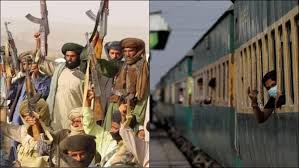
On March 11, 2025, separatist militants attacked the Jaffar Express passenger train in Balochistan’s Bolan district, Pakistan. The train, carrying approximately 500 passengers, was en route from Quetta to Peshawar when it was ambushed in a tunnel. The assailants detonated explosives on the railroad track and engaged in gunfire with onboard security personnel. The Baloch Liberation Army (BLA), designated as a terrorist organisation by both Pakistan and the United States, claimed responsibility for the assault. They asserted that they had taken security forces and civilians hostage, using women and children as human shields. Authorities face challenges accessing the remote, mountainous area to conduct rescue operations. ​

Reports on the number of hostages vary, with some sources estimating 182 while others suggest the initial number could exceed 400. The BLA later claimed to have released civilian passengers—including women, children, and Baloch citizens—but retained active-duty military and security personnel. Conflicting accounts also exist regarding casualties, with the BLA alleging deaths among security forces, though exact figures remain unconfirmed.

The crisis remains ongoing, with tensions high between the BLA and Pakistani authorities. The government and military face the challenge of resolving the standoff without further loss of life, while the BLA’s threats add urgency to the situation. The incident underscores the persistent unrest in Balochistan and the complexities of addressing the region’s separatist movements.


BLA Origin and Background. The Balochistan Liberation Army (BLA) is an ethno-nationalist militant group that seeks an independent Balochistan, citing political marginalisation, economic exploitation, and human rights abuses by the Pakistani state. Its origins are deeply rooted in the broader Baloch nationalist movement, which began when Pakistan annexed the princely state of Kalat in 1948 despite resistance from its ruler, Mir Ahmad Yar Khan. This led to the first Baloch insurgency, followed by successive uprisings in 1958-59, 1973-77, and post-2000, each met with Pakistani military crackdowns. The modern BLA is believed to have formed in the late 1990s or early 2000s, allegedly led by Baloch separatist leaders such as Hyrbyair Marri and Balach Marri. The growing militarisation of Balochistan fueled its emergence, enforced disappearances, and the assassination of nationalist leaders, notably Nawab Akbar Bugti, in 2006. Initially, the BLA targeted Pakistani security forces, gas pipelines, and government installations, but in the 2010s, it expanded its focus to attacking Chinese interests, particularly the China-Pakistan Economic Corridor (CPEC). High-profile attacks include the 2018 Karachi consulate bombing, the 2019 Gwadar Pearl Continental attack, and the 2022 Karachi University suicide bombing targeting Chinese nationals. Pakistan has banned the BLA and designated it as a terrorist organisation, accusing India’s RAW and Afghan intelligence of supporting it, though India denies involvement. The BLA has since fragmented into factions like the Majeed Brigade, known for its suicide attacks and high-profile operations.


Pakistan’s Strategy to Deal with the Baloch Problem. Pakistan has adopted a military-centric approach to address the Baloch insurgency, using a combination of force, intelligence operations, and economic incentives. The Pakistan Army and intelligence agencies (ISI and MI) have led counterinsurgency campaigns, conducting large-scale military operations, airstrikes, and search-and-kill missions against Baloch militant groups like the Balochistan Liberation Army (BLA). Reports suggest enforced disappearances, extrajudicial killings, and torture of suspected militants and activists, which have further fuelled resentment. To counter separatist narratives, Pakistan has also sought to integrate Balochistan into national development programs. Projects under the China-Pakistan Economic Corridor (CPEC), including Gwadar Port, are promoted as economic solutions, but many Baloch nationalists argue they benefit outsiders while displacing locals. The government has also offered amnesty programs, urging militants to surrender in exchange for reintegration and financial incentives. Diplomatically, Pakistan has labelled Baloch insurgents as foreign-backed terrorists. Security forces have intensified border controls and cracked down on pro-Baloch political groups and media outlets. However, these actions have failed to neutralise the insurgency, as groups like the BLA’s Majeed Brigade continue attacks, mainly targeting Pakistani forces and Chinese interests in the region.


Past Incidents Worldwide. Throughout history, militant groups have targeted trains for hijackings or attacks as part of their insurgencies. During the Nicaraguan Contra War (1980s), the leftist Sandinista rebels hijacked and ambushed trains carrying military supplies, disrupting government forces. In Russia, Chechen militants and North Caucasus insurgents targeted trains, including the 2009 Nevsky Express bombing, which killed dozens and highlighted vulnerabilities in railway security. Closer at home, in 1982, Naxalite rebels in India hijacked a train in Bhusaval, Maharashtra, using it as a platform to protest government policies. Naxalites have also derailed and bombed trains, particularly in Chhattisgarh, Jharkhand, and Odisha, as part of their guerrilla warfare.  These historical cases show how trains remain a strategic target for militants aiming to spread terror and weaken state control.


Likely Future Consequences.

This incident underscores the ongoing security challenges in Balochistan and reflects the BLA’s capacity to orchestrate significant attacks. It marks a serious escalation in the Baloch insurgency and could have far-reaching consequences for Pakistan’s security, economy, and regional stability. The incident demonstrates the BLA’s growing operational capability, suggesting that future attacks could target critical infrastructure, transport networks, and Chinese-backed projects like CPEC. In response, Pakistan is likely to intensify military operations, search-and-destroy missions, and intelligence-based crackdowns in Balochistan. However, such actions may exacerbate local grievances, leading to further radicalisation and recruitment into militant ranks. The potential future consequences of this incident are grave, emphasizing the need for immediate action and the audience’s understanding of the gravity of the situation.

Politically, the hijacking may prompt increased state suppression of Baloch political movements, fuelling more unrest. It could also heighten diplomatic tensions, as Pakistan is likely to accuse India (RAW) of supporting Baloch insurgents, increasing hostilities between the two nations. Additionally, the attack raises serious security concerns for Chinese investments, potentially discouraging future economic cooperation and funding for CPEC projects. Foreign investors may reconsider their commitments if such incidents continue, further straining Pakistan’s fragile economy. The incident could have significant economic implications, potentially discouraging foreign investment and economic cooperation and undermining the potential benefits of CPEC for regional development.

In the long term, the train hijacking could push the Baloch insurgency towards more sophisticated urban warfare tactics, creating sustained instability that Pakistan’s current military approach may struggle to contain.


Please Do Comment.


1818
Default rating

Please give a thumbs up if you  like The Post?


Link to the article on the website:-

https://www.eurasiantimes.com/train-attack-pakistan-sends-200-coffins-to-bolan/


For regular updates, please register your email here:-

Subscribe


References and credits

To all the online sites and channels.

Pics Courtesy: Internet

Disclaimer:

Information and data included in the blog are for educational & non-commercial purposes only and have been carefully adapted, excerpted, or edited from reliable and accurate sources. All copyrighted material belongs to respective owners and is provided only for wider dissemination.


English हिंदी