
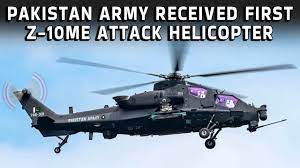
716: PAKISTAN ARMY INDUCTS CHINA’S Z-10ME ATTACK HELICOPTER


My Article was published on “The EurasianTimes” website

on 04 Aug 25.


On August 2, 2025, the Pakistan Army inducted the Chinese-manufactured Z-10ME attack helicopter into its aviation wing. The induction ceremony was held at Multan Garrison and presided over by Chief of Army Staff Field Marshal Asim Munir. During the induction ceremony, a firepower demonstration at the Muzaffargarh Field Firing Ranges showcased the Z-10ME’s operational prowess. The helicopter executed precision strikes, demonstrating its ability to engage targets with accuracy and lethality. This event not only marks the first known export of the Z-10ME but also highlights Pakistan’s growing military-industrial ties with China.

Designed for high-altitude operations, precision strike missions, and enhanced survivability in contested environments, the Z-10ME is poised to become the cornerstone of Pakistan’s attack helicopter fleet, supplanting the ageing American-supplied AH-1F Cobra helicopters. The induction of the Z-10ME signifies a significant realignment in Pakistan’s defence procurement strategy, especially in light of the stalled agreements with Western suppliers.


The Z-10ME

 The Z-10ME, an export-oriented variant of China’s Z-10 attack helicopter, is designed to deliver precision strikes in both day and night conditions, making it a versatile asset for modern battlefields. It is often referred to as China’s answer to the American AH-64 Apache and the Russian Mi-28 Havoc. Developed by the Changhe Aircraft Industries Corporation (CAIC), the Z-10ME is equipped with cutting-edge technology tailored to meet the demands of complex combat environments.

Pakistan’s variant comes equipped with twin uprated WZ-9G turboshaft engines, providing approximately 1,500 horsepower each, designed to deliver reliable performance in high-altitude, hot-and-dusty operational theaters, a crucial requirement given Pakistan’s mountainous terrain in areas like Khyber Pakhtunkhwa and Balochistan. The service ceiling exceeding 6,000 meters enables operations in regions where older platforms, such as the AH-1F, struggled with payload and manoeuvrability.

The Z-10ME is engineered with an emphasis on all-weather, day-night precision strike capabilities, integrating advanced sensor suites that include millimeter-wave (MMW) radar, electro-optical targeting systems (EOTS), and helmet-mounted displays (HMD) for pilots. Its six external hardpoints allow it to carry a versatile range of munitions, including AKD-10 anti-tank guided missiles (ATGMs), CM-502AG air-to-ground missiles, TY-90 air-to-air missiles, and precision-guided rockets. Additionally, the Z-10ME is compatible with CM-501XA loitering munitions and SW-6 launchable UAVs, offering Pakistan a multi-domain strike capability.

One of the helicopter’s standout survivability features is its infrared-suppressed exhaust system, designed to reduce heat signatures against MANPADS threats. Its sand-filtered engine intakes, composite armour plating, self-defence electronic warfare (EW) suite, and laser warning receivers further enhance its ability to survive in modern contested environments.


Analytical Perspective

Failed Acquisition Efforts: China to the Rescue. The induction of the Z-10ME coincides with Pakistan’s ongoing efforts to modernise its battlefield aviation assets, particularly following obstacles encountered in acquiring Western attack helicopters. Pakistan’s ageing fleet of Bell AH-1F Cobras, initially inducted in the 1980s, has become increasingly obsolete in the face of advanced air defence systems and technologically sophisticated enemy armour. An earlier attempt to procure the Turkish T-129 ATAK helicopters was unsuccessful after the United States withheld export licenses for the CTS800 engines, thereby effectively terminating the deal. Similarly, Pakistan’s persistent requests to acquire additional AH-1Z Viper helicopters from the United States have been impeded due to diplomatic tensions and export restrictions. In this context, China has emerged as a reliable defence partner, offering a capable and adaptable solution through the Z-10ME platform. For Pakistan, this development not only addresses a critical operational deficiency but also aligns with its broader strategic objectives of reducing dependence on Western suppliers, diversifying its defence arsenal, and strengthening defence-industrial collaboration with Beijing.

Pakistan-China Military Cooperation. The induction of the Z-10me signifies a milestone in Pakistan-China military collaboration, which has witnessed substantial growth in recent years. China has become Pakistan’s principal arms supplier, offering a diverse array of platforms, ranging from main battle tanks to naval vessels. The agreement concerning the Z-10ME fortifies this partnership, illustrating China’s confidence in Pakistan as a strategic ally and as a significant market for its defence exports. This collaboration transcends mere equipment procurement. The two nations have engaged in joint military exercises, technology transfers, and co-production agreements, thereby fostering interoperability and enhancing technical expertise. The China-Pakistan Economic Corridor (CPEC), a flagship initiative within China’s Belt and Road Initiative, has further solidified bilateral ties, with security cooperation playing an essential role in protecting CPEC infrastructure. The deployment of the Z-10me could augment Pakistan’s capacity to safeguard these economic assets, particularly in volatile regions such as Balochistan.

Fleet Size and Deployment Plans. While the exact number of helicopters in the initial batch remains undisclosed, defence analysts estimate that Pakistan has received an initial tranche of 4–8 units, with a long-term objective of inducting around 50–60 helicopters. These helicopters are expected to be deployed across strategically vital sectors, including the Eastern front facing India, counter-terrorism operations in the North-West, and rapid deployment roles in the South. Operational deployment is also expected to focus on integration with Pakistan’s Network-Centric Warfare (NCW) infrastructure, enabling seamless coordination with ground forces, surveillance drones, and air defence units.

Capability Enhancement. From a tactical standpoint, the Z-10ME significantly enhances Pakistan’s capability to conduct close air support (CAS), anti-armour missions, and precision strikes against high-value targets in complex terrains. The helicopter’s ability to integrate unmanned systems, loitering munitions, and advanced networked sensors offers the Pakistan Army a level of operational flexibility that its legacy platforms could not provide. With the Z-10ME in its arsenal, the Pakistan Army Aviation Corps can now:-

    • Deliver precise anti-armour strikes against adversary mechanised forces, particularly relevant in the context of India’s armoured strength along the eastern border.
    • Provide sustained air support and rapid troop deployment in insurgency-prone areas, enhancing the ability to counter hostile movements swiftly.
    • Conduct modern reconnaissance and battlefield management missions, thanks to digital communications, long-range optics, and robust sensor suites.
    • Project airpower into rugged mountainous terrains, where older helicopters struggled to operate at full effectiveness.


Challenges. While the Z-10ME signifies a significant advancement for Pakistan’s army aviation, its integration into the force encounters several challenges. Training pilots and maintenance personnel to operate and maintain this new platform will necessitate substantial investments of time and resources. The Pakistan Army must establish a comprehensive logistics and support infrastructure to guarantee the helicopter’s operational readiness. Furthermore, ensuring interoperability with existing systems and fostering coordination with other branches of the armed forces will be essential to maximising the Z-10ME’s operational effectiveness.

Future Prospects. Looking ahead, the induction of the Z-10me paves the way for enhanced collaboration with China, potentially involving technology transfers and joint development of future platforms. As Pakistan advances its military modernisation efforts, the Z-10ME is expected to play a pivotal role in shaping its army aviation strategy. Its success will depend on Pakistan’s capacity to capitalise on the helicopter’s capabilities while effectively addressing logistical and operational challenges.

Regional Implications. The deployment of the Z-10ME helicopter holds considerable significance for regional security dynamics, particularly within the context of Pakistan’s rivalry with India. The modernisation of the Indian military, exemplified by its procurement of Apache AH-64E attack helicopters from the United States, has incentivised Pakistan to pursue comparable capabilities. While the Z-10ME may not fully match the advanced systems of the Apache in every aspect, it offers a cost-effective alternative with comparable firepower and operational versatility. This acquisition underscores Pakistan’s intention to preserve a credible deterrent against potential adversaries. Furthermore, the deployment of the Z-10me could alter the power balance in South Asia, particularly in the realms of counterinsurgency and border operations. Its capacity to execute precision strikes against terrorist hideouts and to support ground forces in remote regions enhances Pakistan’s operational scope. Nevertheless, this development also raises concerns regarding an arms race in the region, as neighbouring states may respond by accelerating their military modernisation initiatives.


Conclusion

The induction of the Z-10ME attack helicopter into the Pakistan Army signifies a significant advancement in its military modernisation and strategic alliance with China. With its cutting-edge technology, precision strike capabilities, and reliable all-weather performance, the Z-10ME augments Pakistan’s capacity to confront a broad spectrum of security concerns, ranging from counterterrorism initiatives to conventional combat. As an emblem of Pakistan-China collaboration, the helicopter highlights the strengthening defence relations between the two nations. Although challenges persist, the integration of the Z-10me into the Pakistan Army Aviation Corps positions it as a vital asset in safeguarding the nation’s security and sovereignty amid an increasingly complex regional landscape.


Please Add Value to the write-up with your views on the subject.


1818
Default rating

Please give a thumbs up if you  like The Post?


For regular updates, please register your email here:-

Subscribe

Link to the article on the website:-

After J-10C Fighters, China, Pakistan Cement Military Ties With Z-10 ME Helos; How Do They Stack Up Against Indian Apaches?


References and credits

To all the online sites and channels.

Pics Courtesy: Internet

Disclaimer:

Information and data included in the blog are for educational & non-commercial purposes only and have been carefully adapted, excerpted, or edited from reliable and accurate sources. All copyrighted material belongs to respective owners and is provided only for wider dissemination.


References:-

  1. “Pakistan Army Inducts Chinese Z-10ME Attack Helicopter into Service.” The News International, August 3, 2025.
  1. “Z-10ME Helicopter: Pakistan’s New Aerial Asset.” Dawn, August 3, 2025.
  1. “China’s Z-10ME Makes Export Debut with Pakistan Army.” Global Times, August 2, 2025.
  1. “Pakistan Bolsters Army Aviation with Z-10ME Induction.” Express Tribune, August 3, 2025.
  1. “Technical Specifications and Capabilities of the Z-10ME Attack Helicopter.” Jane’s Defence Weekly, August 2025.
  1. “Pakistan-China Military Cooperation: A Growing Partnership.” Asia-Pacific Defence Reporter, July 2025.
  1. “Field Marshal Asim Munir Presides Over Z-10ME Induction Ceremony.” Pakistan Armed Forces News, August 2, 2025.
  1. Pakistan Today, “COAS stresses civil-military synergy as Army inducts Z-10ME attack helicopters”, Published: August 3, 2025.
  1. The Khyber Mail, “Pakistan Inducts China’s Z-10ME Gunship Helicopters”, Published: August 3, 2025.
  1. Army Recognition, “Pakistan replaces US-made attack helicopters with Chinese Z-10ME to strike faster and farther”, Published: August 3, 2025.
517: APACHE HELICOPTER DELIVERY DELAY: BROADER ISSUE OF TRUST QUOTIENT


My article published on Chanakya Forum website

on 02 Oct 24.


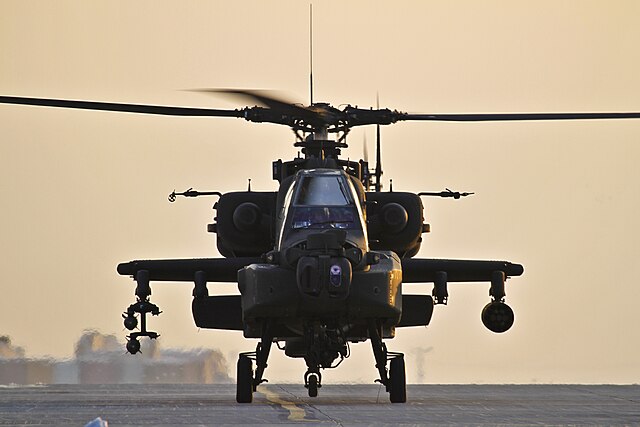
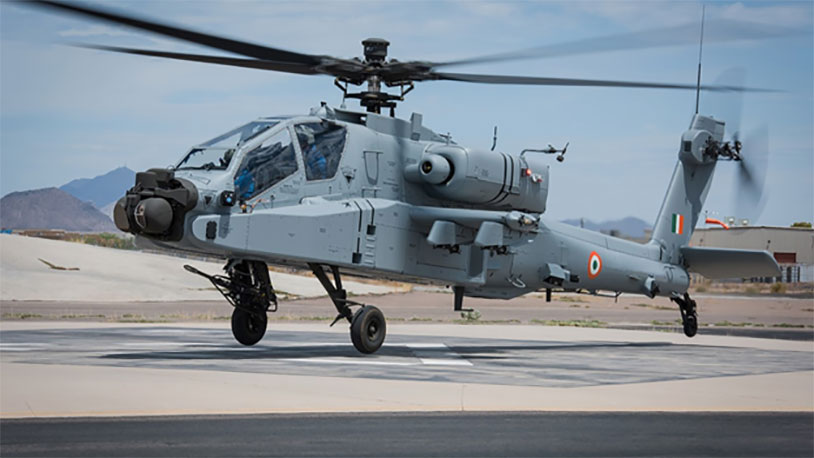
The Boeing AH-64 Apache is an American twin-turbo shaft attack helicopter with a tail wheel-type landing gear and a tandem cockpit for a crew of two. Nose-mounted sensors help acquire targets and provide night vision. It carries a 30 mm (1.18 in) M230 chain gun under its forward fuselage and four hard points on stub-wing pylons for armament and stores, typically AGM-114 Hellfire missiles and Hydra 70 rocket pods. Redundant systems help it survive combat damage. Boeing claims the AH-64E to be the world’s best and most advanced multi-mission attack helicopter. According to Boeing, it is the only combat helicopter with a spectrum of capabilities for virtually any mission requirement, including greater thrust and lift, joint digital operability, improved survivability, and cognitive decision-aiding. The technical details of the helicopter are appended.


Boeing also claims it delivered the first US Army Apache AH-64A in January 1984. Since then, the US Army and other nations have received more than 2,700 AH-64 Apache attack helicopters. Boeing’s global customers for the Apache include Egypt, Greece, India, Indonesia, Israel, Japan, Korea, Kuwait, the Netherlands, Qatar, Saudi Arabia, Singapore, the United Arab Emirates and the United Kingdom. These aircraft in operation have accumulated over five million flight hours, 1.3 million of which have been in combat.


In India, Tata Boeing Aerospace Limited (TBAL), a joint venture between Boeing and Tata Advanced Systems Ltd. (TASL), established in 2016, manufactures fuselages for the AH-64 Apache. TBAL’s Hyderabad facility has been delivering AH-64 Apache fuselages since 2018. The advanced manufacturing facility will eventually become the sole producer of AH-64 fuselages worldwide, with 90% of parts sourced from Indian suppliers. The Indian Air Force has a fleet of 22 AH-64E Apache attack helicopters bought in 2015. In 2020, Boeing signed an agreement with the Government of India to acquire six more Apache helicopters for the Indian Army. The 4,100 crore contract stipulated that these aircraft would be delivered in two batches at the beginning of this year. On March 24, it was disclosed that the delivery of these aircraft would be delayed by over a year.


Delay. The procurement agreement initially stipulated the delivery of all six helicopters by February 2024. The first batch of three Apache helicopters is now expected to be delivered by late 2024 or early 2025, with the remaining three projected to arrive three to four months later. Various reasons are being speculated as the cause for the delay.


  • Supply chain. Boeing has indicated supply chain problems as the possible reason for the delay.


  • Priorities and Allocations Systems Program (DPAS). Another hurdle to the Apache project was related to India’s low ranking in a US government programme that prioritised foreign customers. The US uses DPAS to prioritise defence-related contracts throughout the US supply chain to support military, homeland security, critical infrastructure and other requirements. This seemingly affected 22 critical components fitted on the Apaches, including engines, gearboxes, and weapons. However, the issue was resolved after prolonged discussions between the two sides.
  • Technical Issues. Open-source media reports are also emerging about technical issues related to the helicopter’s electrical systems (power generator) failures, causing safety concerns. Boeing has reportedly temporarily halted all Apache deliveries until these concerns are addressed and resolved.


Tejas Delays. The delay in the Apache delivery is not an isolated incident. It comes after US engine maker General Electric delayed the delivery of GE F-404 jet engines that power India’s indigenous Tejas jets. This has pushed the delivery of the first production of Tejas Mk1 from March 2024 to November 2024. GE Aerospace, responsible for providing these engines, collaborates with Hindustan Aeronautics Limited (HAL).  The delivery schedule of the Tejas jets, which are critical for replacing ageing MiG-21 fighters in the Indian Air Force, has been pushed back. These delays are causing significant concerns for the Indian military’s modernisation programs.


Indo-US Cooperation (Defence and Aerospace). The US-India partnership in defence and aerospace has recently become one of the most vital engagement sectors, merging both countries’ strategic and geopolitical interests. Unfortunately, with all its strategic elements, the defence partnership has an overbearing buyer-seller dimension. India has already acquired several US military platforms and equipment, and some proposals for new acquisitions are in the pipeline. In addition, India has expressed interest in advanced engine technologies to produce advanced medium combat aircraft domestically.


Key Defence Agreements. Over the last two decades, India and the U.S. have strengthened their defence ties, contributing to a higher level of mutual trust. Key agreements, such as the Logistics Exchange Memorandum of Agreement (LEMOA), Communications Compatibility and Security Agreement (COMCASA), and the Basic Exchange and Cooperation Agreement (BECA), allow greater military collaboration and intelligence sharing.


Defence Technology and Trade Initiative (DTTI).  DTTI is a strategic collaboration framework between the United States and India to enhance defence trade, co-production, and co-development of military technology. Established in 2012, it focuses on strengthening defence ties and addressing procedural challenges to foster defence cooperation and technological exchange between the two nations. It aims to identify and pursue projects that promote joint development and production of defence technologies, leveraging the strengths of both countries’ defence industries. The initiative is designed to facilitate technology transfer, ensuring that advanced U.S. defence technologies can be shared with India and fostering greater defence self-reliance in India. DTTI is intended to reduce bureaucratic hurdles and fast-track the approval processes required for defence trade, making cooperation more seamless. The question remains about its ability to overcome bureaucratic hurdles.


Strategic Trade Authorisation-1 (STA-1) Status. In 2018, the United States upgraded India to Strategic Trade Authorisation-1 (STA-1) status, a significant change that enhanced the strategic partnership between the two nations. This move recognised India’s growing role as a critical security and defence partner for the US. The STA-1 designation allows a country to access dual-use technology more easily from the U.S. without needing individual export licenses. India became the first South Asian country in STA-1, joining key allies like NATO members, Japan, and South Korea. The elevation of India’s status under STA-1 was considered a major diplomatic and strategic milestone, enabling greater collaboration between India and the US in areas like defence, space, and nuclear technology. The delays in delivery schedules of the defence contracts create doubt about the sincerity of these agreements.

Defence Priorities and Allocations System Program (DPAS). The Defence Priorities and Allocations System (DPAS) prioritises national defence-related contracts/orders throughout the US supply chain to support military, energy, homeland security, emergency preparedness, and critical infrastructure requirements. The DPAS can also provide military or critical infrastructure assistance to foreign nations. The President has the authority for preferential acceptance and performance of contracts or orders (other than employment contracts). Under this provision, other government agencies, owners and operators of critical infrastructure, or companies can place priority ratings on contracts or orders on a case-by-case basis. India’s low rating on this priority list does not augur well for the Indo-US defence Cooperation.


US Sanctions on India. The US has imposed sanctions on India at various historical points. After India’s first nuclear test in 1974, the U.S. imposed technology-related sanctions on India. These restrictions were primarily aimed at limiting India’s access to nuclear technology and materials and restricting sensitive technologies that could be used for military purposes. The most significant sanctions were imposed after India’s nuclear tests in May 1998. The sanctions included suspending military and economic assistance to India, prohibiting the export of sensitive dual-use technology, restricting loans and credit from U.S. financial institutions, and opposing loans from international financial institutions like the World Bank and the International Monetary Fund (IMF). The sanctions were lifted in 2001.


Countering America’s Adversaries through Sanctions Act (CAATSA). This US law sanctions countries engaging in significant transactions with Russia, Iran, and North Korea’s defence or intelligence sectors. As a substantial defence buyer from Russia, especially its S-400 missile defence system, India faced potential sanctions under CAATSA. However, it did not impose CAATSA-related sanctions on India, opting for a waiver in 2022. In the past, the US has occasionally warned of sanctions to pressure India to reduce or halt its oil imports from Iran. India’s investment in Iran’s Chabahar Port was also a point of contention. However, the U.S. provided waivers for this project due to its strategic importance in stabilising Afghanistan. The US has also imposed restrictions on selling advanced military technology to India in the past. These were primarily due to concerns over India’s ties with Russia during the Cold War and its nuclear weapons program.


Indo-US Trust Quotient. The trust quotient between India and the United States has evolved over the past few decades. India’s non-aligned stance and closer ties with the Soviet Union during the Cold War created distrust between the US and India. Pakistan has historically been a cause of trust deficit between India and the US, with the US supporting Pakistan during the 1971 India-Pakistan war. While the relationship moved from suspicion during the Cold War to strategic partnership in recent years, the trust level fluctuates depending on geopolitical, economic, and defence considerations.  The Indo-U.S. trust quotient has risen significantly over the past two decades, driven by shared strategic interests and growing defence and economic cooperation. While the overall trajectory remains one of increasing trust and partnership, doubts still exist.


These uncalled-for occurrences and hurdles would force India to adopt a cautious approach regarding critical defence contracts and would affect future procurement contracts from the USA. The trust quotient goes down quickly, but it is challenging to increase it. The US and Indian governments, armed services, and industry should identify and prioritise defence products. US technology and expertise could be combined with Indian manufacturing capabilities for co-production and co-development. Further in-depth consultations with the US are also necessary to jump-start DTTI and other agreements, initiatives and mechanisms.


AH-64E Apache Technical Specifications

Standard Crew 2
Length 48.16 ft. (14.68 m)
Height 15.49 ft. (4.72 m)
Rotor Diameter 48 ft. (14.63 m)
Primary Mission Gross Weight 15,075 lb. (6,838 kg)
Maximum Operating Weight 23,000 lb. (10,432 kg)
Maximum Rate of Climb 2,800+ ft. (853+ m) per minute
Maximum Level Flight Speed 150+ knots (279+ kph)
Service Ceiling 20,000 ft. (6,096 m)
Ordnance 16 HELLFIRE missiles,

76 2.75-inch rockets and

1,200 30 mm chain gun rounds

Rate of Fire 600-650 rounds per minute


Link to the published article:-

APACHE HELICOPTER DELIVERY DELAY: BROADER ISSUE OF TRUST QUOTIENT


Suggestions and value additions are most welcome.


1818
Default rating

Please give a thumbs up if you  like The Post?


For regular updates, please register your email here:-

Subscribe


References and credits

To all the online sites and channels.

References:-

  1. Ujjwal Shrotryia, “After Jet Engines, US Delays Delivery Of Apache Attack Helicopters; Cites Supply Chain Issues” Swarajya Defence, 13 Sep 24.
  1. Abhinandan Mishra & Saurabh Sharma, “U.S. slow on delivery of Apaches, Indian Army faces long wait”, The Sunday Guardian, 08 Sep 24.
  1. “Apache helicopter arrival for Indian Army pushed to 2025”, Alert 5 Aviation News, 09 Sep 24.
  1. Jaydeep Gupta, “Boeing Delays Apache AH-64E Deliveries to India amid Power Generator Failure Concerns”, Defence.in news and discussion, 07 Sep 24.
  1. Rahul Singh, “Induction of Apache hits supply chain wall, Hindustan Times, 12 Sep 24.
  1. “U.S.-India Bilateral Partnership: Aiming High”, US India Business Council roadmap.
  1. Apache Website of Boeing.

Disclaimer:

Information and data included in the blog are for educational & non-commercial purposes only and have been carefully adapted, excerpted, or edited from reliable and accurate sources. All copyrighted material belongs to respective owners and is provided only for wider dissemination.

510: APACHE HELICOPTER DELIVERY DELAYED


It is always a pleasure to interact with Shiv Aroor on contemporary defence and security issues.


On the latest episode of Battle Cry (India Today), the focus is on the delay in the delivery of Apache attack helicopters from the United States to the Indian Army. This delay has impacted the Indian Army’s preparedness, as these helicopters were intended for close air support to tanks and troops. This is the second major US defence supply contract to be affected by supply chain related slippages, the first being the delay in the supply of engines for the Indian Air Force’s Tejas fighter jets.


Suggestions and value additions are most welcome.


1818
Default rating

Please give a thumbs up if you  like The Post?


For regular updates, please register here:-

Subscribe


References and credits

To all the online sites and channels.


Disclaimer:

Information and data included in the blog are for educational & non-commercial purposes only and have been carefully adapted, excerpted, or edited from reliable and accurate sources. All copyrighted material belongs to respective owners and is provided only for wider dissemination.


English हिंदी