
Article for the IAF Flight Safety Magazine
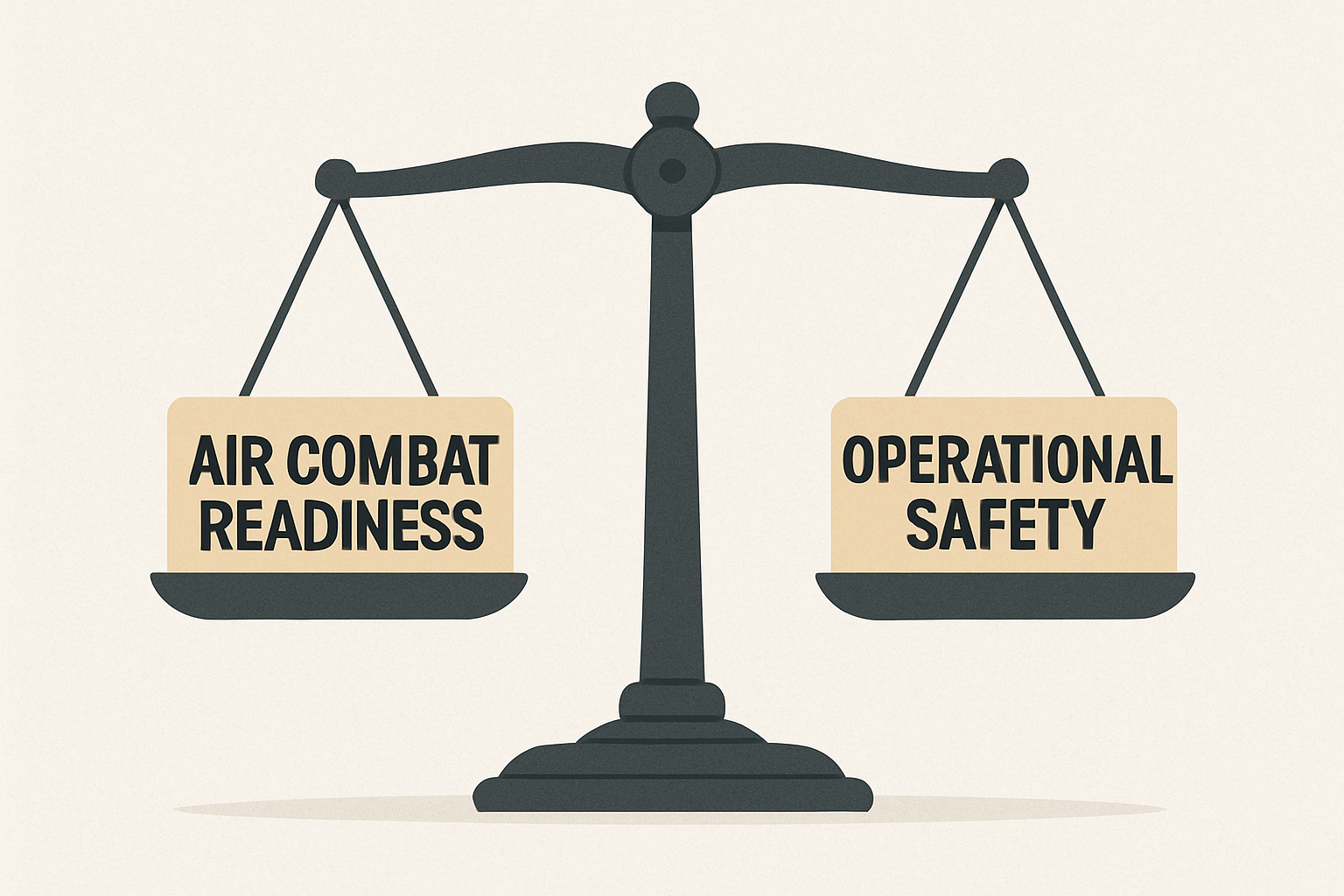
The fast-changing warfare environment in the 21st Century is characterised by heightened levels of technical complexity, multi-domain operations, and an increasing complexity of threats. Air forces now need to appropriately balance maintaining preparedness for air combat while also maintaining operational safety and security to meet a rapidly evolving future. Being able to navigate correct posture between these competing demands is vital for successful 21st Century air forces to be operationally effective, survivable and strategically resilient.
Air combat capability demands forces to deploy, survive, and fight successfully over the entire range of conflict at short notice. This necessitates continuous pilot training, strong aircraft maintenance, in-depth logistical support, and rapid incorporation of disruptive technologies like artificial intelligence (AI), precision-guided weapons, and network-centric systems. Operational safety, on the other hand, seeks to carefully manage risk during training, during deployment and, obviously, during combat. In fact, in the case of combat, the difference between tactical and operational safety is primarily intent: in combat, operational safety is still going to manage risk and reduce accidents, system failures, human error, and cyber threats to reliability and sustainment into the future.
The readiness-safety paradox is touchy: stressing too much safety results in undue caution in training and negates readiness for peer conflict, whereas focusing on readiness without adequate checks and balances raises mishap rates, attrition, and long-term vulnerability. With modern warfare becoming increasingly multi-domain, utilising unmanned platforms, hypersonics, and AI-enabled decision-making, this balance is complicated, and a holistic approach to both lethality and resilience will be needed.
There is a need to discuss the necessities of air combat preparedness, the value of operational safety, the dilemma of readiness versus safety, and solutions toward a sustainable equilibrium. Air forces need to be both razor-sharp spears, positioned to seize air superiority, and impenetrable shields, defending personnel, equipment, and networks from kinetic and non-kinetic threats. This balance is not an administrative issue per se—it is the foundation of deterrence credibility, mission survivability, and strategic resilience in contemporary conflict.
Air Combat Readiness Imperatives
Air combat readiness is the foundation of air power, providing air forces with the capability to deter aggression, project dominance, and shift instantly from peacetime to high-intensity conflict in contested multi-domain environments. It is a strategic resource characterised by the combination of human, technical, and organisational readiness encompassing four interconnected pillars:-
Crew Proficiency and Training Continuity. Airfighting readiness is predicated on Crew proficiency in mastering air-to-air, air-to-ground, electronic warfare, and beyond-visual-range (BVR) techniques. Sustained, realistic training, live-fire exercises, and simulated contested environments form combat reflexes and hone decision-making under duress. This promotes mental acuity and muscle memory for dynamic battlefields, essential to fighting against peer adversaries.
Aircraft Availability and Maintenance. High sortie production rates are reliant on sound maintenance programs and effective supply chains. Predictive diagnostics and new sustainment practices. Older fleets, especially in emerging air forces, are challenged by attrition and servicing complexity, highlighting the necessity for sophisticated maintenance doctrines to ensure operational availability.
Logistics and Dispersed Basing Resilience. Contemporary conflicts require tough basing and logistics that can weather enemy attacks, cyber interruptions, or disputed supply lines. A combat employment doctrine that is agile, like dispersing assets in several locations, improves survivability. Intra-theater dispersal and mobile support bases ensure prolonged operations, maintaining high sortie rates even in hostile environments.
Integration of Modern Technologies. Combat credibility is dependent on the smooth integration of networked sensors, stealth, hypersonics, AI-assisted decision support, unmanned teaming, and precision-guided munitions. These technologies speed response time, increase targeting precision, and increase the lethality envelope. Their non-adoption jeopardises delayed decision-making and decreased effectiveness against newer, high-end threats such as hypersonic weapons.
Importance of Operational Safety
Operational safety is important for air forces to be able to maintain combat readiness, while not suffering personnel or asset losses, or remaining resilient. Not only is it the prevention of accidents, but resource protection, human capital protection, and providing resilience to air forces’ operations in high-tempo, high-risk environments. Safety systems improve morale, credibility, and combat capability over lengthy and protracted conflicts, while weighing lethality against sustainability.
Safety is not some timidness, but is an enabler to assist readiness, both replicable and resilient. Operational safety ensures that readiness is doable and maintains efficacy over time, without suffering losses that cannot be sustained, that erode combat capabilities. Historically, the loss of aircraft during peacetime accidents has outstripped hostile action, illustrating that there needs to be systematic (professional) risk reduction. Important aspects of operational safety to meet our objectives include: –
Protection of Human Capital. Pilots and aircrews are the product of years of training and investment and, as such, are unique assets. Safety procedures like Crew Resource Management (CRM) reduce the risk associated with fatigue, stress, and mental overload, which are prime causes of aviation accidents. Survival systems guarantee crew safety in training and combat, and maintain a healthy workforce that can sustain long battles.
Asset Preservation. Contemporary aerospace platforms, such as stealth aircraft or AWACS, are expensive national investments. Avoidable accidents degrade force structure, erode deterrence credibility, and have major strategic and psychological consequences. Stringent inspections, predictive modelling, and maintenance procedures ensure high mission-capable rates, keeping platforms online and available.
Cyber and Information Resilience. Safety really goes beyond just mechanical parts- it also means protecting the digital world through cybersecurity and electronic safeguards. With threats like hostile cyber attacks, spoofing, and supply chain issues, the flight controls, navigation systems, and command networks face real risks. Strong cyber defences and resilient systems are important to keep everything running smoothly, even in challenging environments.
The Readiness–Safety Dilemma and Key Challenges
The confrontation between combat readiness and safety is a core dilemma for contemporary air forces. Readiness necessitates stretching boundaries in order to anticipate high-intensity, multi-domain conflict, and safety necessitates risk mitigation in order to provide sustainability. Exaggerating safety breeds caution that can blunt readiness, but unbridled readiness stimulates attrition, weakening enduring credibility. This dilemma is compounded by changing threats and dwindling resources, with a number of key challenges influencing the balance. Key challenges include:-
Training Realism versus Risk Mitigation. Realistic training like low-level manoeuvres, low-altitude operations, night operations, and live-fire is similar in intensity to peer-level combat but increases the risk of accidents. Excessive safety measures like restricted flight envelopes minimise accidents but can render the crew ill-prepared for unencumbered war. Balancing realism with risk mitigation is essential to bridge training and combat realities without putting crews at risk.
Sustainment and Maintenance Challenges. Operational tempos that are high speed up the wear-and-tear of aircraft, and higher risks of mechanical failures arise. Quick repairs improve short-term availability but degrade safety if done hastily. Ageing fleets aggravate this problem. Data analytics predictive maintenance can anticipate failures, but resource shortages tend to compel trade-offs that handicap fleet readiness or long-term reliability.
Resource Shortages and Indigenisation. Most air forces suffer from part shortages, skilled technical manpower, and contemporary platforms due to over-dependence on foreign sources or sanctions. Indigenisation attempts at building indigenous systems minimise dependence but threaten to incorporate untested technologies that undermine safety. On the other hand, excessive dependence on legacy platforms or rationing limited spares compromises readiness with a flimsy trade-off of innovation with reliability.
Crew Exposure. Combat preparedness demands that the crew accumulate considerable experience on platforms and mission tasks through high rates of flying hours. Greater exposure increases fatigue, accident potential, and mental overload, especially for smaller air forces with low crew reservoirs. Creating training regimens that induce realistic stress without ruinous risk is critical in order to keep pilots qualified and retained.
Navigating the Dilemma. The readiness–safety dilemma requires adaptive responses to maintain air forces as lethal and sustainable. Excessive caution threatens to create forces not hardened for combat’s harshness, while unrestrained aggression causes unsustainable losses. Through addressing these challenges by innovative sustainment, balanced training, and resource stewardship, air forces can balance readiness and safety to maintain credible combat power in dynamic, high-stakes environments.
Means of Establishing the Balance
A state of harmony between operational safety and air combat readiness can only be attained through cohesive, systemic approaches that integrate technology, training, doctrine, and organisational culture. Integrated strategies make air forces lethal, effective, and resilient without affecting sustainability, thus resolving the readiness-safety challenge through synergistic priorities. Key strategies include:-
Integration of Risk Management. Integrating risk management into operational planning meets realism with safety. Calibrating risk, for instance, by limiting risky manoeuvres to trainees but permitting them for veteran crews, air forces prevent combat-relevant training with disastrous consequences. Automated systems need to be introduced that recognise and counter vulnerabilities through statistical readiness indicators.
Technological Integration and Predictive Maintenance. AI-based predictive maintenance, digital twins, and aircraft health monitoring systems predict mechanical failure, cutting downtime and accident rates. On modern platforms, these capabilities maintain high mission-capable rates while improving safety, enabling readiness and reliability without compromise.
Advanced Simulation and Hybrid Training. Cutting-edge simulators, such as virtual and augmented reality, mimic sophisticated combat situations such as BVR engagements, electronic warfare, and hypersonic threats at low physical hazard. Hybrid models, combining simulated and live missions, cross the realism-safety divide, providing combat exposure with decreased mishap probabilities.
Training and Crew Resource Management (CRM). Improved CRM systems promote teamwork, communication, and awareness in situ among pilots, ground staff, and command centres. In integrating safety culture into readiness exercises, CRM minimises human-factor mistakes while preserving operational aggressiveness, building a workforce that excels at operating in high-stress environments.
Network-Centric and Beyond Visual Range (BVR) Focus. Contemporary warfare focuses on network-centric operations and BVR engagements. Expertise in AWACS integration, datalink coordination, and multi-asset synchronisation raises lethality while lowering dependence on close-in, high-risk manoeuvres. Cyber safety procedures also guarantee robustness in contested digital environments.
Doctrinal Flexibility and Comprehensive Workforce Development. Doctrinal Flexibility and Comprehensive Workforce Development. Flexible doctrines vary training intensity, balancing geopolitical environments and conditions of forces, understanding that readiness for peer-level confrontation comes at a cost of safety in lower intensity operations. Comprehensive workforce development—from aircrew to engineers to data professionals to AI professionals—involves shared accountabilities for readiness and safety within the entire enterprise, improving flexibility and resilience.
Joint Doctrine Development. In operations across multiple domains, joint doctrine aligns air, space, cyber, and land operations, providing interoperability and minimising accidents with common standards of safety. Deconflicting air routes, safeguarding data networks, and adding unmanned systems increases readiness and security collectively in a coalition war.
Holistic Integration. These approaches cumulatively close the readiness-safety gap by capitalising on technology, innovative training, and flexible doctrines. Through treating readiness and safety as complementary, air forces can maintain combat credibility, reduce losses, and guarantee resilience in dynamic, high-stakes environments, reconciling lethality with long-term operational sustainability.
The Future Landscape
The safety-readiness balance will become increasingly dynamic with the evolution of air combat through multi-domain operations (MDO), unmanned systems, hypersonic systems, and artificial intelligence (AI)-based decision-making. These emerging dynamics create new vulnerabilities and safety issues while augmenting combat effectiveness, necessitating air forces to establish a dynamic equilibrium that regularly rebalances readiness and safety. Key emerging dynamics include:-
Multi-Domain Operations (MDO). Air power will converge with cyber, space, EW and info domains to tap into C5ISR ecosystems for greater situational awareness and near-real-time responses. While this enhances lethality, it also heightens systemic vulnerabilities, which require strong safety measures to safeguard interdependent networks and ensure operational resilience across domains.
Unmanned and Autonomous Systems. Drones and AI systems can perform high-risk operations with limited pilot exposure. Manned-unmanned teaming and swarming technologies facilitate adaptive decentralised operations, but pose dangers such as biases in AI, cyberattacks, and autonomous-crewed asset collisions. New safety paradigms are needed to provide reliability and ethical responsibility.
Hypersonic and Directed Energy Weapons. Hypersonic weapons shorten decision cycles, necessitating readiness for extremely rapid engagements and innovative C5ISR integration. These vehicles and weapons place extreme stress on aircrew and system resources, necessitating advanced safety features to control risk while preserving combat effectiveness against transient engagement opportunity sets.
AI-Based Decision-Making. AI speeds up decision loops, increasing readiness in uncertain situations. But dependence on algorithms threatens transparency, adversary tampering, and misperceptions in targeting or sensor data interpretation. Strong safety nets must balance AI-lethality with operational dependability.
Navigating the Future. The future beckons for a dynamic, readiness-safety balance theme, supported by software-enabled, swift updating and agile doctrines. Air forces should invest in AI-enabled autonomous systems, establish unmanned safety frameworks, and continue to integrate multi-domain sensors to inhibit anti-access and area-denial adversaries. By developing air force capabilities to solve ethical, safety, and reliability questions, an air force can achieve resilience and lethality in a rapidly more complex battlespace.
Conclusion
Operational safety is closely tied to air combat readiness and preparedness. Safety will always come first, as ensuring the safety of flight operations for personnel and equipment ensures sustainability and survivability over the long term. Readiness and preparedness do not take a backseat, though; they are vital when the air forces find themselves required to operate in a contested environment and have to compete in a high-stakes environment. Finding the correct balance between operational safety, innovation, some availability of the aircraft, and training that is realistic while not lax, burnout, or unreliable is the balance the air forces want to strike for their personnel and aircraft. This is achieved through combinations of predictive maintenance, better crew resource management, improved simulation, getting better at integrating risk management and training pilots around flexible joint doctrine. The amount of risk with air power is increasingly mitigated with the input of AI, hypersonic strikes, and autonomous systems. However, operational safety and operational readiness have become even more insidious and complex than before, as they are intertwined. Too much focus on readiness equals unnecessary accidents and exposure to fatigue and technical issues, and too much caution equals an untested force with no capability for peer-level fight. Operational safety must balance preclusion of risk with credibility to deter enemy forces. Air forces must configure their technologies and risk management to be conducive to preserving our people and our assets and operational commitments and deterrence while rapidly adapting to change by technology, threats and geopolitics. Ultimately, air power needs to be focused on the safe conduct of operations, but air forces must treat readiness and safety as two vital and interconnected pillars.
Please Add Value to the write-up with your views on the subject.
For regular updates, please register your email here:-
References and credits
To all the online sites and channels.
Pics Courtesy: Internet
Disclaimer:
Information and data included in the blog are for educational & non-commercial purposes only and have been carefully adapted, excerpted, or edited from reliable and accurate sources. All copyrighted material belongs to respective owners and is provided only for wider dissemination.
References:-
- “Advances in Human Factors and Simulation”, Proceedings of the International Conference on Human Factors and Simulation, July 24-28, 2019.
- Deptula, D. A., “Air Power in the Age of Multi-Domain Operations”, Mitchell Institute for Aerospace Studies, 2020.
- Johnson, J. S., “Artificial Intelligence and the Future of Warfare: The Impact of AI on Military Operations”, Manchester University Press, 2021.
- Reason, J. “Managing the Risks of Organisational Accidents”. Ashgate Publishing, 2018.
- Bommakanti, K., & Mohan, S. (2024). Emerging Technologies and India’s Defence Preparedness. Observer Research Foundation.
- Pant, H. V., & Bommakanti, K. (2023). Towards the Integration of Emerging Technologies in India’s Armed Forces. ORF Occasional Paper No. 392, Observer Research Foundation.