My Inputs on HT-2 Aircraft to Atul Chandra in an Interview.
Excerpts from the Article on the CAPSS (Center For Air Power and Strategic Studies) Website published by him.
A History of Partnership: The Indian Air Force and Growth of Indigenous Basic Trainer Production
Mr Atul Chandra
Research Scholar, Unni Kartha Chair of Excellence
Introduction
The Indian Air Force (IAF) has a proud legacy of undertaking basic flight training in South India. IAF air bases and training establishments located in the region, have made it the ‘cradle’ of military flight training in India. Since Independence, the IAF’s requirements for basic trainer aircraft have also aided in the growth of aeronautical manufacturing in Southern India. Since 1948, a total of three indigenous basic trainer aircraft, the HT-2, HPT-32 and more recently, the HTT-40 have been developed and manufactured in India. While the latter two basic trainers were vitally important in the growth of India’s nascent domestic aeronautical design and development capability, the completion of design and development of the HTT-40 signals the maturity of the nation’s domestic aerospace and defence ecosystem, which is today producing fighter aircraft, trainer aircraft, utility and attack helicopters. The deliveries of the HTT-40 to the IAF are now slated to begin in Q1 2026.
As we strive towards the goal of ‘Atmanirbhar Bharat’ and self-sufficiency in defence production, it is important to note that the IAF, from 1948 till now, continues to drive the growth of India’s aeronautical industry and will continue to do so.
Piston Pioneer
Following in the footsteps of the HT-2, in 1975 HAL began preliminary work on the development of a new basic trainer for the IAF. The Government sanctioned the design and development of a new basic trainer aircraft in 1976 at a cost of INR 5.53 crores. The requirement was for a total of 161 trainer aircraft and work was proceeding in earnest by 1977.
The design of the Hindustan Piston Trainer 32 (HPT-32). proceeded swiftly, with the first 1st HPT-32 prototype (X 2157) making its maiden flight in Bangalore on 6th January 1977, piloted by Wg Cdr Inder Chopra, HAL’s Chief Test Pilot (CTP). The second HPT-32 prototype made its maiden flight in March 1979, incorporating several modifications. The third and last prototype made its maiden flight on 31st July 1981 and was representative of the final production version and significantly lighter than the first two prototypes.
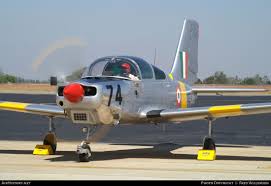
The HPT-32 is a cantilever, low-wing monoplane and of all-metal construction. Unlike the HT-2, the HPT-32 was a nose wheel aircraft with side-by-side seating for two persons under a rearward sliding jettisonable framed canopy. The HPT-32 also had the provision for a seat behind the instructor and trainee, along with space for some luggage. This was due to the fact that HAL had also planned to offer the aircraft to undertake liaison roles. The aircraft had a non-retractable tricycle type landing gear. The aircraft was powered by a Textron Lycoming AEIO-540-D4B5 flat-six 260 hp engine, driving a Hartzell two-blade constant-speed metal propeller. Fatigue life was quoted as 6.500 hours.
The IAF went on to place an initial production order for the new basic trainer in 1981, ordering 40 aircraft with an additional requirement for 100-150. At the time, the cost of each aircraft was estimated at INR 19.25 lakh.
The HPT-32 was inducted into the Indian Air Force in March 1984. The trainer aircraft was used for Stage 1 flight training providing pupils with 65AIAF hours of flying.
HAL completed the delivery of 40 HPT-32s by March 1987. Just as it was with the HT-2, the Navy also acquired the HPT-32, ordering nine aircraft. INAS 550-B Flt at Kochi which was equipped with Islander aircraft in 1976, went on to induct the HPT-32 in January 1986. The squadron completed basic flying training on the HPT-32 in October 1987, for the first batch of six naval pilots. However, training on the HPT-32 was discontinued soon after, and the squadron ceased further basic flying training on the type.
The IAF placed three additional orders for the HPT-32 in August 1988, January 1990 and March 1992 for 40, 30 and 24 additional aircraft respectively. In total, the IAF placed orders for 134 HPT-32s.
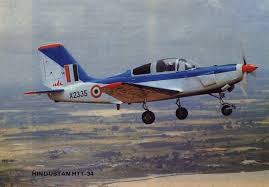
A turboprop version of the HPT-32, called as the HTT-34 took to the air for the first time on 17th June 1984 piloted by Wg Cdr Ashok and another pilot. “The aim was to enhance its performance, while also overcoming the nagging supply problems of high-octane fuel. A turboprop engine uses turbine fuel (refined kerosene). “The more powerful engine on the HTT-34 gave the aircraft excellent performance,” Wg Cdr P Ashoka (retd)” said in his autobiography. HTT-34 prototype was in fact the HPT-32 third prototype which was modified.
However, despite the HTT-34s improved performance, HAL never received any orders for it.
The HTT-34 was also demonstrated as a trainer aircraft at the Farnborough (UK) and Paris Airshows in 1984 and 1985 respectively. “Later we (HAL) took it to Nigeria and Ghana in Africa on a marketing mission. Our aerobatic displays were greatly appreciated and some of the foreign pilots who flew the aircraft, were also duly impressed. Unfortunately, this did not result in any sales, probably for financial reasons,” Wg Cdr Ashoka added.
Troubled Trainer
The HPT-32 took over the basic training role (Phase I) in the IAF in entirety from 1988 onwards, following the retirement of the HT-2. According to a CAG report released in 2019, the HPT-32 aircraft was besieged with difficulties related to reliability and safety including engine failure, poor glide characteristics and absence of an ejection seat.
Due to a large number of accidents, the entire HPT-32 fleet was grounded in July 2009. This decision followed the crash of an HPT-32 on 28th July 2009 due to engine failure.
A High-Power Study Team (HPST) was constituted by Air HQ and HAL’s Transport Aircraft Division in Jul 2009 to undertake an in-depth analysis of maintainability and reliability of HPT-32 aircraft and its engine. The HPST was tasked to undertake technical investigation to find out the cause of engine failures and suggest remedial measures
However, in August 2009, the IAF decided to discontinue flying of the HPT-32 fleet till the finalization of HPST report. The HPST report released in December 2009 stated that the HPT-32 aircraft was designed and developed in the early 1980s and did not meet present day standards (at the time). The technical investigation carried out by HAL was inconclusive in its findings.
As per a CAG report released in 2013, it observed that engine cut-off issues had resulted in 189 incidents/accidents on HPT-32 aircraft. Originally slated for retirement in 2014, the HPT-32 fleet was grounded in 2009 and resulted in HAL’s HJT-16 Kiran Intermediate Jet Trainer (IJT) being used for Stage I training from 2010 to 2013. In June 2012, the IAF opted not to return its HPT-32 fleet back into service, which at the time numbered approximately 116 aircraft.
In total when combining the HT-2 and HPT-32, 300 trainers were produced by HAL. The HPT-32 remained in service only for 25 years as compared to the HT-2, which remained in service for 34 years. Despite the trials and tribulations with the development of indigenous basic trainers, it would not be out of place, to say that the HT-2 and HPT-32 set the stage for the development of a new, modern and state-of-the-art basic trainer for the future.
Air Marshal Anil Khosla retired from the Indian Air Force as Vice Chief of the Air Staff. He was commissioned into the Indian Air Force in December 1979.
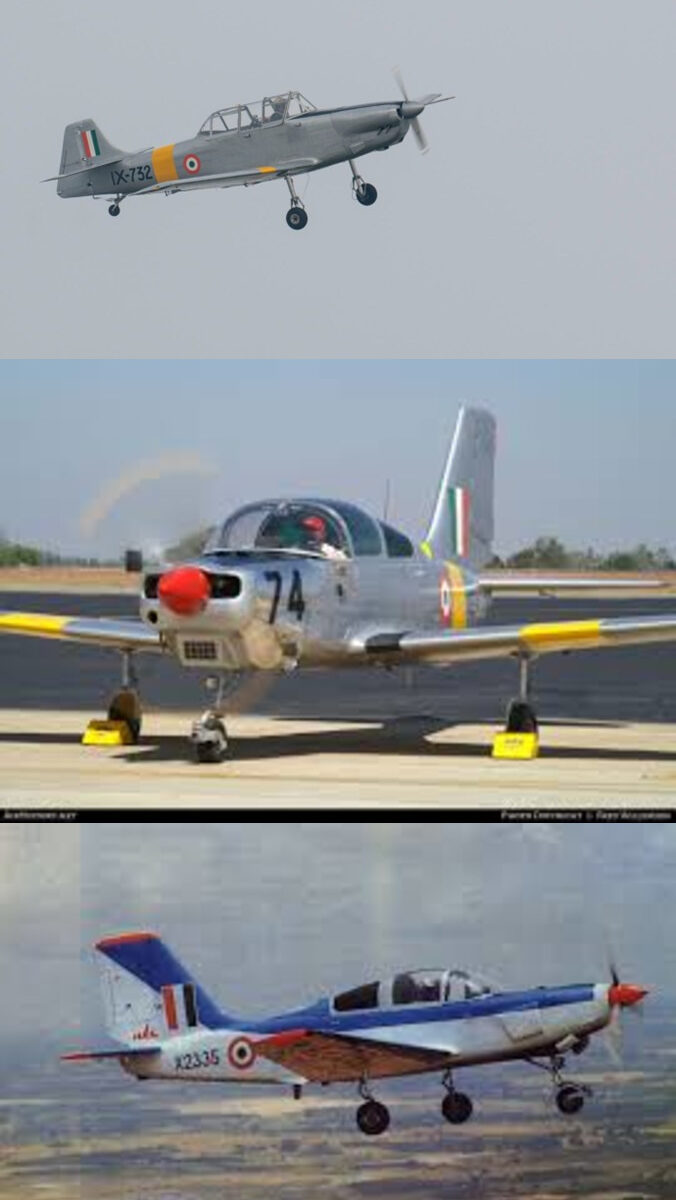
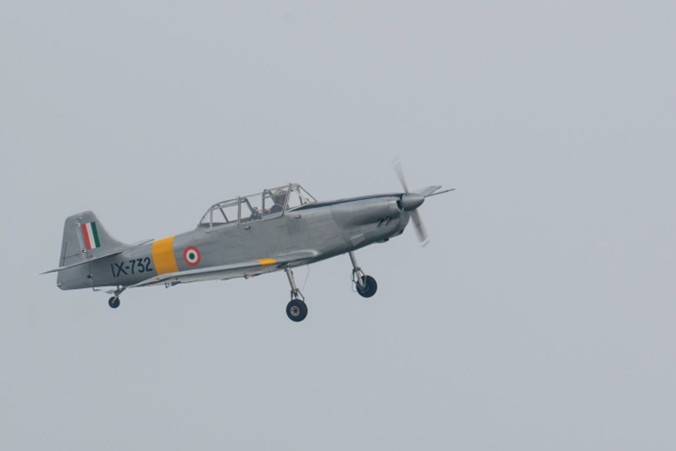
My very first impression of the HT-2 as a cadet was that it looked simple and almost modest, yet purposeful. As a young flight cadet in the Indian Air Force during the 1970s, my first encounter with the HT-2 was both exhilarating and a bit intimidating. The aircraft was a sleek, all-metal design with tandem seating and it was simple yet robust. The controls were responsive, but it demanded precision right from the start; a sloppy approach could lead to a bumpy landing on those narrow landing gear.
In total I flew a total of 215 hours on the HT-2. This included 40 hours of ab-initio training, 65 hours during the Flying Instructors’ Course, and 110 hours during instructing at Flying Instructors School (FIS) Tambaram. At FIS Tambaram I instructed on the HT-2 teaching young IAF pilots how to become instructors.
My abiding memories are vivid and multifaceted. I remember the distinctive sound of the engine starting up. I Remember the smell of gasoline during stall turns. One unforgettable sortie for me, was my second solo flight, during which, after take-off, I had an engine failure and had to force-land the aircraft.
The HT-2 was considered challenging to fly, however, it had many attributes that made it such a long-serving basic trainer in the Air Force. The HT-2 earned its reputation as challenging aircraft to fly as it tended to swing on the ground on landing. It required total concentration and focus to prevent over-controlling, especially in crosswinds. It was known to be somewhat unforgiving if mishandled, especially in the stall/spin regime.
Yet, these very challenges made it an excellent trainer for basic flying skills. It remained in service for over three decades (from the 1950s until the late 1980s), with over 120 aircraft produced.
Its attributes included: –
Ruggedness.
Easy to maintain (indigenously available spare parts).
Excellent visibility from the front (in the air).
Low operating Cost.
Indigenous production with no dependency on foreign OEM.
The aspects of the HT-2 that I liked and disliked were many.
Likes:
Handling and Stability—perfect for building confidence.
The response to controls was direct, making it great for learning flying.
The bubble canopy and raised instructor’s seat provided panoramic view.
The engine was smooth and powerful enough for basic trainer.
Execution of aerobatic manoeuvres gave a lot of satisfaction and a boost to the confidence.
Dislikes:
The narrow-track undercarriage made landings tricky as it was prone to swinging on the ground.
The seats weren’t the most ergonomic for extended sessions, causing back aches during prolonged flying.
The seat was fixed without height or position adjustment.
The parachute strapped to the pilot was not very comfortable or easy to bail out.
Disclaimer: The views and opinions expressed in this article are those of the author and do not necessarily reflect the position of the, Centre for Aerospace Power and Strategic Studies [CAPSS]
This work is licensed under Creative Commons Attribution – Non-Commercial – No Derivatives 4.0 International License.
Centre for Aerospace Power and Strategic Studies | @CAPSS_India |Centre for Aerospace Power and Strategic Studies |
Information and data included in the blog are for educational & non-commercial purposes only and have been carefully adapted, excerpted, or edited from reliable and accurate sources. All copyrighted material belongs to respective owners and is provided only for wider dissemination.
“An effective IADS doesn’t just respond to threats; it anticipates them, creating a network of capabilities greater than the sum of their parts.”
— Defence Analyst John Carter.
Introduction
Defending national airspace has become significantly more challenging as military technology advances rapidly, introducing sophisticated threats such as hypersonic missiles, stealth aircraft, and swarms of unmanned aerial vehicles (UAVs). Integrated Air Defence Systems (IADS) are the backbone of modern airspace protection, representing a highly coordinated and layered approach to counter these diverse dangers. IADS offers real-time threat monitoring and quick decision-making by integrating detection and surveillance systems with a robust command structure and control centres. Secure communication networks link these components to various weapon platforms, including surface-to-air missiles, anti-aircraft artillery, and interceptor jets, while electronic warfare units disrupt enemy systems. This collaboration enables IADS to respond to traditional threats, such as manned aircraft, as well as emerging ones, including drones and ballistic missiles. For many countries, IADS constitutes the core of national security, defending sovereignty against aerial incursions in an era where technological superiority can instantly shift the balance of power. The ongoing development of AI, sensor technology, and countermeasures keeps IADS at the forefront of defence, reflecting the continuous innovation necessary to maintain airspace dominance in an increasingly contested domain.
Integrated Air Defence System.
An Integrated Air Defence System (IADS) is an orchestrated networked system that coordinates and manages various air defence assets to detect, track, intercept, and neutralise incoming aerial threats. These threats may include aircraft, unmanned aerial vehicles (UAVs), missiles, and other airborne targets. An IADS combines a variety of sensors, interceptors, and command and control centres to provide comprehensive airspace coverage and protection. Unlike isolated air defence units, an IADS ensures cohesive operation and seamless integration of multiple defence layers to protect airspace effectively.[1]
Components
An Integrated Air Defence System (IADS) constitutes a sophisticated network. Its efficacy depends on the seamless coordination of several interconnected components.
Detection and surveillance systems form the foundational components, providing early awareness of potential threats. These include early warning tools such as ground-based radar stations, airborne platforms (AWACS and AEW&C aircraft), and space-based surveillance assets, which facilitate extensive area monitoring. This multi-layered configuration ensures comprehensive coverage and redundancy, which are essential for detecting threats over vast areas and airspace.[2]
Command and Control (C2) systems serve as the nerve centres of the IADS, processing vast amounts of sensor data to enable rapid and informed decision-making. Modern C2 systems increasingly integrate artificial intelligence (AI) to analyse threats, predict trajectories, and coordinate real-time responses. These hubs synthesise information and issue operational commands to other components, whether centralised or distributed.[3] Communication networks form the backbone of the system, providing secure, high-speed, and seamless connections that link sensors, C2 centres, and weapons platforms. They enable real-time data exchange and operational unity, even under electronic attacks or challenging conditions.[4]
Weapon systems deliver the punch, encompassing a range of weapons designed to counter various threats. Surface-to-air missile (SAM) systems, such as the Patriot, S-400, or Iron Dome, engage targets at multiple ranges and altitudes. Meanwhile, anti-aircraft artillery (AAA) offers close-range, point-defence capabilities to complement missile batteries. Fighter jets and interceptor aircraft add versatility, engaging threats beyond the reach of ground-based systems. [5]
Finally, Electronic Warfare (EW) Units strengthen the IADS by disrupting enemy activities. These units jam or mislead adversary radar, communications, and guidance systems, decreasing the impact of incoming threats and increasing overall resilience. [6]
These components create a multi-layered defence, integrating detection, decision-making, communication, kinetic action, and electronic countermeasures. The synergy of advanced technology and strategic coordination makes a modern IADS a formidable shield against aerial incursions, one that is adaptable to evolving threats in an increasingly complex battle space.[7]
Operational Mechanism
The Operational Mechanism of IADS relies on a layered defence strategy, ensuring redundancy and coverage across multiple domains. An IADS’s effectiveness hinges on its capacity to coordinate various components, creating a layered and flexible defence. Its main functions begin with Early Detection and Monitoring, where sophisticated radar systems, satellites, and airborne warning platforms continuously monitor the airspace to detect irregularities. This stage is crucial for detecting potential threats early, before they come too close. Once an object is identified, the system activates Identification and Classification procedures. IADS uses Identification, Friend or Foe (IFF) transponders, signal analysis, and ELINT to distinguish between friendly, neutral, and hostile targets. The subsequent phase is Threat Assessment, where command-and-control (C2) centres analyse factors like speed, altitude, trajectory, and intent to determine the threat level. Based on these analyses, threats are prioritised so that the most urgent and dangerous targets receive immediate attention.[8]
Following this, the Engagement Coordination phase begins, during which the most suitable weapon system is chosen to neutralise the threat. Depending on the threat’s characteristics and location, this could involve surface-to-air missile (SAM) batteries, anti-aircraft artillery, or interceptor aircraft. Effective coordination between these systems is crucial to achieving a successful interception. After an engagement, the Post-Engagement Assessment phase reviews the outcome, determining whether the threat was successfully neutralised or if further actions are necessary.[9] According to the Center for Strategic and International Studies (CSIS), the success of an IADS is contingent upon its ability to integrate real-time data, coordinate multi-domain assets, and dynamically adapt to evolving threats.[10]
Key Features
The key features of an Integrated Air Defence System (IADS) are vital in improving its ability to detect, track, and neutralise aerial threats. Interoperability is essential, enabling different defence systems to operate within a unified network. This seamless integration guarantees effective communication and coordination between radars, missile batteries, command centres, and other defence assets, enhancing threat response times and situational awareness. [11]
Another vital feature is redundancy and resilience, which ensures that the system remains operational even if specific components are disabled due to enemy attacks or technical failures. By incorporating backup sensors, alternative communication links, and multiple control nodes, IADS can continue functioning without significant degradation in performance.[12]
A layered defence structure is crucial for maximising protection. It combines long-range surveillance and engagement capabilities with medium and short-range systems to create overlapping defensive coverage. This multi-tiered strategy enhances the chances of detecting and neutralising threats at various stages, significantly reducing the risk of successful penetration by enemy aircraft, drones, or missiles. [13]
Furthermore, scalability allows IADS to be customised to a region’s specific defence needs, whether safeguarding a single military installation, a key urban centre, or national airspace. This flexibility ensures that IADS remains effective against changing threats, from traditional air assaults to advanced hypersonic weapons and electronic warfare strategies. By incorporating these essential features, IADS offers a strong, adaptable, and highly resilient defence system, securing long-term safety, operational efficiency, and superiority in modern aerial combat.[14]
Global Examples and Utilisation during War
“Effective air defence combines technology, strategy, and geopolitical acumen. A well-deployed IADS can shift the regional balance of power.”
– General Paul Davidson, a retired NATO commander.
Israel’s IADS. Israel’s Integrated Air Defence System (IADS) ranks among the world’s most advanced and battle-proven air defence networks, designed to counter various aerial threats. The system combines multiple layers of defence, including the Iron Dome, which intercepts short-range rockets and artillery shells; David’s Sling, for medium-range threats such as cruise missiles and ballistic missiles; and the Arrow system, offering long-range ballistic missile defence. These systems are seamlessly linked via a centralised command and control network, ensuring rapid threat detection, tracking, and interception. Israel’s IADS has been extensively deployed in real-world conflicts, especially against rocket barrages from Hamas and Hezbollah, as well as missile threats from Iran. The Iron Dome has demonstrated high interception success rates, significantly reducing civilian casualties and damage to infrastructure. Additionally, Israel employs sophisticated electronic warfare and early warning radar systems to enhance its defensive capabilities. The system is continuously upgraded with AI-driven automation and multi-domain integration to adapt to evolving threats, including drones and hypersonic weapons. By maintaining a robust and adaptable IADS, Israel protects its national security, deters adversaries, and sustains its strategic superiority in a volatile region.[15]
Russian IADS. Russia’s Integrated Air Defence System (IADS) is one of the most sophisticated and multi-layered air defence networks, designed to protect vast territories and counter advanced aerial threats. It comprises a combination of long-range, medium-range, and short-range defence systems, all integrated into a highly networked command and control structure. Key components include the S-400 and S-500 systems, capable of engaging aircraft, cruise missiles, and ballistic missiles at ranges exceeding 400 km, as well as Buk-M3 and Tor-M2 for medium- and short-range defence. These systems work in conjunction with early warning radars and electronic warfare units to create a robust defensive shield. Russia’s IADS is strategically deployed to protect critical military and governmental infrastructure, with a strong presence around Moscow, Kaliningrad, Crimea, and key military bases. It has been actively used in Syria to defend Russian forces and deter Western air operations, showcasing its operational effectiveness. Additionally, in Ukraine, Russian air defences have played a crucial role in countering Ukrainian drones and missile strikes. By integrating advanced sensors, layered defence, and electronic warfare, Russia’s IADS remains a formidable component of its strategic military doctrine.[16]
US IADS. The United States maintains one of the most advanced and globally integrated air defence systems to protect military assets, key infrastructure, and allied territories. The U.S. IADS employs a multi-layered approach, combining long-range systems like the Ground-Based Midcourse Defence (GMD) for ballistic missile threats, THAAD (Terminal High Altitude Area Defence) for regional missile defence, and the Patriot system for medium-range engagements. Short-range defences include the NASAMS (National Advanced Surface-to-Air Missile System) and Avenger systems, which protect critical assets from drones, cruise missiles, and aircraft. These elements are integrated with a networked command and control infrastructure, such as the NORAD (North American Aerospace Defence Command) system, which provides real-time surveillance and threat response. The U.S. IADS is strategically deployed to protect the homeland, forward-operating bases, and allied nations. It is widely used in Europe and the Indo-Pacific to deter potential adversaries. Additionally, U.S. air defences have been vital in the Middle East, protecting forces and allies from missile and drone attacks. The system is continually upgraded with AI, sensor fusion, and electronic warfare capabilities to counter emerging threats, such as hypersonic weapons, thereby ensuring U.S. air superiority in modern conflicts.[17]
India’s IADS: Strategic Necessity
“An effective IADS transforms disparate defence units into a single, formidable shield, capable of repelling sophisticated threats.”
– Dr. Jason Miller, Aerospace Defence Analyst.
India’s approach to Integrated Air Defence Systems (IADS) exemplifies its strategic imperative to safeguard its airspace within a complex geopolitical environment, characterised by two nuclear-armed adversaries in proximity. The extensive territory and precarious security landscape of India necessitate robust air defence measures. In light of China’s expanding aerial and missile capabilities and Pakistan’s reliance on aerial assaults and asymmetric warfare, India’s IADS is indispensable for deterrence, response, and the projection of power.[18]
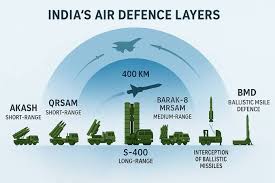
Components of India’s IADS. India’s Integrated Air Defence System (IADS) encompasses a multilayered structure. At the strategic echelon, the Integrated Air Command and Control System (IACCS) serves as the foundational framework of the IADS, seamlessly interconnecting the Air Force, Army, and Navy’s air defence assets under a unified command hierarchy. The IACCS nodes integrate radar data from diverse sources, including multiple ground-based radars, airborne platforms such as AWACS (PHALCON) and NETRA AEW&C, as well as the Akashteer (IA C2 network). The integrated network facilitates near real-time tracking and threat prioritisation across India’s western and northern sectors. The operational tier of the IADS comprises a combination of domestically developed and imported surface-to-air missile systems. The Akash missile system, deployed alongside SPYDER SR/MR systems, provides a robust and rapid-response shield against low-flying threats. Concurrently, Barak-8 batteries expand the medium-range engagement envelope. Low-altitude drones are countered by L70 and ZU-23-2B guns, which are integrated with indigenous fire-control radars. The recent induction of the S-400 Triumf system introduces a significant strategic element, enabling deep interception of threats exceeding 400 km and effectively establishing no-fly zones over critical assets.[19]
Ballistic Missile Defence Program. India’s BMD program is a two-tiered system designed to intercept incoming ballistic missiles before they reach their targets. The Prithvi Air Defence (PAD) system intercepts high-altitude threats in the exo-atmospheric range. In addition, the Advanced Air Defence (AAD) system complements PAD by targeting lower-altitude ballistic missile threats. Recent successful tests of these systems have demonstrated India’s growing capabilities in missile defence, moving closer to a fully operational BMD shield.[20]
Foreign Collaboration. To further strengthen its IADS, India has actively collaborated with global partners. Russia has supplied the S-400 and legacy air defence systems such as the Pechora and Osa SAMs. Israel partnered with India to develop the Barak-8 missile system, contributing to advancements in radar and electronic warfare technology. The United States has also been a strategic partner, offering India the NASAMS-II (National Advanced Surface-to-Air Missile System) to enhance city defences, particularly around New Delhi.[21]
Indian IADS Performance during Operation Sindoor. During Operation Sindoor, the Indian Integrated Air Defence System (IADS) was evaluated against high-intensity aerial threats, such as fighter jets, drones, cruise missiles, and loitering munitions. It was crucial for maintaining airspace control and protecting vital infrastructure. The operation also assessed India’s ability to sustain an active air defence stance amid cyber and electronic warfare pressures. The robustness of the IACCS and the redundancy of communication channels ensured continuous command flow, even during saturation attacks. Overall, the Indian IADS’s performance in Operation Sindoor highlighted its advanced capabilities and quick responsiveness.
Challenges in India’s Integrated Air Defence Systems (IADS). Despite notable progress, India’s IADS encounters several challenges that warrant thorough attention. One foremost issue is ensuring interoperability and seamless integration, given that India’s IADS comprises a diverse array of systems from Russian, Israeli, American, and indigenous origins. Achieving interoperability among these varied platforms necessitates sophisticated integration efforts and the establishment of a unified communication and control framework. Moreover, with the escalating dependence on digital networks, it is imperative to enhance cybersecurity protocols and deploy Electronic Counter-Countermeasures (ECCM) to mitigate potential cyber and electronic threats. Additionally, maintaining a large-scale air defence network demands considerable financial resources and specialised technical expertise. Effectively allocating budgets, promoting indigenous production, and planning for long-term sustainability are essential to ensure that India’s IADS remains modern, resilient, and operationally effective.[22]
Future Developments and Indigenous Efforts. India is prioritising indigenous development to strengthen its air defence capabilities further. The Defence Research and Development Organisation (DRDO) is engaged in the development of advanced surface-to-air missile (SAM) systems, AI-driven surveillance platforms, and next-generation ballistic missile defence (BMD) technologies to diminish reliance on foreign systems. Additionally, the development of space-based early warning systems and anti-satellite (ASAT) capabilities will enhance India’s capacity to detect and neutralise threats from greater distances. In the future, a synergistic approach combining indigenous technological innovations, strategic collaborations, and adaptive warfare strategies will ensure that India sustains a formidable air defence posture within a rapidly evolving security environment.[23]
The Future of Integrated Air Defence Systems
“Modern IADS must be agile, decentralised, and multi-domain—or they will be obsolete.”
— Lt. Gen. Ben Hodges (U.S. Army, Retired)
Challenges
Integrated Air Defence Systems (IADS) are currently at a pivotal juncture, facing an expanding array of threats that undermine their conventional effectiveness. Historically optimised to counteract traditional manned aircraft and ballistic missile threats, these systems now face unprecedented challenges due to the rapid proliferation of drones, hypersonic weapons, and sophisticated electronic warfare (EW) capabilities. The transition towards multi-domain warfare —encompassing land, sea, air, space, and cyberspace —further complicates air defence operations. Consequently, these emerging issues necessitate a comprehensive re-evaluation of IADS strategies, sensor integration, engagement methodologies, and network resilience.[24]
The Drone Challenge: Mass, Persistence, and Swarming Tactics. Drones pose a significant threat to modern IADS, revolutionising air warfare with their varied sizes and capabilities, from small reconnaissance quadcopters to large, weaponised platforms. Their low cost and ability to operate in swarms overwhelm traditional defences. Surface-to-Air Missiles (SAMs) are inefficient against cheap drones, and loitering munitions can exploit gaps, hide in terrain, and saturate defences. Current radars struggle to distinguish small drones from clutter, reducing detection effectiveness. To counter this, IADS must adopt new sensors, such as AI-enhanced radar, acoustic, and electro-optical systems. Electronic warfare (jamming and spoofing) can disrupt control, while directed energy weapons (such as microwaves and lasers) and point-defence systems provide scalable, low-cost interception. Integrating these into legacy IADS remains challenging.[25]
Hypersonic Weapons: Speed and Manoeuvrability Overwhelming Defences. Hypersonic weapons, like Hypersonic Glide Vehicles and Hypersonic Cruise Missiles, travel over Mach 5, can manipulate flight paths, and evade traditional missile defences by operating in the transition zone between air and space. They generate intense heat, creating plasma sheaths that disrupt signals and shorten reaction times for detection and interception. Conventional radars are less effective against them, requiring advanced measures such as space-based infrared tracking, over-the-horizon radar, and high-speed data processing. Solutions such as directed-energy weapons, kinetic interceptors, and AI-enhanced strategies are being developed to counter this threat.[26]
The Cyber and Electronic Warfare Dimension. IADS face growing threats from cyber warfare and electronic attacks, which can disrupt operations and deceive systems. High-capability adversaries use cyber and electronic tactics like jamming, spoofing, and EMP to disable radar and sensors, as seen in Ukraine. Future conflicts may begin with cyber-electronic strikes to weaken defences before launching drones or missiles. To counter this, IADS should enhance network resilience with redundant, decentralised architecture, AI-driven cybersecurity, and alternative data transmission methods. Passive detection systems can also help mitigate the impacts of jamming.[27]
The Future Trends
The future of Integrated Air Defence Systems (IADS) is influenced by technological innovation, evolving aerial threats, and strategic security imperatives. As nations allocate resources towards modernising their air defence capacities, IADS are increasingly becoming more sophisticated, automated, and integrated with cutting-edge technologies. The spread of hypersonic weapons, stealth aircraft, unmanned aerial systems (UAS), and cyber threats necessitates a more resilient, adaptable, and multilayered defence infrastructure. Contemporary IADS utilise advanced radar systems, artificial intelligence, space-based surveillance, electronic warfare, and directed energy weapons to facilitate real-time threat detection, tracking, and interception. The integration of these technologies aims to establish an interconnected and networked defence ecosystem that improves response times and operational efficiency. As threats grow more complex and unpredictable, the future of IADS will be characterised by the capacity to counteract them with speed, precision, and resilience.[28]
Artificial Intelligence and Machine Learning. Artificial Intelligence (AI) and Machine Learning (ML) are revolutionising the effectiveness of Integrated Air Defence Systems (IADS) by enabling more rapid and precise threat detection, decision-making, and response coordination. AI-powered systems can swiftly analyse extensive sensor data from multiple sources, differentiating between friendly, neutral, and hostile objects. Machine learning algorithms augment predictive analytics, allowing IADS to anticipate threats before their manifestation and to optimise interception strategies accordingly. AI also plays a crucial role in automating complex decision-making processes, thereby reducing human workload and enhancing reaction times in high-stakes combat scenarios. Furthermore, AI-driven autonomous air defence systems are capable of operating in environments with limited communication, rendering them highly resilient to electronic warfare and cyber threats. It is anticipated that future IADS will incorporate AI at every level, from command and control to fire control and target engagement, thereby ensuring superior situational awareness and a more effective layered defence strategy.[29]
Directed Energy Weapons (DEWs). Incorporating DEWs into Integrated Air Defence Systems (IADS) represents a groundbreaking advancement in air defence. These technologies, including high-energy lasers and microwave systems, offer an economical, precise, and rapid response to airborne threats such as drones, missiles, and hypersonic projectiles. Unlike conventional interceptors, DEWs possess virtually unlimited ammunition capacity, provided they have sufficient power, thereby reducing logistical challenges and expenses. High-energy lasers are capable of neutralising multiple targets within seconds, delivering near-instantaneous protection. Furthermore, microwave weapons can interfere with or disable electronic systems in adversarial aircraft and missiles, enhancing electronic warfare capabilities. Future IADS will increasingly integrate DEWs with traditional interceptors, forming a hybrid defence system capable of addressing threats across multiple domains.[30]
Space-Based Surveillance and Missile Defence.
As missile threats become increasingly sophisticated, including hypersonic glide vehicles and intercontinental ballistic missiles (ICBMs), space-based surveillance and missile defence systems will assume a pivotal role in future Integrated Air Defence Systems (IADS). Satellite-based early warning systems offer comprehensive global coverage, real-time tracking, and predictive analysis of missile launches, thereby facilitating more rapid response times. The advancement of space-based interceptors, kinetic kill vehicles, and high-powered lasers could furnish an additional layer of defence against long-range threats. Nations investing in space-based IADS endeavour to integrate orbital assets with ground-based and airborne components to enhance overall situational awareness and engagement capabilities. Moreover, advanced satellite networks equipped with AI-driven analytics are poised to markedly improve target tracking, enabling seamless coordination among military branches. Future IADS must function within a fully integrated air and space defence framework to effectively counter emerging threats from space and beyond.[31]
Interoperability and Network-Centric Warfare. Modern air defence requires seamless interoperability between different branches of the military and allied forces. Network-centric warfare (NCW) principles will ensure that all elements of IADS, including radars, sensors, command centres, and interceptor platforms, operate within a unified framework. Future IADS will leverage real-time data sharing and cross-platform integration, allowing for a more coordinated and efficient response to threats. Cloud computing, artificial intelligence, and secure data links will enable multi-domain operations, where air, land, sea, space, and cyber domains are synchronised for optimal defence effectiveness. The shift towards open-architecture systems will allow nations to integrate new technologies without overhauling existing infrastructure, ensuring adaptability to evolving threats.[32]
Autonomous Defence Systems. The deployment of autonomous air defence systems is set to redefine the operational landscape of IADS. Unmanned aerial vehicles (UAVs), unmanned surface vehicles (USVs), and robotic ground-based interceptors will significantly supplement traditional defence systems. These autonomous platforms can have AI-driven target recognition, real-time decision-making, and swarm attack capabilities to counter mass aerial assaults. Swarm defence systems, in which multiple autonomous drones coordinate to intercept incoming threats, will enhance the survivability and effectiveness of IADS. Additionally, automated gun systems and AI-controlled missile launchers will reduce human intervention in high-risk combat scenarios, improving reaction times and precision. As AI and robotics advance, fully autonomous IADS with minimal human oversight could become a reality in the near future.[33]
Future Trends and Technological Enhancements in IADS. The future of IADS will be characterised by continuous technological advancements, modular system architectures, and improved multi-layered defence strategies. Emerging trends include the integration of quantum computing for accelerated data processing, hypersonic missile interception capabilities, and the development of next-generation radar systems with advanced stealth detection. The increasing role of artificial intelligence, autonomous platforms, and space-based assets will transform how nations approach air defence. Furthermore, advancements in energy storage and power generation will bolster the operational sustainability of directed energy weapons. As aerial threats continue to evolve, emphasis will be placed on developing IADS that are resilient, adaptable, and capable of operating effectively in highly contested environments. The integration of artificial intelligence, cybersecurity, electronic warfare, and space-based defence will ensure that future IADS remain effective amid the ever-changing landscape of modern warfare.[34]
Conclusion
Integrated Air Defence Systems (IADS) are the top-tier method of protecting airspace today, combining sensors, interceptors, and command networks into a cohesive, multi-layered defence. As aerial threats like stealth aircraft, hypersonic missiles, and drone swarms become more common, countries must continually upgrade their IADS to keep them effective. Incorporating artificial intelligence, network-centric warfare, and space-based surveillance enhances real-time situational awareness and response capabilities. Still, IADS are vulnerable to cyber threats, electronic warfare, and saturation attacks, which challenge their reliability. To address these risks, nations need a comprehensive approach that includes redundancy, decentralised command, and adaptive technology. A robust IADS defends national sovereignty and serves as a strong deterrent. In an era of rapid aerospace advancements, the future of air defence depends on seamless interoperability, strategic foresight, and ongoing innovation to maintain dominance in contested airspace.[35]
Please Add Value to the write-up with your views on the subject.
For regular updates, please register your email here:-
Information and data included in the blog are for educational & non-commercial purposes only and have been carefully adapted, excerpted, or edited from reliable and accurate sources. All copyrighted material belongs to respective owners and is provided only for wider dissemination.
References:-
[1] Johnson, L. (2022). Integrated Air Defence Systems: A Global Perspective. Oxford: Oxford University Press.
[2] Brown, T. (2023). Modern Air Defence: Technologies and Challenges. New York: Routledge.
[3] Lee, H. (2024). AI and the Future of Air Defense. Cambridge, MA: MIT Press.
[4] Wilson, K. (2023). Network-Centric Warfare and Air Defence Systems. Arlington, VA: RAND Corporation.
[5] Davis, M. (2022). Emerging Technologies in Air Defence Systems. London: Jane’s Information Group.
[6] Taylor, P. (2023). Electronic Warfare in Modern Air Defence. London: Routledge.
[7] Smith, E. (2024). The Evolution of Air Defence Systems in Modern Warfare. Boston: Harvard University Press.
[8] Johnson, L. (2022). Integrated Air Defence Systems: A Global Perspective. Oxford: Oxford University Press.
[9] Brown, T. (2023). Modern Air Defence: Technologies and Challenges. New York: Routledge.
[10] Center for Strategic and International Studies (CSIS). (2023). Air Defence in the 21st Century: Challenges and Opportunities. Washington, DC: CSIS Press.
[11] Wilson, K. (2023). Network-Centric Warfare and Air Defence Systems. Arlington, VA: RAND Corporation.
[12] Taylor, P. (2023). Electronic Warfare in Modern Air Defence. London: Routledge.
[13] Davis, M. (2022). Emerging Technologies in Air Defence Systems. London: Jane’s Information Group.
[14] Smith, E. (2024). The Evolution of Air Defence Systems in Modern Warfare. Boston: Harvard University Press.
[15] Cohen, R. (2023). Israel’s Multi-Layered Air Defense Network. Tel Aviv: Institute for National Security Studies.
[16] Petrov, A. (2023). Russia’s Air Defence Network: Capabilities and Limitations. Moscow: Center for Military Analysis.
[17] Adams, J. (2024). U.S. Air Defence Systems: Evolution and Strategic Deployment. Washington, DC: National Defense University Press.
[18] Singh, R. (2023). India’s Integrated Air Defence System: Strategic Imperatives. New Delhi: Institute for Defence Studies and Analyses.
[19] Kumar, S. (2023). India’s Air Defence Strategy: Challenges and Opportunities. Strategic Studies Quarterly, 17(4), 55–70.
[20] Defence Research and Development Organisation (DRDO). (2024). India’s Ballistic Missile Defence Program: Progress and Prospects. New Delhi: DRDO Publications.
[21] Singh, R. (2023). India’s Integrated Air Defence System: Strategic Imperatives. New Delhi: Institute for Defence Studies and Analyses.
[22] Kumar, S. (2023). India’s Air Defence Strategy: Challenges and Opportunities. Strategic Studies Quarterly, 17(4), 55–70.
[23] Defence Research and Development Organisation (DRDO). (2024). India’s Ballistic Missile Defence Program: Progress and Prospects. New Delhi: DRDO Publications.
[24] Smith, E. (2024). The Evolution of Air Defence Systems in Modern Warfare. Boston: Harvard University Press.
[25] Brown, T. (2023). Modern Air Defence: Technologies and Challenges. New York: Routledge.
[26] Davis, M. (2022). Emerging Technologies in Air Defence Systems. London: Jane’s Information Group.
[27] Wilson, K. (2023). Network-Centric Warfare and Air Defence Systems. Arlington, VA: RAND Corporation.
[28] Smith, E. (2024). The Evolution of Air Defence Systems in Modern Warfare. Boston: Harvard University Press.
[29] Lee, H. (2024). AI and the Future of Air Defense. Cambridge, MA: MIT Press.
[30] Brown, T. (2023). Modern Air Defence: Technologies and Challenges. New York: Routledge.
[31] Davis, M. (2022). Emerging Technologies in Air Defence Systems. London: Jane’s Information Group.
[32] Wilson, K. (2023). Network-Centric Warfare and Air Defence Systems. Arlington, VA: RAND Corporation.
[33] Taylor, P. (2023). Electronic Warfare in Modern Air Defence. London: Routledge.
[34] Smith, E. (2024). The Evolution of Air Defence Systems in Modern Warfare. Boston: Harvard University Press.
[35] Johnson, L. (2022). Integrated Air Defence Systems: A Global Perspective. Oxford: Oxford University Press.