My Article published in the Jun 25 issue of IAF Flight Safety Magazine – ” Blue Sky”
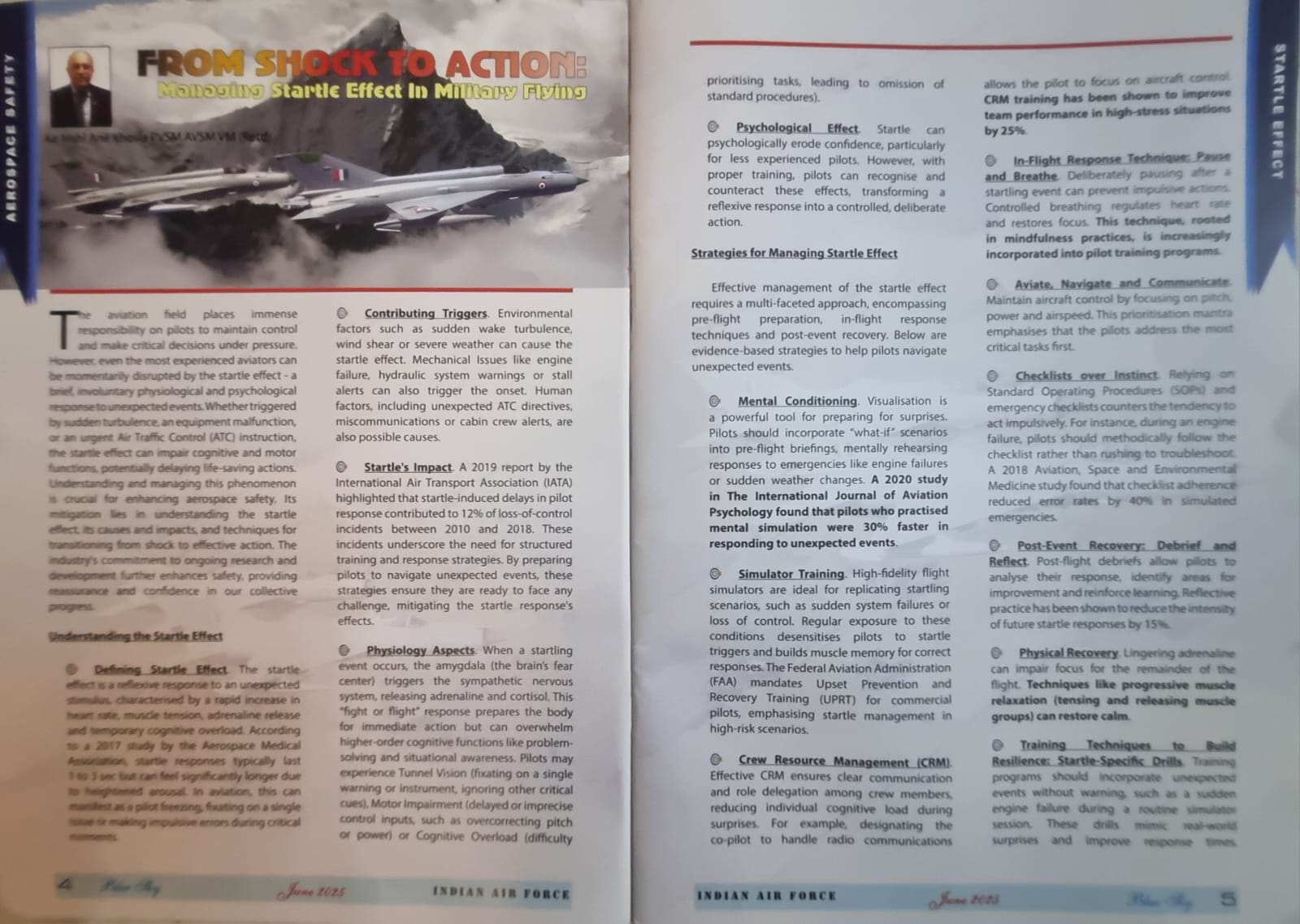
The aviation industry places immense responsibility on pilots to maintain control and make critical decisions under pressure. However, even the most experienced aviators can be momentarily disrupted by the startle effect—a brief, involuntary physiological and psychological response to unexpected events. Whether triggered by sudden turbulence, an equipment malfunction, or an urgent air traffic control (ATC) instruction, the startle effect can impair cognitive and motor functions, potentially delaying life-saving actions. Understanding and managing this phenomenon is crucial for enhancing flight safety. Its mitigation lies in understanding the startle effect, its causes and impacts, and techniques for transitioning from shock to effective action. The industry’s commitment to ongoing research and development further enhances safety, providing reassurance and confidence in our collective progress.
Understanding the Startle Effect
Defining Startle Effect. The startle effect is a reflexive response to an unexpected stimulus, characterised by a rapid increase in heart rate, muscle tension, adrenaline release, and temporary cognitive overload. According to a 2017 study by the Aerospace Medical Association, startle responses typically last 1–3 seconds but can feel significantly longer due to heightened arousal. In aviation, this can manifest as a pilot freezing, fixating on a single issue, or making impulsive errors during critical moments.
Contributing Triggers. Environmental factors such as sudden wake turbulence, wind shear, or severe weather can cause the startle effect. Mechanical Issues like engine failure, hydraulic system warnings, or stall alerts can also trigger the onset. Human factors, including unexpected ATC directives, miscommunications, or cabin crew alerts, are also possible causes.
Startle’s Impact. A 2019 report by the International Air Transport Association (IATA) highlighted that startle-induced delays in pilot response contributed to 12% of loss-of-control incidents between 2010 and 2018. These incidents underscore the need for structured training and response strategies. By preparing pilots to navigate unexpected events, these strategies ensure they are ready to face any challenge, mitigating the startle response’s effects.
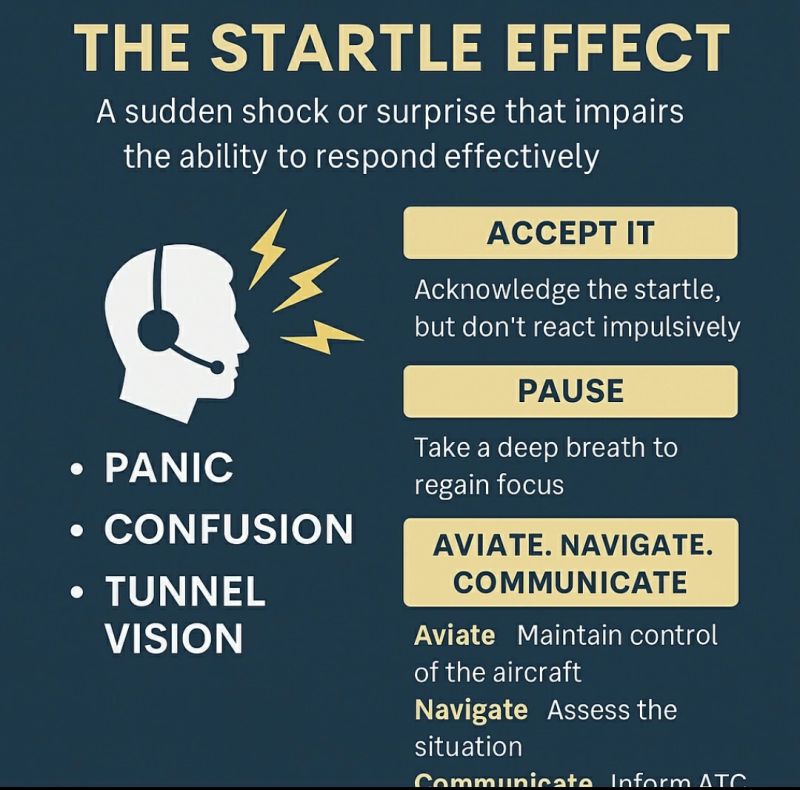
Physiology Aspects. When a startling event occurs, the amygdala (the brain’s fear center) triggers the sympathetic nervous system, releasing adrenaline and cortisol. This “fight or flight” response prepares the body for immediate action but can overwhelm higher-order cognitive functions like problem-solving and situational awareness. Pilots may experience Tunnel Vision (fixating on a single warning or instrument, ignoring other critical cues), Motor Impairment (delayed or imprecise control inputs, such as overcorrecting pitch or power), or Cognitive Overload (difficulty prioritising tasks, leading to omission of standard procedures).
Psychological Effect. Startle can psychologically erode confidence, particularly for less experienced pilots. However, with proper training, pilots can recognise and counteract these effects, transforming a reflexive response into a controlled, deliberate action.
Strategies for Managing Startle Effect
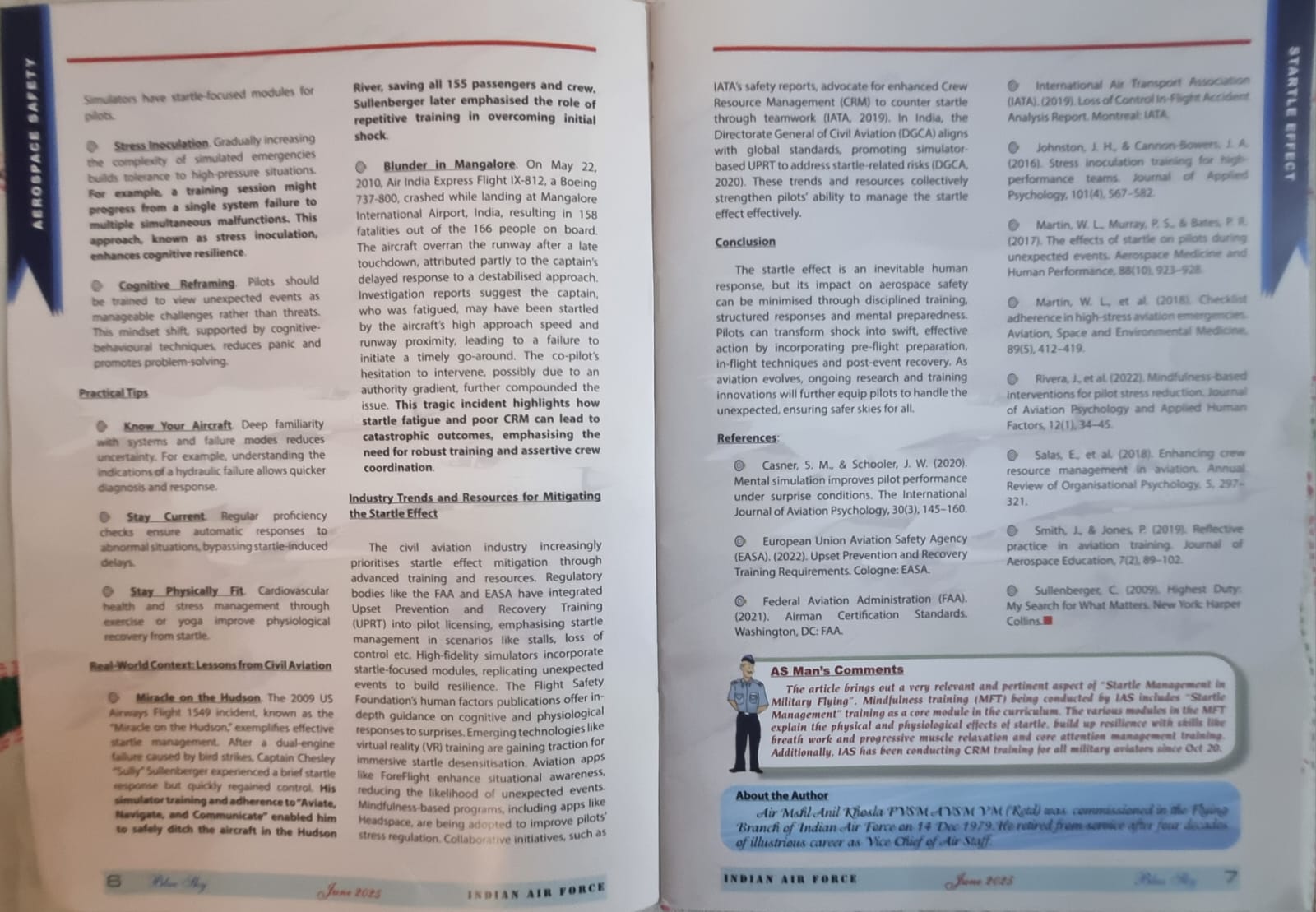
Effective management of the startle effect requires a multi-faceted approach, encompassing pre-flight preparation, in-flight response techniques, and post-event recovery. Below are evidence-based strategies to help pilots navigate unexpected events.
Mental Conditioning. Visualisation is a powerful tool for preparing for surprises. Pilots should incorporate “what-if” scenarios into pre-flight briefings, mentally rehearsing responses to emergencies like engine failures or sudden weather changes. A 2020 study in The International Journal of Aviation Psychology found that pilots who practised mental simulation were 30% faster in responding to unexpected events.
Simulator Training. High-fidelity flight simulators are ideal for replicating startling scenarios, such as sudden system failures or loss of control. Regular exposure to these conditions desensitises pilots to startle triggers and builds muscle memory for correct responses. The Federal Aviation Administration (FAA) mandates Upset Prevention and Recovery Training (UPRT) for commercial pilots, emphasising startle management in high-risk scenarios.
Crew Resource Management (CRM). Effective CRM ensures clear communication and role delegation among crew members, reducing individual cognitive load during surprises. For example, designating the co-pilot to handle radio communications allows the pilot to focus on aircraft control. CRM training has been shown to improve team performance in high-stress situations by 25%.
In-Flight Response Technique: Pause and Breathe. Deliberately pausing after a startling event can prevent impulsive actions. Controlled breathing regulates heart rate and restores focus. This technique, rooted in mindfulness practices, is increasingly incorporated into pilot training programs.
Aviate, Navigate, and Communicate. Maintain aircraft control by focusing on pitch, power, and airspeed. For example, during a stall warning, pilots should apply full power and reduce the angle of attack. Ensure the aircraft is on a safe trajectory, avoiding terrain or traffic. Inform ATC only after stabilising the situation. This prioritisation mantra emphasises that the pilots address the most critical tasks first.
Checklists over Instinct. Relying on standard operating procedures (SOPs) and emergency checklists counters the tendency to act impulsively. For instance, during an engine failure, pilots should methodically follow the checklist rather than rushing to troubleshoot. A 2018 Aviation, Space, and Environmental Medicine study found that checklist adherence reduced error rates by 40% in simulated emergencies.
Post-Event Recovery: Debrief and Reflect. Post-flight debriefs allow pilots to analyse their response, identify areas for improvement, and reinforce learning. Reflective practice has been shown to reduce the intensity of future startle responses by 15%.
Physical Recovery. Lingering adrenaline can impair focus for the remainder of the flight. Techniques like progressive muscle relaxation (tensing and releasing muscle groups) can restore calm.
Training Techniques to Build Resilience: Startle-Specific Drills. Training programs should incorporate unexpected events without warning, such as a sudden engine failure during a routine simulator session. These drills mimic real-world surprises and improve response times. Simulators have startle-focused modules for pilots.
Stress Inoculation. Gradually increasing the complexity of simulated emergencies builds tolerance to high-pressure situations. For example, a training session might progress from a single system failure to multiple simultaneous malfunctions. This approach, known as stress inoculation, enhances cognitive resilience.
Cognitive Reframing. Pilots should be trained to view unexpected events as manageable challenges rather than threats. This mindset shift, supported by cognitive-behavioural techniques, reduces panic and promotes problem-solving.
Practical Tips.
-
- Know Your Aircraft. Deep familiarity with systems and failure modes reduces uncertainty. For example, understanding the indications of a hydraulic failure allows quicker diagnosis and response.
-
- Stay Current. Regular proficiency checks ensure automatic responses to abnormal situations, bypassing startle-induced delays.
-
- Stay Physically Fit. Cardiovascular health and stress management through exercise or yoga improve physiological recovery from startle.
Real-World Context: Lessons from Civil Aviation.
Miracle on the Hudson. The 2009 US Airways Flight 1549 incident, known as the “Miracle on the Hudson,” exemplifies effective startle management. After a dual-engine failure caused by bird strikes, Captain Chesley “Sully” Sullenberger experienced a brief startle response but quickly regained control. His simulator training and adherence to “Aviate, Navigate, and Communicate” enabled him to safely ditch the aircraft in the Hudson River, saving all 155 passengers and crew. Sullenberger later emphasised the role of repetitive training in overcoming initial shock.
Blunder in Mangalore. On May 22, 2010, Air India Express Flight IX-812, a Boeing 737-800, crashed while landing at Mangalore International Airport, India, resulting in 158 fatalities out of the 166 people on board. The aircraft overran the runway after a late touchdown, attributed partly to the captain’s delayed response to a destabilised approach. Investigation reports suggest the captain, who was fatigued, may have been startled by the aircraft’s high approach speed and runway proximity, leading to a failure to initiate a timely go-around. The co-pilot’s hesitation to intervene, possibly due to an authority gradient, further compounded the issue. This tragic incident highlights how startle, fatigue, and poor CRM can lead to catastrophic outcomes, emphasising the need for robust training and assertive crew coordination.
Industry Trends and Resources for Mitigating the Startle Effect
The civil aviation industry increasingly prioritises startle effect mitigation through advanced training and resources. Regulatory bodies like the FAA and EASA have integrated Upset Prevention and Recovery Training (UPRT) into pilot licensing, emphasising startle management in scenarios like stalls, loss of control, etc. High-fidelity simulators incorporate startle-focused modules, replicating unexpected events to build resilience. The Flight Safety Foundation’s human factors publications offer in-depth guidance on cognitive and physiological responses to surprises. Emerging technologies like virtual reality (VR) training are gaining traction for immersive startle desensitisation. Aviation apps like ForeFlight enhance situational awareness, reducing the likelihood of unexpected events. Mindfulness-based programs, including apps like Headspace, are being adopted to improve pilots’ stress regulation. Collaborative initiatives, such as IATA’s safety reports, advocate for enhanced Crew Resource Management (CRM) to counter startle through teamwork (IATA, 2019). In India, the Directorate General of Civil Aviation (DGCA) aligns with global standards, promoting simulator-based UPRT to address startle-related risks (DGCA, 2020). These trends and resources collectively strengthen pilots’ ability to manage the startle effect effectively.
Conclusion
The startle effect is an inevitable human response, but its impact on flight safety can be minimised through disciplined training, structured responses, and mental preparedness. Pilots can transform shock into swift, effective action by incorporating pre-flight preparation, in-flight techniques, and post-event recovery. As aviation evolves, ongoing research and training innovations will further equip pilots to handle the unexpected, ensuring safer skies for all.
Please Add Value to the write-up with your views on the subject.
For regular updates, please register your email here:-
References and credits
To all the online sites and channels.
Pics Courtesy: Internet
Disclaimer:
Information and data included in the blog are for educational & non-commercial purposes only and have been carefully adapted, excerpted, or edited from reliable and accurate sources. All copyrighted material belongs to the respective owners and is provided only for broader dissemination.
References:-
- Casner, S. M., & Schooler, J. W. (2020). Mental simulation improves pilot performance under surprise conditions. The International Journal of Aviation Psychology, 30(3), 145–160.
- European Union Aviation Safety Agency (EASA). (2022). Upset Prevention and Recovery Training Requirements. Cologne: EASA.
- Federal Aviation Administration (FAA). (2021). Airman Certification Standards. Washington, DC: FAA.
- International Air Transport Association (IATA). (2019). Loss of Control In-Flight Accident Analysis Report. Montreal: IATA.
- Johnston, J. H., & Cannon-Bowers, J. A. (2016). Stress inoculation training for high-performance teams. Journal of Applied Psychology, 101(4), 567–582.
- Martin, W. L., Murray, P. S., & Bates, P. R. (2017). The effects of startle on pilots during unexpected events. Aerospace Medicine and Human Performance, 88(10), 923–928.
- Martin, W. L., et al. (2018). Checklist adherence in high-stress aviation emergencies. Aviation, Space, and Environmental Medicine, 89(5), 412–419.
- Rivera, J., et al. (2022). Mindfulness-based interventions for pilot stress reduction. Journal of Aviation Psychology and Applied Human Factors, 12(1), 34–45.
- Salas, E., et al. (2018). Enhancing crew resource management in aviation. Annual Review of Organisational Psychology, 5, 297–321.
- Smith, J., & Jones, P. (2019). Reflective practice in aviation training. Journal of Aerospace Education, 7(2), 89–102.
- Sullenberger, C. (2009). Highest Duty: My Search for What Matters. New York: HarperCollins.