Information and data included in the blog are for educational & non-commercial purposes only and have been carefully adapted, excerpted, or edited from reliable and accurate sources. All copyrighted material belongs to the respective owners and is provided only for broader dissemination.
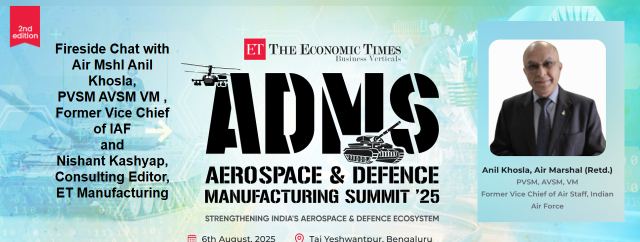
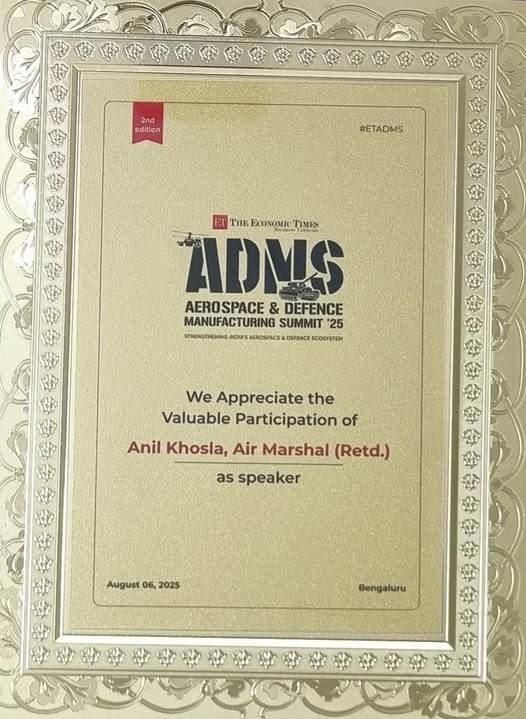
Presented my Paper at the Economic Times-sponsored “Aerospace and Defence Manufacturing Summit 2025”
on 06 Aug 25.
India’s defence preparedness has undergone a transformative journey, evolving from a reliance on imports to a robust push for indigenous development under the Aatmanirbhar Bharat initiative. This transformation, driven by strategic vision and policy reforms, has been exemplified by platforms like the Tejas Light Combat Aircraft (LCA). However, achieving genuine self-reliance requires not just assembling equipment but building deep capabilities in design, systems integration, and advanced materials. This article explores India’s defence evolution, the role of indigenous platforms, and the critical building blocks, industrial strategies, collaborative ecosystems, technological leadership, and talent development needed to ensure sustained preparedness and global competitiveness.
Evolution of India’s Defence Preparedness
Post-Independence to 1990s: Heavy Import Reliance. In the decades following independence, India’s defence capabilities were heavily dependent on foreign suppliers, primarily the Soviet Union/Russia. Aircraft like the MiG-21, tanks such as the T-72, and submarines sourced from these partners ensured operational readiness. However, this reliance exposed vulnerabilities, including inconsistent supply chains for spares, limited technological autonomy, and exposure to geopolitical pressures. The lack of indigenous capabilities meant that India was often at the mercy of external suppliers, which impacted its long-term strategic flexibility.
1990s to Early 2010s: Shift to Indigenous Development. The 1990s marked a pivotal shift toward self-reliance, with investments in research and development through organisations like the Defence Research and Development Organisation (DRDO), Hindustan Aeronautics Limited (HAL), and Bharat Electronics Limited (BEL). Key programs, including the LCA Tejas, Arjun Main Battle Tank (MBT), Akash missile system, and INSAS rifle, were initiated to reduce import dependency. While these programs faced significant challenges—such as delays, cost overruns, and technological hurdles—they laid the foundation for indigenous defence manufacturing. The Tejas program, conceptualised in the 1980s, began to take shape as a symbol of India’s ambitions, despite early setbacks in development and production.
2015 Onwards: Strategic Autonomy and Aatmanirbhar Bharat. Since 2015, India’s defence strategy has aligned with the Aatmanirbhar Bharat initiative, emphasising indigenous design, development, and production. Programs like the Tejas Mk1A, Arjun Mk1A, Dhanush/ATAGS artillery, and Ballistic Missile Defence system reflect a maturing ecosystem. The government has actively promoted private sector and MSME participation, reducing import dependency from approximately 70% in the early 2000s to around 50% today. Policies such as Defence Corridors, the Strategic Partnership Model, and Positive Indigenisation Lists have incentivised local manufacturing. Additionally, the integration of emerging technologies—unmanned aerial vehicles (UAVs), artificial intelligence (AI), cyber defence, and space assets—has modernised India’s strategic doctrine to address both conventional and non-traditional threats.
Current Focus. India’s defence strategy now centers on creating an ecosystem for self-reliance, technological leadership, and rapid innovation. The focus is on building capabilities to counter evolving threats, including border tensions, cyber warfare, and space-based challenges. Indigenous platforms, such as the Tejas, coupled with policy reforms, are driving this transformation; however, gaps in production timelines, supply chain robustness, and the adoption of cutting-edge technology remain critical challenges.
Tejas and the Rise of Indigenous Platforms
The Tejas LCA, a 4.5-generation fighter, represents a cornerstone of India’s indigenous defence capabilities. Evolving from a 1980s concept to the advanced Tejas Mk1A, it incorporates cutting-edge avionics, the Uttam Active Electronically Scanned Array (AESA) radar, and modern weaponry. The Indian Air Force’s (IAF) commitment to procure 240 units underscores confidence in the platform. Tejas symbolises advancements in avionics, flight control systems, and composite materials, showcasing India’s growing expertise in aerospace engineering.
Beyond Tejas, other platforms highlight India’s progress:-
Arjun Tank. A domestically developed MBT with improved variants like the Arjun Mk1A.
Pinaka Rocket System. A multi-barrel rocket launcher enhances artillery capabilities.
Dhruv Helicopter. A versatile utility helicopter for diverse operational roles.
BrahMos and Akash Missiles. Precision strike and air defence systems with global recognition.
INS Vikrant. India’s first indigenous aircraft carrier is demonstrating naval engineering prowess.
The “Make in India” and Aatmanirbhar Bharat initiatives have bolstered these achievements by fostering local supply chains, private sector involvement, and export potential. However, challenges such as delayed production, supply chain vulnerabilities, and gaps in advanced systems integration persist, necessitating accelerated efforts to meet global standards.
Building Blocks for Deep Self-Reliance
Genuine self-reliance in defence requires more than assembling equipment; it demands mastery over design, systems integration, and advanced materials. The following building blocks are critical:-
R&D Investment. Increased funding for DRDO, the Council of Scientific and Industrial Research (CSIR), and private-sector R&D is essential for developing technologies like stealth, AI, and hypersonics. Public-private partnerships can bridge the gap between laboratory research and battlefield deployment.
Advanced Materials Expertise. India must develop domestic capabilities in composites, titanium alloys, rare earths, and electronics. Investments in material science research and industrial-scale production facilities are crucial for reducing import reliance.
Systems Integration. Expertise in integrating complex systems—such as sensors, weapons, and communication networks—is vital. Collaboration between Defence Public Sector Undertakings (DPSUs), private firms, and global Original Equipment Manufacturers (OEMs) can facilitate knowledge transfer.
IP and Design Ownership. Developing internationally recognised Indian technologies ensures design autonomy and reduces dependence on foreign intellectual property rights.
Robust Testing Infrastructure. Establishing state-of-the-art facilities for rapid validation of platforms will accelerate deployment and ensure reliability.
Innovation Ecosystem. Fostering startups and public-private partnerships in AI, avionics, and propulsion systems will drive innovation and competitiveness.
Skilled Workforce. Specialised training programs through academia-industry partnerships are essential to build a talent pool proficient in advanced defence technologies.
Policy and Vision. A long-term vision, consistent policy support, incentives, and export-oriented production are critical to sustaining self-reliance.
Scaling The Industry for Sustained Preparedness
Achieving scale in defence production involves more than numbers—it requires consistent supply chains, high-quality spares, and system-level readiness. Indian industry must take the following steps:
Robust Supply Chains. Develop tiered supplier networks with MSMEs to ensure component availability and redundancy. Localisation efforts can reduce import dependence.
Quality Assurance. Implement global-standard quality control systems, such as AS9100 certification, and establish robust audit mechanisms to ensure consistency and reliability.
Scalable Production. Invest in modular manufacturing facilities and automation to enable flexible scaling and production. Expanding production lines, such as HAL’s Tejas facility, is crucial to meeting volume demands.
Digital Integration. Adopt Industry 4.0 technologies, such as IoT, AI, and digital twins, for real-time supply chain management and predictive maintenance.
Public-Private Synergy. Encourage private players, such as Tata, L&T, and Mahindra, to co-invest with DPSUs in production infrastructure. Partnerships with the armed forces can align production with demand.
Strategic Partnerships. Form joint ventures with global leaders to facilitate technology transfer and process excellence, thereby enhancing production capabilities.
Government Support. Faster clearances, tax incentives, and long-term contracts are essential to sustain momentum. Clear targets for indigenous procurement under Make-in-India initiatives will drive accountability.
Collaborative Ecosystem for Innovation
Unlocking the innovation potential of India’s defence manufacturing sector requires a cohesive ecosystem involving DPSUs, private manufacturers, MSMEs, and startups. Key elements include:-
Collaborative Framework. Platforms like the Innovations for Defence Excellence (iDEX) should be scaled to enable co-development and co-ownership of intellectual property.
Clear Role Demarcation. DPSUs should focus on strategic systems, private players on innovation, and MSMEs on specialised components to optimise contributions.
Innovation Hubs. Defence innovation clusters near industrial and academic centers (e.g., Bengaluru, Hyderabad) can drive R&D, prototyping, and testing.
Technology Transfer. Joint ventures with global OEMs can facilitate knowledge transfer while ensuring Indian firms retain critical expertise.
Policy Support. Simplified procurement processes, timely payments to MSMEs, and tax incentives for R&D will encourage participation. Defence corridors can streamline production.
Knowledge and Data Sharing. Secure platforms for sharing design and production data will enhance integration and collaboration, ultimately improving the overall workflow. Regular workshops and technology meets can foster collaboration.
Shared Infrastructure. Access to shared testing, certification, and validation facilities will reduce duplication and expedite time-to-market.
Open Innovation. Funding and mentoring startups and academia through open innovation challenges will drive breakthroughs.
Trust and Transparency. Transparent procurement policies and predictable orders will encourage private sector investment and risk-taking.
Leading in Cutting-Edge Technologies
To remain future-ready, India must transition from adopting technologies to leading their development. This is particularly critical in aerospace and defence, where disruptive technologies such as AI, unmanned systems, hypersonics, quantum computing, and directed-energy weapons are reshaping warfare. Key strategies include:-
Leadership in Disruptive Technologies. Prioritise R&D in next-generation technologies and integrate them into programs like the Advanced Medium Combat Aircraft (AMCA).
Indigenous Capability Development. Develop standards and patents in semiconductors, encrypted communications, and radar for technological sovereignty.
Global Partnerships. Collaborate with allies like the US, Israel, and France for co-development while retaining IP rights.
Agile Procurement and Doctrine. Reform procurement to rapidly adopt emerging technologies, drawing inspiration from global models like DARPA. Adaptable doctrines will align with technological advancements.
Future-Proof Infrastructure. Develop testing and simulation facilities for emerging domains, such as space and cyber warfare.
Support for Deep-Tech Startups. Promote dual-use and export-oriented technologies through funding and mentorship.
Talent Retention. Attract and retain talent with competitive incentives and global exposure.
Continuous Feedback Loop. Close collaboration between defence forces and industry will ensure technological responses align with operational needs.
Strategic Foresight. Proactive investment and policy agility will position India as a technology leader by 2035.
Building a Robust Talent Pipeline
A strong defence system requires skilled professionals—from aerospace engineers to machinists and systems designers. Building a robust talent pipeline involves:-
Curriculum Alignment. Universities, such as IITs and NITs, should offer specialised programs in aerospace, materials science, and emerging technologies, aligned with industry needs through partnerships with DRDO, HAL, and private firms.
Practical Training. Industry-led internships, apprenticeships, and on-the-job training in MSMEs and startups will bridge the gap between theory and practice, providing a valuable connection between academic knowledge and real-world applications.
Centres of Excellence. Academia-industry-government collaboration can establish defence-focused research and skills development centres to drive innovation and talent development.
Dedicated Skilling Institutes. Training centers under ITIs and the National Skill Development Corporation (NSDC) should focus on advanced manufacturing, CNC machining, 3D printing, and avionics.
Faculty and Trainer Upskilling. Regular programs will ensure educators stay updated with industry advancements.
Industry-Led Initiatives. Private firms and DPSUs should fund university research chairs and provide hands-on training to foster practical expertise.
Government Support. Scholarships, STEM programs, and grants will incentivise collaboration. A national mission to train 100,000 defence professionals by 2030 can drive scale.
Global Exposure. Exchange programs with leading international defence institutes will upskill talent.
Reskilling Workforce. Programs in advanced manufacturing, AI, and cybersecurity will keep the existing workforce relevant and up-to-date.
Tripartite Collaboration. A coordinated framework of academia, industry, and government will ensure a steady supply of world-class talent.
Conclusion
India’s defence preparedness has evolved significantly, from dependence on imports to a robust push for self-reliance, exemplified by platforms like the Tejas. Achieving genuine self-reliance requires deep capabilities in design, systems integration, and advanced materials, supported by scalable production, collaborative ecosystems, and technological leadership. A robust talent pipeline, driven by synergy among academia, industry, and government, is critical to sustaining this momentum. By addressing challenges in production timelines, supply chain robustness, and technology adoption, India can not only meet its defence needs but also emerge as a global leader in defence innovation by 2035.
Please Add Value to the write-up with your views on the subject.
For regular updates, please register your email here:-
Information and data included in the blog are for educational & non-commercial purposes only and have been carefully adapted, excerpted, or edited from reliable and accurate sources. All copyrighted material belongs to respective owners and is provided only for wider dissemination.
References:-
Bitzinger, R. A. (2020). India’s Defence Industrial Base: Opportunities and Challenges. Rajaratnam School of International Studies.
DRDO. (2023). Annual Report 2022-23. Defence Research and Development Organisation, Ministry of Defence, Government of India.
Government of India. (2020). Aatmanirbhar Bharat: Self-Reliant India Mission. Ministry of Defence, Government of India.
Hindustan Aeronautics Limited. (2024). Tejas Light Combat Aircraft: Technical Specifications and Development Timeline. HAL Official Website.
Ministry of Defence. (2022). Defence Production and Export Promotion Policy (DPEPP) 2020. Government of India.
Mishra, A. (2021). India’s Defence Manufacturing: The Road to Self-Reliance. Observer Research Foundation.
Pant, H. V., & Bommakanti, K. (2022). India’s National Security: Emerging Challenges and Opportunities. Routledge India.
Press Information Bureau. (2023). Aatmanirbhar Bharat in Defence: Achievements and Roadmap. Ministry of Defence, Government of India.
Singh, A. (2019). India’s Defence Modernisation: Challenges and Prospects. Institute for Defence Studies and Analyses.
Stockholm International Peace Research Institute (SIPRI). (2024). Trends in Global Arms Transfers, 2023. SIPRI Database.
My Article published on the Chanakya Forum Website
on 24 Mar 25.
A recent Indian defence committee has recommended increasing private sector participation in military aircraft manufacturing to enhance the Indian Air Force’s capabilities. The committee, led by the defence ministry’s top bureaucrat, submitted its report to Defence Minister Rajnath Singh, who has directed that the recommendations be implemented promptly. The report emphasises the need for private companies to work alongside Defence Public Sector Undertakings (DPSUs) and the Defence Research and Development Organisation (DRDO) to achieve self-reliance in aerospace manufacturing. It suggests implementing short-, medium–, and long-term measures to expedite the production of Light Combat Aircraft (LCA) variants, including Mk-1, Mk-1A, and Mk-2, to address delays and strengthen the IAF’s operational readiness.
India’s aerospace and defence sector has undergone significant transformation in recent decades, evolving from a predominantly state-controlled domain to increasingly embracing private sector participation. Fighter jet production, a critical component of national defence, has traditionally been the preserve of public sector undertakings (PSUs) like Hindustan Aeronautics Limited (HAL). However, with the government’s push for indigenisation, self-reliance, and modernisation under initiatives like “Make in India,” the private sector is emerging as a vital player in this high-stakes industry. This article examines the intricacies of how private companies contribute to India’s defence capabilities and what lies ahead for this evolving partnership.
Historical Context
India’s journey into fighter jet production began in the mid-20th century, heavily reliant on foreign technology and licensing agreements. The 1960s saw HAL commence production of the Soviet-designed MiG-21 under license, marking the start of India’s aircraft manufacturing journey. Over the years, HAL expanded its portfolio, producing aircraft like the Jaguar, Mirage 2000, and Su-30 MKI, all under similar arrangements with foreign OEMs. These efforts established HAL as the cornerstone of India’s defence aviation industry, supported by other PSUs and the Defence Research and Development Organisation (DRDO).
The push for Indigenous fighter jet development gained momentum with the HF-24 Marut, designed by German engineer Kurt Tank in the 1960s. However, the Light Combat Aircraft (LCA) Tejas program, initiated in the 1980s by the Aeronautical Development Agency (ADA) with HAL as the production partner, represented a significant leap towards self-reliance. The Tejas, inducted into the Indian Air Force (IAF) in 2016, showcased India’s ability to design and build a modern fighter jet, albeit with substantial reliance on imported components.
Historically, private sector involvement in fighter jet production was minimal. The defence sector’s strategic importance, high capital requirements and restricted access to advanced technology confined manufacturing to PSUs. While effective in establishing a foundational aerospace industry, this PSU-centric model faced limitations in scalability, innovation, and meeting the IAF’s growing demands, setting the stage for private sector inclusion.
A series of progressive policy reforms have driven the shift towards private sector involvement in defence manufacturing, including fighter jets. Launched in 2014, the “Make in India” initiative sought to bolster domestic manufacturing and reduce import dependency, with defence identified as a priority sector. This program encouraged private companies to participate in defence production by fostering a conducive business environment and promoting collaborations with global players.
A pivotal policy change was the liberalisation of Foreign Direct Investment (FDI) in defence. Previously capped at 26%, the FDI limit was raised to 74% under the automatic route in 2020, with provisions for up to 100% on a case-by-case basis for critical technologies. This opened doors for foreign OEMs to invest in India, often in partnership with private Indian firms, facilitating technology transfer and capacity building.
The Strategic Partnership (SP) Model, introduced in the 2017 Defence Procurement Procedure (DPP), marked another milestone. Designed to foster long-term collaborations between private Indian companies and foreign OEMs, the SP Model identifies private firms as Strategic Partners in manufacturing major defence platforms, including fighter aircraft. The selection process emphasises financial stability, technical expertise, and manufacturing capabilities to create a robust domestic defence industrial base.
Revisions to the DPP further supported this shift. The DPP 2016 introduced the “Buy (Indian-IDDM)” category—Indigenously Designed, Developed, and Manufactured—prioritising equipment with at least 40% Indigenous content. Offset clauses in defence contracts, mandating foreign vendors to invest a percentage of the contract value in India, have also incentivised partnerships with private companies. These policies collectively signal a departure from the PSU monopoly, inviting private sector innovation and investment.
Current Involvement of the Private Sector
The private sector’s role in Indian fighter jet production is multifaceted, spanning manufacturing, supply chain contributions, and support services. While HAL remains the primary assembler of fighter jets like the Tejas, private companies are increasingly integrated into the production ecosystem.
Supply Chain Contributions. In the Tejas program, private firms supply critical components and sub-systems. Dynamatic Technologies, for instance, manufactures the front fuselage of the Tejas, demonstrating the precision and reliability private players can offer. Larsen & Toubro (L&T) contributes to various aerospace projects, leveraging its engineering expertise, while Tata Advanced Systems Limited (TASL) participates in component manufacturing and assembly processes. These collaborations reduce HAL’s burden and enhance production efficiency, paving the way for a more robust and agile production ecosystem.
Offset Obligations. Major defence deals have catalysed private sector involvement. The 2016 Rafale deal with France’s Dassault Aviation, involving 36 fighter jets, included offsets worth billions. Reliance Defence and Engineering partnered with Dassault to fulfil these obligations, producing components and establishing a manufacturing facility in Nagpur. Such partnerships generate business for private firms, facilitating skill development and technology absorption.
Maintenance, Repair, and Overhaul (MRO). Beyond production, private companies are making inroads into MRO services, which are essential for maintaining fighter jet fleets. TASL has established advanced MRO facilities that service military and civilian aircraft, while Mahindra Defence Systems supports aerospace equipment. These services ensure operational readiness, a critical factor given the IAF’s ageing fleet.
Emerging Technologies. Some private firms are exploring adjacent fields like Unmanned Aerial Vehicles (UAVs). Companies like TASL and Adani Defence & Aerospace are developing drones and building aerospace expertise that could eventually support fighter jet programs. While UAVs differ from manned fighters, the technological overlap strengthens the private sector’s aerospace capabilities.
Technology Transfer and Innovation. Technology transfer remains a cornerstone of private sector growth. Collaborations with foreign OEMs provide access to advanced systems, such as radar and propulsion technologies, while joint ventures encourage co-development. Private firms also invest in innovation, exploring additive manufacturing (3D printing) and artificial intelligence to streamline production and reduce costs. Over time, these efforts could lead to fully indigenous fighter jet designs.
Role of MSMEs. Micro, Small, and Medium Enterprises (MSMEs) are the backbone of the aerospace supply chain. These firms produce smaller components—fasteners, wiring harnesses, and sub-assemblies—supporting larger private companies and PSUs. By integrating MSMEs, the industry can enhance efficiency and scalability, fostering a broader industrial ecosystem and providing opportunities for growth and innovation.
Key Defence Production Private Companies. Several private companies have shown interest in participating in fighter jet manufacturing, either independently or in collaboration with HAL and foreign OEMs.
Tata Advanced Systems Limited (TASL) has emerged as a leader in India’s private aerospace sector. Its joint venture with Lockheed Martin to produce aero structures, including wings for the C-130J Super Hercules, showcases its manufacturing prowess. Although the F-16 production proposal did not materialise, TASL’s capabilities position it for future fighter jet projects.
Mahindra Defence Systems. Mahindra has leveraged its automotive expertise to enter defence manufacturing, supplying aircraft components and expressing interest in the SP Model. Its partnership with Airbus for helicopter components reflects its ambition to expand into fighter jet production.
Larsen & Toubro (L&T). L&T’s decades-long experience in defence engineering includes contributions to the Tejas and other platforms. Its advanced manufacturing facilities and focus on precision engineering make it a strong contender in aerospace production.
Adani Defence & Aerospace. It aims to enhance India’s self-reliance in defence manufacturing. While active in UAVs, avionics, and MRO, it seeks partnerships for fighter jet production but lacks an indigenous fighter aircraft program.
Challenges Faced by Private Companies
Private companies face significant hurdles in entering fighter jet production despite growing involvement.
High Capital Investment. Aerospace manufacturing demands substantial upfront investment in infrastructure, technology, and skilled manpower. The long gestation periods before returns materialise deter many firms, particularly more minor players.
Technological Barriers. Fighter jet production requires mastery of complex technologies—avionics, propulsion, and materials science—that PSUs like HAL have developed over decades. Private companies often lack this expertise, relying on foreign partnerships that may limit technology transfer.
Bureaucratic Procurement Processes. The defence procurement system is notoriously complex, with lengthy tendering, evaluation, and approval stages. This can discourage private firms accustomed to faster commercial cycles.
Competition with PSUs. HAL’s entrenched position and government backing create an uneven playing field. Private companies must compete with HAL’s economies of scale and establish relationships with the IAF.
Quality and Certification. Fighter jets demand uncompromising quality and safety standards. Private firms must navigate rigorous certification processes, such as those mandated by the Centre for Military Airworthiness and Certification (CEMILAC), adding time and cost.
Future Prospects
The private sector’s role in Indian fighter jet production is set for significant expansion, driven by policy continuity, market demand, and technological advancements. Government initiatives such as Atmanirbhar Bharat and the Defence Acquisition Procedure (DAP) foster a stable investment climate, encouraging private firms to engage in aerospace manufacturing. Policy measures like strategic partnerships and increased foreign direct investment (FDI) limits further enhance private sector participation.
Market demand is another key driver. The Indian Air Force (IAF) is undergoing rapid modernisation, with plans to replace ageing aircraft and induct advanced fighters. Additionally, India’s ambition to become a defence exporter presents lucrative opportunities for private companies. Countries in Southeast Asia, the Middle East, and Africa could become potential buyers, bolstering the case for increased private production.
Technological advancements are also reshaping the industry. Additive manufacturing, artificial intelligence, and advanced materials reduce entry barriers and enable new players to contribute. Collaborations with global aerospace firms can further accelerate technology absorption.
However, for private firms to succeed, key enablers must be addressed. Streamlining procurement processes, enhancing R&D funding, and developing a skilled workforce are critical. Bureaucratic hurdles and financial constraints have historically hindered private participation, but targeted reforms could unlock their full potential. If these challenges are managed effectively, private companies could be pivotal in next-generation fighter projects like the Advanced Medium Combat Aircraft (AMCA). This would strengthen India’s defence manufacturing ecosystem and enhance its strategic autonomy in aerospace technology.
Conclusion
The involvement of the private sector in Indian fighter jet production marks a paradigm shift from a PSU-dominated landscape to a collaborative ecosystem. While challenges like capital intensity and technological gaps persist, the opportunities—driven by policy reforms, IAF requirements, and global partnerships—are immense. Companies like TASL, Mahindra, and L&T exemplify the potential of private enterprises to enhance India’s defence capabilities. As the nation strives for self-reliance, the private sector’s role will be pivotal in shaping a robust, innovative, and competitive aerospace industry, ensuring that India’s fighter jets soar not just in the skies but also as symbols of industrial prowess and strategic autonomy.
Information and data included in the blog are for educational & non-commercial purposes only and have been carefully adapted, excerpted, or edited from reliable and accurate sources. All copyrighted material belongs to respective owners and is provided only for wider dissemination.
References:-
Singh, Abhijit. “Public-Private Partnership in Indian Defence Manufacturing: A Strategic Perspective.” Journal of Defence Studies, vol. 16, no. 2 (2023): 51-78.
Raghavan, Ramesh. “The Role of Private Companies in Defence Production: Lessons from Global Models.” Strategic Analysis, vol. 45, no. 1 (2022): 29-50.
Mehta, Sameer. “India’s Quest for Fighter Jet Autonomy: Challenges and Opportunities for the Private Sector.” Air Power Journal, vol. 17, no. 3 (2022): 12-35.
Sharma, Arvind. “HAL and the Evolving Role of Indian Private Defence Firms.” Journal of Defence Research and Development, vol. 19, no. 4 (2023): 88-105.
Chakrabarti, Rajesh. Defence Economics in India: The Transition to a Military-Industrial Complex. Oxford University Press, 2020.
Sinha, Rakesh. Privatisation and Defence Manufacturing in India: The Road Ahead. Routledge, 2019.
Pandit, Rajat. “HAL and the Private Sector: A New Era in Indian Fighter Jet Production.” The Times of India, March 10, 2023.
Peri, Dinakar. “Adani and Tata’s Role in India’s Advanced Medium Combat Aircraft (AMCA) Project.” The Hindu, August 12, 2023.
Unnithan, Sandeep. “How Private Players Are Transforming Indian Defence Manufacturing.” India Today, November 15, 2022.
Singh, Rahul. “India’s LCA Tejas and the Private Sector: The Growing Role of Private Industry in Aerospace.” Hindustan Times, July 20, 2023.
Mitra, Joydeep. “The Rafale Offset Deal: How Private Companies are Gaining from India’s Fighter Jet Deals.” Business Standard, September 25, 2023.
Centre for Air Power Studies (CAPS). The Future of India’s Indigenous Fighter Jet Development: Role of Private Sector. CAPS Report No. 231, 2023.
Observer Research Foundation (ORF). Public-Private Collaboration in Indian Defence: Global Lessons and Local Challenges. ORF Special Report, 2022.
Institute for Defence Studies and Analyses (IDSA). Self-Reliance in Indian Defence: Evaluating the Private Sector’s Role. IDSA Monograph No. 82, 2023.
Carnegie India. India’s Fighter Jet Ecosystem: Bridging the Capability Gap through Private Sector Involvement. New Delhi: Carnegie India, 2023.
Kumar, Rohit. “The Evolution of the Tejas Fighter Jet: Indigenous Capability and the Role of Private Sector.” Defence and Security Review, vol. 24, no. 3 (2022): 15-37.